Transport fare hike reasonable amid cost pressures — COPEC
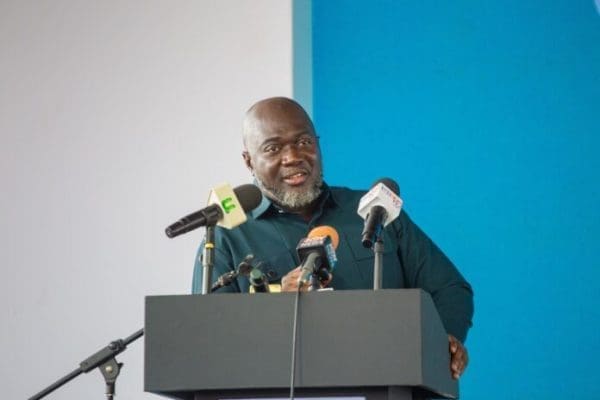
Duncan Amoah
The Executive Secretary of the Chamber of Petroleum Consumers (COPEC), Duncan Amoah, has defended the decision by transport operators to increase public transport fares by 20 per cent, describing the adjustment as justified in light of rising operational expenses and growing financial pressures on the transport sector.
His remarks come after the Ghana Private Road Transport Union (GPRTU) and the Commercial Transport Operators of Ghana announced a nationwide increase in transport fares, effective Tuesday, June 2, 2026.
According to the transport unions, the fare adjustment has become necessary due to the continued increase in fuel prices and the rising cost of vehicle spare parts, both of which have significantly increased the cost of running transport businesses across the country.
Speaking on Accra-based Citi FM on Saturday, May 30, Amoah argued that transport operators had demonstrated considerable restraint in recent months despite facing mounting operational challenges.
“Let me start off by saying that the transport operators have been quite magnanimous with all of us. At this time when already fuel prices are set to go up again on Monday, one could imagine that their operations could become unsustainable if they continue to charge the very old fares,” he said.
The COPEC Executive Secretary noted that transport operators had previously responded positively to reductions in fuel prices by lowering fares, and therefore deserved the flexibility to adjust fares upward now that fuel costs have returned to earlier levels.
“Granted that it is those who decided to go down on fares when fuel was 15. Now that it’s gone back up to 15 again, it could only be fair that we grant them that space to also adjust back to the old levels they were,” he stated.
Amoah maintained that expecting transport operators to maintain old fares despite increasing operating costs would be unfair, particularly when many transport providers had already revised their pricing structures to reflect current economic realities.
He pointed out that several transport operators, including long-distance bus services, had already increased fares in response to higher costs, making it difficult to justify holding GPRTU members to previous rates.
“It would become quite a disservice to the GPRTU and other transport operators if we insist at this point that they should stick with the old fares. So I find that the adjustment is reasonable, except that we would need to again ask them the basis for the 20%,” he said.
While expressing support for the fare increase, Amoah indicated that he would have preferred a slightly lower adjustment. He suggested that a 15 per cent increase might have been more appropriate, although he acknowledged that transport operators may have considered a range of additional expenses beyond fuel prices when arriving at the 20 per cent figure.
According to him, factors such as vehicle maintenance, insurance premiums, spare parts and other operational costs continue to place significant strain on transport operators and likely influenced their decision.
He explained the practical implications of the new fare structure for commuters, noting that passengers should expect noticeable but manageable increases in transport costs.
Under the revised fares, a commuter currently paying GH¢100 for a journey could expect to pay approximately GH¢120, while a trip that currently costs GH¢10 could rise to about GH¢12.
The fare increase is expected to affect millions of commuters nationwide, many of whom are already grappling with broader cost-of-living pressures. Nevertheless, Mr Amoah stressed that sustaining the transport sector requires a balance between affordability for passengers and profitability for operators.
Beyond the immediate fare adjustment, the COPEC Executive Secretary renewed calls for a more transparent and scientific approach to determining transport fares in Ghana.
He proposed the development of a standard formula that would consider both fixed and variable operating costs, allowing authorities and transport unions to establish a clear cost-per-passenger-per-kilometre benchmark for fare calculations.
According to him, such a system would help eliminate the frequent disagreements that often accompany fare reviews while providing greater predictability for both transport operators and the commuting public.
“But I think that we should be making meaningful progress towards arriving at a cost per head per kilometre, so that there is no confusion and no chaos,” he said.
Amoah argued that the current method of determining transport fares lacks sufficient transparency and is often viewed as arbitrary by both operators and commuters. He therefore urged stakeholders, including transport unions, regulators and policymakers, to adopt a more data-driven pricing model capable of reflecting prevailing economic conditions.
He believes a structured fare-setting mechanism would not only improve public confidence in transport pricing decisions but also reduce tensions whenever fare adjustments become necessary.
As the June 2 implementation date approaches, commuters across the country are preparing for higher transport costs, while industry stakeholders continue to debate the most effective way to balance consumer interests with the financial sustainability of transport operations.