Free speech or spree speech when it suits the speaker

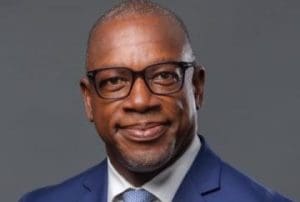
Kwesi Tawiah-Benjamin
Years ago, the evangelism committee in my church tasked members to embark on a soul-winning campaign by doing something extraordinary: Leave the Bible behind.
How would we witness Christ to anybody without quoting from the Bible?
As new converts, we wondered how that was ever possible.
The import of that instruction was to let our lives do the talking. If we had assimilated the values of the faith and followed a responsible culture, it would show in what we said and how we said it.
Camilla’s last stop
At communication and journalism school, we were told that free speech is like the air we breathe.
Nobody pauses in the ordinary business of life to ask about the source of the air and how it gets into our lungs.
We breathe freely. Without knowing constitutional provisions that guarantee free speech, Ghanaians should be able to naturally express themselves without fearing any consequences.
Like the evangelist whose life must vindicate the message of saving Grace, speech should not be criminalised when we speak or misspeak, and the constitution should vindicate us.
In civil and political life, when people say the wrong things, it is tempting to scoop a dossier of instances where others who said similar things or made more harmful statements, went unpunished.
Last week, when a court sentenced TikToker Camilla Alhassan to a year’s imprisonment for spreading false news about President Mahama, politicians treated us to a cocktail of careless people who said worse things.
They included journalists, political communicators and party footsoldiers.
However, we also had some constructive prognosis about Camilla’s punishment.
Some media commentators hoped the Community Service Bill, which was passed only this month by Parliament, would provide a healthy alternative for people like Camilla, who would serve our community better by sweeping and scrubbing public toilets, instead of going to prison.
Generally, the commentaries that greeted Camilla’s sentence spiraled a showdown of equalizations and counter-equalizations, especially from leaders who have our trust and confidence to chart better courses.
Generational filters
The last time I had the rare honour and privilege of exchanging mails with Dr. Charles Yves Wereko-Brobby (Tarzan), he worried that the Ghanaian youth was not taking advantage of social media to do some of the innovative things youth elsewhere are putting the huge digital resource to.
I have very vivid recollections of Tarzan asking why a Ghanaian or an African could not develop an indigenous African alternative to facebook.
It has been some 15 years since we had those exchanges, and social media has seen fifteen times more filth than what Tarzan saw.
It is tempting for every generation to point to the foibles and scruples of the generation before, and absolve ourselves from blame.
Our parents did not spare a moment to remind us about the good old days when they walked barefooted and did not have the benefit of self-help books and ‘courtesy for boys and girls’, but respected their elders.
We wonder how our generation suddenly produced disrespectful children who have no sense of proportion.
We are quick to blame social media exhibitionism and placate ourselves that we were better.
A filter leaves an imprint on anything it filters. How free was free speech before social media went on a speaking spree?
The same week Camilla made shocking and unprintable remarks about our President, some religious leaders in the charismatic sphere deployed their social media pulpits to launch missiles of insults against one another.
People like Camila may be motivated by these regrettable moments in our national life, to poison the waters of free speech with putrid.
Freedom after speech
We had been in the doldrums of ‘spree’ speech before Camilla. Daily, social media users slug it out to outdo one another in x-rated insults and everything that promotes chronic moral degeneration.
Any amount of mobile phone data entitles anybody who may not be able to put together a reasoned position in formal writing, to deploy bombastic and unsavoury vocabulary to describe a sitting president.
It gives us reason–not only to worry about the speaker, but the medium.
Camilla may easily be dismissed as a ‘bush illiterate’, as a popular civil society titan describes her, but can we in one breath criticise her careless diatribe as reprehensible and damaging to the President’s image, and in another, find fault with a court judgment that seeks to punish the reprehensible act?
The community of reading men prescribe a defamation suit as an appropriate punishment for Camila, instead of jail.
They say insult is not a criminal offence.
The community of reading men also worry about how media elsewhere would report Camila’s imprisonment.
The BBC’s report was telling and revealing, regretting that “Ghana is widely regarded as one of West Africa’s strongest democracies, with constitutional protections for freedom of expression and a vibrant media landscape”.
A Sierra Leonean journalist reported that they look up to Ghana and trust our democracy to handle infractions of free speech better.
How do we solve a problem like Camilla? How do we guarantee free speech and also guarantee freedom after speech?
TikTokers do not know that if you repeat false information that is on everybody’s lips, you have broken the rule.
Kwaku Baako, Haruna Attah and other people of consequence went to jail for less. Should we dignify an irrelevant and careless TitToker with as much as a civil suit?
Tissues Of The Issues
bigfrontiers@gmail.com
Ottawa, Canada