Digital economy powers Ghana’s GDP to 6%

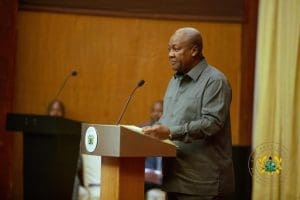
Dr Alhassan Iddrisu, the Government Statistician
Digital economy powers Ghana’s real Gross Domestic Product (GDP) growth to six per cent in the second quarter of 2026, with Information and Communication Technology sub-sectors leading the expansion.
The six per cent second quarter GDP growth in 2026, compared to the 6.6% recorded in the same period in 2025, represented a 0.6 percentage slowdown in economic growth, driven largely by slow growth in agriculture.
The growth in agriculture slowed to 3.9% in the second quarter of 2026, compared to the 7.1% in 2025, while industry also saw a marginal slow growth from 9.5 to eight percent.
Industry’s growth increased from 2.4 to 4.3% in the same period.
“In real terms, we produced GH₵51.3 billion worth of goods and services, up from 48.4bn a year earlier, which is 2025 quarter two,” said, Dr Alhassan Iddrisu, Government Statistician.
“Despite maintaining robust growth momentum, Ghana’s economy did experience a measurable slowdown compared to the previous year, with the 6% in the second quarter of 2026 growth representing a decline of 0.6 percentage points from the 6.6% recorded in second quarter of 2025,” he added.
Dr Alhassan said this during a press briefing on Ghana’s 2026 second quarter GDP estimates and June 2026 Monthly Indicator of Economic Growth (MIEG) in Accra on Wednesday.
The sectoral breakdown revealed a dominance of the Services sector, which contributed 57.6% of all second quarter of 2026 growth despite slowing slightly from 9.5 the previous year to 8% in 2026.
Information and Communication Technology (ICT) emerged as Ghana’s single largest growth driver, leading the Services sector with a 30.9% year-on-year growth compared to 21.3% a year earlier.
Dr Iddrisu noted that ICT’s dominance reflected not a temporary increase but sustained expansion, with the sector recording double-digit growth in every quarter for the past three years.
“This performance establishes Ghana’s growth story as substantially digital, with technology sector expansion driving nearly half of all economic expansion in the second quarter,” he emphasised.
Industry, which contributed 23.5% of growth, saw an increase in GDP from 2.4% in second quarter of 2025 to 4.3% in second quarter of 2026, marking a dramatic transformation in oil and gas dynamics.
“This is a swung from a 29% contraction a year ago to remarkable 22.4% growth in second quarter of 2026, a 51 percentage-point directional shift that contributed 12.8% of total GDP growth independently,” the Government Statistician noted.
The manufacturing sub-sector expanded 6.6% compared to 5.4%, construction grew 4.4%, representing a slowdown from the 6.5% posted in second quarter of 2025, while water and sewage constituted industry’s sole weak spot, contracting 0.6%.
In the Agriculture sector, growth moderated to 3.9% in second quarter of 2026 from 7.1% a year earlier, with forestry and logging emerging as the strongest performer, growing 10.7% compared to 2.7% in 2025.
The Crops sub-sector expanded by 5.2%, down from eight per cent, still contributing 13.8%of total growth as agriculture’s single largest subsector., while livestock’s growth held steady at 5.9% growth.
On the other hand, the fishing sub-sector experienced a contraction of 24.7%, representing a 25.6 percentage-point change from the previous year and cutting 4.6% from overall economic growth.
“This fishing sector collapse reflects broad-based agricultural growth undermined by one significant contraction that coastal and fishing communities will experience directly through reduced livelihoods and economic opportunities,” Dr Iddrisu said.
Dr Iddrisu explained that an examination of the first-half 2026 performance, combining first quarter of and second quarter data, disclosed a softer overall dynamic while confirming inflation moderation as the defining economic achievement.
“Overall GDP grew 6.2% in the first half of 2026, only marginally below the 6.4% recorded in the first half of 2025, while non-oil GDP decelerated to 5.9 from 8.2%,” he stated.
He called for a balancing achievements and challenges, noting that the strong digital sector expansion and recovery in petroleum production drove growth, with critical vulnerabilities in fishing, hospitality, and education requiring urgent policy attention.