
AI, digital assets to drive Ghana’s FinTech future — Shaibu
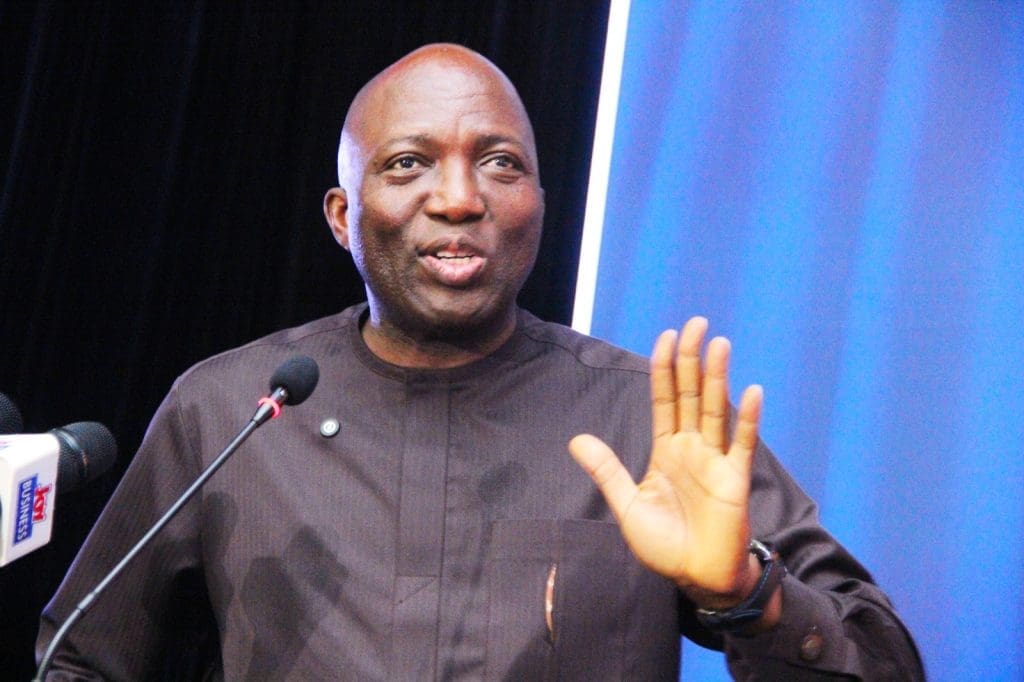
Shaibu Haruna
Chief Executive Officer (CEO) of MobileMoney FinTech Limited (MMFL), Shaibu Haruna, has identified artificial intelligence, open finance, embedded finance, digital assets and instant payment rails as five key innovation themes expected to shape Ghana’s FinTech industry over the next 12 to 24 months.
He said the emerging trends would not only transform how financial services were delivered but also deepen financial inclusion, improve consumer protection and create new opportunities for Ghanaians to participate in the digital economy.
Shaibu made the observation at a session with business editors in Accra on Friday, where he provided insights into global and Ghanaian fintech developments.
On artificial intelligence, he said the technology was increasingly being deployed by fraudsters, making it necessary for financial service providers to turn the same technology against fraudulent activities.
“I think AI against fraud. AI is working for fraud, but we can also flip it over in terms of using AI to manage real-time management of fraud and be very proactive in quickly addressing some of the fraud elements that come through,” he said.
He, however, said effective fraud prevention would require greater collaboration among financial institutions and technology platforms because fraudulent transactions often moved across different ecosystems.
“But it requires inter-organisational interplay to allow this to happen on a real-time basis because you can do a lot within your ecosystem, but the way it evolves is that you require others to have a central control system where platforms are talking to each other to understand their flows,” he said.
Shaibu said criminals could initiate fraud from one platform and move the proceeds through several other ecosystems, making real-time collaboration critical to detecting and stopping such activities.
On open finance, he said Ghana was currently focused largely on open banking but had the potential to expand the concept to cover a wider range of financial and non-financial data.
“I think in Ghana we’re talking about open banking, but there’s a potential to scale up to open finance. The difference is really about the extent to which data can be harvested from multiple sources, even outside of the banking sector, including bills and et cetera,” he said.
He said consented data sharing could help financial technology companies develop products tailored to the needs of customers and improve their quality of life.
Shaibu also identified embedded finance as a major opportunity for increasing the adoption of financial services and improving financial health.
“Embedded finance is going to be how we solve for adoption and deepening financial health. Embedded finance is about ensuring that a lot of the payments, credits, decision, insurance offerings are embedded in the daily transaction needs of our customers,” he said.
He cited a situation where a customer shopping at a retail outlet could automatically allocate a small portion of every purchase towards an investment or insurance product.
“So imagine a world where you go to a Melcom shop to buy, and you are able to decide that for every thousand cedis that you buy from Melcom, one cedi of it or two cedis of it goes into your investment. And maybe one cedi goes into an insurance offering,” he said.
According to him, such a model could make insurance and investment products more accessible by removing the pain associated with making separate payments.
On digital assets, Shaibu described virtual assets as one of the biggest FinTech developments of the year, saying regulatory frameworks were gradually providing the necessary safeguards for their adoption.
“This is an exciting area. This is an area which has moved. Regulation is catching up and providing the guardrails for us to be able to do it safely and with greater confidence,” he said.
He said stablecoins could potentially serve as a medium of exchange, while tokenisation could make investment in assets such as gold more accessible to ordinary Ghanaians.
Shaibu noted that although Ghana was one of the world’s major gold producers, access to gold investment remained difficult for many individuals.
He said tokenisation could allow people to purchase fractional interests in gold with relatively small amounts of money.
“If you fractionalise gold and say you have like 10 Ghana cedi gold, somebody can decide to buy 10 cedis every day as their fraction that they want to invest in gold. And over time, they’ll be able to build their gold assets,” he said.
Giving an insight into the growth of mobile money, Shaibu said the global industry crossed the $2 trillion mark in transaction value in 2025, representing a 23% increase over 2024.
Registered mobile money accounts worldwide reached 2.3 billion, with 268 million new accounts added during the year. Active accounts within a 30-day period also rose by 15% to 593 million.
He said the stronger growth in transaction value compared with transaction volume suggested that mobile wallets were increasingly becoming integral to people’s financial lives rather than simply serving as places to hold money.
In Ghana, he said Bank of Ghana data for August 2026 showed the increasing importance of mobile money as the country’s main payment rail.
The data showed that mobile money transactions had reached GH¢3.37 trillion, while transaction volume in August alone hit 1.05 billion, crossing the one-billion mark for the first time.
Registered mobile money accounts stood at 85.8 million, with 26.4 million classified as active accounts.
The number of active agents also increased to 594,000, from 433,000 a year earlier.
The float held in mobile money accounts similarly rose to GH¢39.8 billion from GH¢28.4 billion over the same period.
Despite the growth, Shaibu said the industry continued to face challenges, including account inactivity, fraud, transaction taxes, cross-border data restrictions and the persistent gender gap in financial inclusion.
He said almost 75% of mobile money accounts globally were not used in a given month, making sustained customer engagement a major industry challenge.
He also pointed to interoperability and cross-border harmonisation, digital public infrastructure, stronger consumer protection and fraud controls as key areas that would determine the next phase of industry growth.
According to him, regulation was increasingly playing a constructive role, with more than 60% of providers indicating that interoperability and consumer protection rules had supported their operations.
Shaibu said the convergence of technology, regulation and collaboration among financial service providers would be critical to ensuring that Ghana benefited fully from the next phase of fintech development.
By DANIEL NONOR, Accra