Cocoa
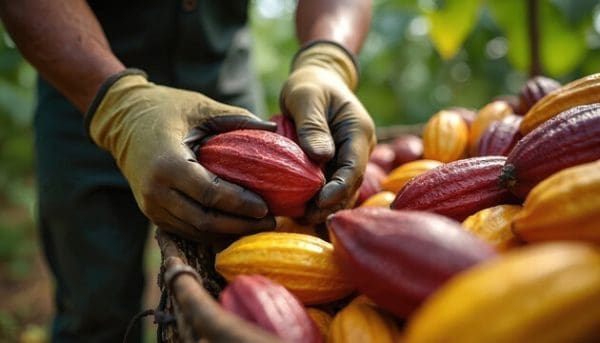
The Governor of the Bank of Ghana (BoG), Dr Johnson Pandit Asiama, has announced that cocoa purchases for the 2026/2027 crop season will be financed through $1 billion mobilised from the domestic bond market, marking a significant shift in the country’s cocoa financing framework.
He explained that the approach forms part of broader efforts to strengthen Ghana’s cocoa financing system while reducing reliance on external borrowing and foreign lenders. According to him, the strategy is designed to deepen domestic capital markets, improve liquidity, and enhance the role of local investors in financing key sectors of the economy.
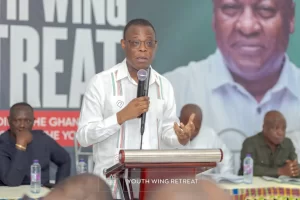
Dr Asiama made the disclosure while opening the 130th meeting of the Monetary Policy Committee (MPC) of the Bank of Ghana, held at the central bank’s headquarters, Bank Square, in Accra.
He noted that the new financing structure would represent a major transformation in how cocoa purchases are funded, particularly as Ghana works to stabilise the sector following recent adjustments in farmgate cocoa prices earlier in 2026.
The Governor said the cocoa financing model would help reduce dependence on dollar-denominated funding, which has historically exposed the sector to exchange rate volatility and external financial shocks. Instead, the Bank of Ghana intends to mobilise domestic capital through instruments such as commercial paper and commercial notes, tapping into available liquidity within the local financial system.
“This is a significant shift to reduce reliance on dollar funding and foreign lenders,” Dr Asiama observed, underscoring the importance of building a more resilient and self-sustaining financing structure for one of Ghana’s most critical export commodities.
The initiative is also expected to strengthen Ghana’s domestic bond market by encouraging greater participation from institutional investors such as pension funds, insurance companies, and banks. The Governor indicated that renewed confidence in domestic debt instruments, following the successful resumption of treasury bond issuance earlier this year, provides a strong foundation for the cocoa financing programme.
Beyond sector-specific benefits, the model is expected to contribute to broader macroeconomic stability by improving the efficiency and depth of Ghana’s capital markets. It is also intended to support longer-term government debt management by diversifying funding sources and reducing exposure to external debt pressures.
The Governor emphasised that the new arrangement aligns with Ghana’s broader economic strategy of promoting price stability, sustainable farmer incomes, and improved fiscal coordination across key sectors.
He added that the cocoa financing model could serve as a benchmark for similar reforms in other commodity-dependent areas of the economy.
The Monetary Policy Committee meeting, now in its 130th session, serves as the Bank of Ghana’s highest decision-making body for monetary policy. The committee is responsible for setting the policy rate and managing money supply in order to achieve price stability and support economic growth.
The current session, which began yesterday, is expected to conclude on May 20, 2026. A press conference will subsequently be held to announce the committee’s decision on the policy rate, which currently stands at 14 per cent.
The committee comprises six members and is supported by advisors and key stakeholders, including the Presidential Advisor on the Economy, Seth Terkper, as well as representatives from the Ghana Association of Bankers (GAB) and the Association of Ghana Industries.
Dr Asiama also highlighted several external and domestic risks that could influence upcoming monetary policy decisions. Chief among them are rising global energy prices and persistent inflationary pressures.
He noted that ongoing geopolitical tensions in the Middle East have contributed to sustained increases in global crude oil prices, leading to higher fuel, transport, and consumer costs in Ghana. According to him, the combined effect of external commodity shocks and domestic energy supply challenges could complicate inflation control efforts and threaten recent macroeconomic gains.
“The committee would carefully assess measures needed to keep inflation expectations anchored while sustaining economic stability and credit growth within the economy,” he said.
While acknowledging that Ghana’s economic conditions have improved since the previous MPC meeting in March 2026, Dr Asiama cautioned that these gains are being tested by a deteriorating external environment driven largely by global geopolitical developments.
He explained that disruptions such as tensions around key global shipping routes have intensified oil price pressures, with inflationary spillovers affecting both advanced and emerging economies. These developments, he said, have introduced new complexities into monetary policy decision-making, requiring a careful balance between maintaining domestic stability and responding to external shocks.
On Ghana’s engagement with international financial partners, Dr Asiama stated that discussions with the International Monetary Fund (IMF) have continued following the conclusion of the sixth and final review under the Extended Credit Facility (ECF) programme in Accra last Friday.
He noted that the IMF acknowledged significant progress in macroeconomic stabilisation, including lower inflation, improved external reserves, stronger performance of the cedi, and enhanced debt sustainability indicators.
However, he cautioned that the global outlook remains uncertain, particularly due to ongoing geopolitical tensions that are expected to sustain pressure on energy, food, and fertiliser prices in the medium term.
Looking ahead, Dr Asiama said discussions have advanced on a proposed 36-month non-financing Policy Coordination Instrument (PCI), which is intended to strengthen policy credibility, reinforce reforms, and reduce dependence on IMF financing while increasing domestic ownership of Ghana’s economic programme.
He explained that the PCI represents a continuation of Ghana’s reform trajectory under the international financial architecture, preserving the signalling benefits of IMF engagement while strengthening fiscal discipline and policy credibility.
According to him, the instrument will incorporate commitments relating to the Bank of Ghana’s monetary policy framework, with improvements expected in transmission mechanisms, liquidity forecasting, and the maintenance of the inflation targeting regime. He added that the ongoing corridor reform discussions are aligned with the PCI’s monetary framework pillar.
Dr Asiama further noted that the PCI will also focus on strengthening the Bank of Ghana’s balance sheet over the medium term. This will involve limiting quasi-fiscal activities and improving transparency and oversight of programmes such as the Domestic Gold Purchase Programme (DGPP), ensuring greater accountability and financial discipline within the central bank’s operations.