
Galamsey, road works cause 74% of $20m fibre cuts
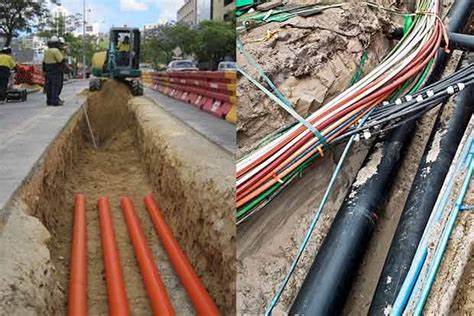
Fibre cuts
The Government and mobile network operators (MNOs) are expected to spend about US$20 million this year repairing damaged fibre infrastructure across Ghana, following a sharp increase in fibre cuts that have disrupted telecommunications services nationwide.
The country recorded 8,578 fibre cuts between January and August 2026, with the figure projected to reach about 9,000 by the end of the year if the current trend continues.
The Minister of Communications, Digital Technology and Innovations, Mr Samuel Nartey George, disclosed this at the Government’s Accountability Series in Accra, where he presented the Ministry’s performance for the January-to-August period and outlined measures being pursued to strengthen the resilience of Ghana’s telecommunications infrastructure.
He said the cost of repairing the damaged fibre had become a significant financial burden for telecommunications operators and was diverting resources that could otherwise be invested in expanding network capacity and improving connectivity.
“That’s money that without the fibre cut, we would have used to build new sites,” he said.
The Minister described fibre cuts as one of the most persistent causes of network degradation in Ghana, stressing that disruptions could occur even in areas where adequate telecommunications infrastructure and coverage existed.
“People complain, the network is bad here. It’s not because there is no service, but because the fibre has been cut,” he said.
Road construction biggest culprit
Mr George said road construction activities accounted for 49% of the 8,578 fibre cuts recorded so far this year, making them the single biggest source of damage to the country’s fibre infrastructure.
Illegal mining, popularly known as galamsey, accounted for another 25%, while private developers and other activities were responsible for the remaining 26%.
The figures, he said, underscored the need for stronger coordination between telecommunications operators, road agencies, contractors, developers and other entities whose activities involve excavation.
The Minister said the problem was particularly worrying because Ghana’s telecommunications market was shifting rapidly from one driven largely by voice services to one increasingly dependent on data.
He noted that smartphone penetration had increased from 27.5% a decade ago to 71.8% as of June 2026, creating significantly higher demand for reliable network capacity and uninterrupted data services.
17-hour outage on Winneba-Mankessim road
Mr George cited several incidents to demonstrate the impact of fibre damage on consumers and businesses.
One major incident occurred along the Winneba-Mankessim road, where ongoing road construction resulted in a fibre cut that caused a 17-hour service disruption, affecting communities along the route through to Cape Coast.
In another instance, fibre damage caused a 19-hour outage in an affected area.
The Minister also disclosed that three separate fibre routes carrying telecommunications capacity to northern Ghana were cut within a two-hour period on the same day, resulting in widespread degradation of telecommunications services in the northern part of the country.
The incidents, he said, illustrated the vulnerability of the country’s communications infrastructure and the extent to which a single excavation-related incident could affect large numbers of users.
NCA to coordinate road works and fibre protection
To tackle the recurring problem, Mr George said the Government was developing a stronger coordination framework through the National Communications Authority (NCA) to ensure that road agencies and contractors consult telecommunications operators before excavation works begin.
Under the proposed arrangement, contractors would be provided with clear points of contact through which they could obtain information on the location of underground fibre infrastructure before commencing construction.
“We want to have this coordination framework through the NCA and the Ghana Highways Authority… to ensure that whenever a contractor is deployed to a site, he knows the call points to go to, to be advised on where fibre exists,” he said.
The objective is to reduce accidental damage by ensuring that contractors know where fibre infrastructure is located before heavy machinery and excavation equipment are deployed.
Fibre chambers planned for road projects
The Ministry of Communications, Digital Technology and Innovations and the Ministry of Roads and Highways have also prepared a joint policy proposal for Cabinet consideration that would require road construction projects to incorporate dedicated fibre chambers alongside roads.
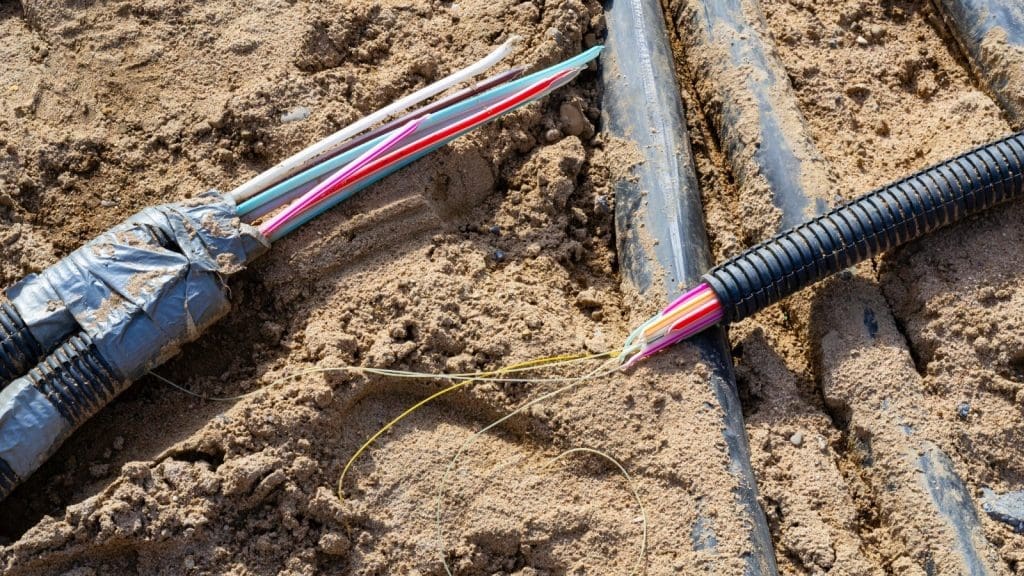
The chambers are expected to make fibre infrastructure easier to identify, protect, access and relocate during road construction and other works.
Mr George said the Government intended to make the incorporation of such infrastructure part of road construction planning rather than waiting until fibre cables were damaged before taking corrective action.
“We will have a policy that allows for all road construction work to carry a fibre chamber alongside,” he said.
The Government also plans to introduce enforceable penalties against contractors and other parties who fail to comply with the proposed framework.
The Minister said the combination of better coordination, clearer identification of fibre routes, dedicated infrastructure and enforcement would help reduce the frequency and cost of fibre damage.
$20m repair bill threatens network expansion
The projected US$20 million repair bill represents more than a cost of restoring services after individual incidents. Mr George said the repeated expenditure was also reducing the funds available to operators for network expansion.
He said money spent repeatedly repairing infrastructure damaged by construction activities, illegal mining and other excavation-related activities could instead have been used to establish new telecommunications sites and increase network capacity.
This has become particularly significant as demand for mobile data continues to grow and more Ghanaians depend on digital services for business, education, financial transactions, entertainment and communication.
The Minister said the Government therefore wanted network expansion to be accompanied by measures to protect existing infrastructure.
Power instability, flooding also disrupt networks
Fibre cuts are not the only threat to network reliability.
Mr George identified instability in the national power grid and flooding as additional causes of telecommunications disruptions.
He explained that several telecommunications sites depend on the national electricity grid, with generators and batteries serving as backup power sources when grid supply is interrupted.
Flooding can also damage telecommunications infrastructure and disrupt access to sites, further complicating efforts by operators to maintain uninterrupted services.
He said the Government was therefore pursuing a broader network resilience strategy in collaboration with the NCA, the Ghana Investment Fund for Electronic Communications (GIFEC) and mobile network operators.
Operators step up investment
The Government’s efforts to improve network resilience are also being complemented by increased investment from telecommunications operators.
Mr George said MTN Ghana had committed more than US$1.1 billion over the next three years, including about US$380 million in 2026, towards network expansion, deployment of new sites and support for the rollout of 5G.
“MTN alone is doing 800 new sites,” he stressed.
He said the investment was expected to significantly increase network capacity and coverage while supporting the country’s transition towards more advanced digital services.
The Minister also disclosed that Telecel Ghana had increased its capital investment by 60% between 2023 and 2026, compared with the preceding four-year period.
“As we speak, in fact, 1,890 have been completed out of a planned 2,698 for the year. We’ve seen 60% more investment in capital,” he added.
Rural networks targeted for upgrades
The Government is also focusing on rural areas, where ageing telecommunications infrastructure remains a challenge.
Mr George said the Ministry was working with the NCA, GIFEC and MNOs to upgrade 2G and 3G infrastructure in rural communities to 4G-capable networks.
The initiative is intended to extend reliable broadband connectivity to communities that have historically had limited access to high-speed digital services.
He said improved rural connectivity would support a range of activities, including mobile money, digital agriculture, e-learning, telemedicine and other digital services.
The Minister stressed that expanding access alone would not be sufficient if the underlying infrastructure remained vulnerable to repeated damage and outages.
‘We cannot fix a decade of neglect in one year’
Mr George acknowledged that the challenges confronting Ghana’s telecommunications infrastructure were the result of years of accumulated deficiencies and could not be resolved immediately.
“We cannot fix a decade of neglect in one year,” he said.
He, however, maintained that the Government was taking deliberate steps to improve network capacity, coverage and resilience.
The planned fibre-protection framework, dedicated fibre chambers for road projects, stronger coordination between contractors and network operators, enforceable penalties, increased private-sector investment and upgrades to ageing rural infrastructure are expected to form part of a broader effort to ensure that Ghana’s growing dependence on digital services is matched by reliable telecommunications infrastructure.
With 8,578 fibre cuts already recorded in the first eight months of 2026 and the annual figure potentially approaching 9,000, the Government faces increasing pressure to address the problem before repair costs and service disruptions further undermine efforts to expand Ghana’s digital economy.