World Bank pledges $75m to revive Ghana cocoa sector

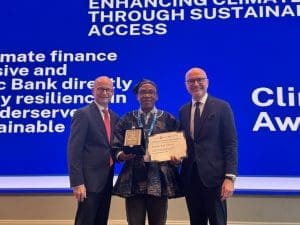
Dr. Ashwini Sebastian of the World Bank
The World Bank has committed $75 million to support the restoration of cocoa farms across Ghana, in a move aimed at revitalising one of the country’s most important agricultural sectors.
The funding is expected to help rehabilitate ageing and diseased cocoa farms, improve productivity, and enhance the livelihoods of thousands of farmers who depend on cocoa for income.
The World Bank announced that its $75 million contribution under the West Africa Food Systems Resilience Programme (FSRP) will support Ghana in restoring farmlands, improving yields, and strengthening farmer incomes, while promoting long-term sustainability in the cocoa sector.
At a World Bank Civil Society Organisation dialogue on food security in Accra, Agricultural Economist Dr Ashwini Sebastian explained that the programme is part of a wider effort to build resilient food systems across West Africa.
She said “The West Africa Food Systems Resilience Programme, financed by the World Bank and implemented by the Government of Ghana, has enabled us to leverage grant financing.
“We have received seed funding from the Norwegian government, which we are deploying through the programme to support key agricultural value chains.”
Beyond cocoa, Dr Sebastian said the programme supports the development of seed systems and tests improved crop varieties that can withstand dry-season conditions, with a particular focus on northern Ghana.
“We are piloting seed varieties that can be used during the dry season, especially in the north, to improve productivity and resilience,” she added.
The initiative also includes distributing cashew seedlings to farmers, aimed at diversifying incomes and strengthening rural livelihoods. On cocoa, Dr Sebastian highlighted the programme as a flagship intervention:
“We are putting in almost 75 million dollars to rehabilitate 25,000 hectares of cocoa farms that have been affected by disease. Our immediate target is to restore about 5,000 hectares by July,” she noted.
The rehabilitation effort will replace unproductive and diseased trees with high-yielding, disease-resistant varieties and introduce improved farm management practices.
With Ghana’s cocoa sector grappling with ageing trees, swollen shoot disease, and climate variability, experts stress that such large-scale interventions are vital to reversing declining production and securing Ghana’s position among the world’s top cocoa producers.
Ghana, one of the world’s leading cocoa producers, has in recent years faced declining yields due to factors such as climate change, pests, and soil degradation.