When foreign courts tell us the truth we refuse to hear
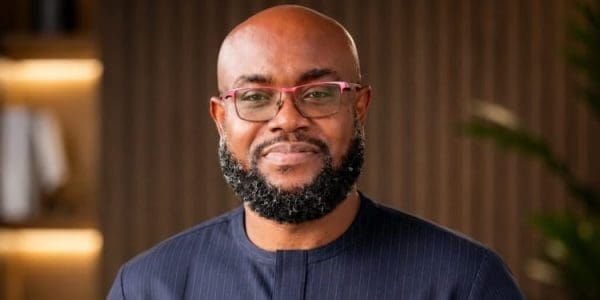
JOSEPH BERNARD ALLOTEY
I have been thinking about the news that dominated Ghana this week. Not because corruption allegations involving public officials are new. Sadly, they are not.
What caught my attention was something else entirely. It was our reaction.
According to the United States Department of Justice, a former Ghanaian public official was convicted by a U.S. federal jury for his role in a scheme to bribe Ghanaian government officials in connection with a proposed power plant project. Prosecutors said the conspiracy involved more than US$1 million in bribes intended to influence the approval of the project.
Whether every Ghanaian mentioned in those proceedings will ultimately face legal consequences at home is a matter for due process. That is for our institutions to determine.
But that is not the point I wish to make.
What fascinated me was the silence. Not silence because people were indifferent.
Quite the opposite. People immediately began examining the timelines.
Who was the Minister responsible then? Who served on Parliament’s Energy Committee?
Who occupied key positions within the ministry? Who could these unnamed officials be? Notice what was missing.
There were no loud cries of political persecution. There were no demonstrations alleging that the investigation was intended to silence political opponents.
There were no claims that this was a witch hunt orchestrated to damage one political party.
The public, almost instinctively, accepted that if the allegations had emerged from an American courtroom, they deserved serious attention.
Now ask yourself a simple question. What if exactly the same allegations had been announced by a Ghanaian investigative agency?
Would we have reacted the same way? I doubt it.
Before anyone had read a single page of evidence, the country would already be divided. One side would insist it was selective justice.
The other would celebrate it as accountability. Television studios would fill with political spokespersons.
Radio discussions would descend into partisan arguments.
Social media would explode with accusations of political persecution.
The evidence would become secondary. Politics would become the story. And that is our tragedy.
Somewhere along the way, we have become a nation that judges investigations not by the strength of the evidence but by the identity of the investigator. This is not the first time.
When the Airbus bribery scandal came to light, it was not a Ghanaian investigation that first exposed the allegations.
It was investigations by authorities in the United Kingdom and the United States that uncovered the bribery scheme involving several countries, including Ghana.
Those findings eventually prompted investigations in Ghana and the involvement of the Office of the Special Prosecutor.
Again, foreign investigators forced us to confront questions that should have been asked here long before they were asked elsewhere.
That pattern should disturb every Ghanaian.
On 11 July 2009, speaking before Ghana’s Parliament during his historic visit to Accra, United States President Barack Obama made a statement that has since become one of the defining quotations on governance in Africa. He said:
“Africa doesn’t need strongmen, it needs strong institutions.”
Those words have endured because they speak to a timeless truth.
We often quote them as though institution-building is simply about passing laws, creating offices or appointing officials.
It is not.
Institutions become strong only when citizens are prepared to trust lawful processes, demand evidence, respect due process and allow investigations to run their course without immediately reducing every allegation to partisan warfare.
That is where we continue to fail.
Interestingly, this is one issue on which our political leaders have consistently spoken with one voice, even if our politics has often failed to reflect it.
On 9 December 2021, at the National Anti-Corruption Conference held to mark International Anti-Corruption Day, then-President Nana Addo Dankwa Akufo-Addo declared:
“I will not shield any public official found to be engaged in acts of corruption or malfeasance.”
Years later, President John Dramani Mahama, speaking about his government’s anti-corruption agenda, argued that the fight against corruption is not merely about punishing offenders but also about recovering what rightfully belongs to the people of Ghana.
Two presidents. Two political traditions. One message. Corruption is a national enemy.
Yet somewhere between those speeches and our public discourse, the message becomes distorted.
We stop listening to the evidence and start counting political jerseys.
Corruption has become one of the few truly bipartisan institutions in Ghana. It survives every election.
It flourishes under different governments. It changes faces but rarely changes habits.
Yet instead of confronting corruption together, we defend those we politically identify with and condemn those we oppose.
The result is predictable. Corruption remains
Governments change.
The excuses simply change with them.
The saddest part is this: many Ghanaians appear to have more confidence in the findings of a foreign prosecutor than in the findings of their own institutions.
Think about what that says about us. Not just about our institutions, but about ourselves.
Because institutions do not become credible by magic.
They become credible when citizens insist on integrity, reject selective outrage and refuse to measure justice by political convenience.
Our fight against corruption will never be won if every investigation is viewed through party colours.
Justice cannot wear red. Justice cannot wear green.
Justice cannot wear blue.
Justice has only one colour—the colour of truth.
The day we stop asking, “Who is being investigated?” and start asking, “What does the evidence show?”
Is the day Ghana will finally begin to treat corruption not as a political weapon, but as a national enemy.
Until then, we will continue to wait for foreign courts to tell us truths we should have had the courage to uncover ourselves.
By JOSEPH BERNARD ALLOTEY