
Tomato prices surge in Accra after Burkina Faso terror attack
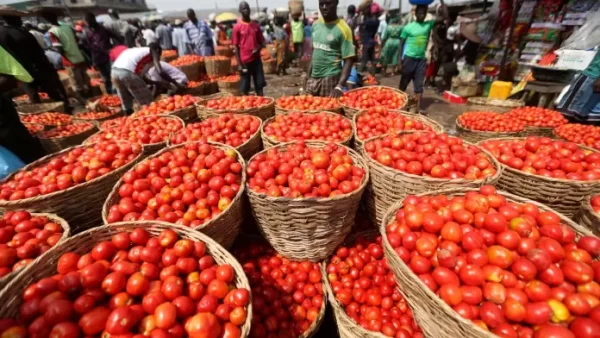
Tomatoes
Tomato prices across major markets in Accra have surged sharply following a recent militant attack in neighbouring Burkina Faso, a development traders say has disrupted supply routes into Ghana and strained already tight food supply chains.
A visit by Newscenta to the Agbogbloshie, Madina and Kaneshie markets, where traders said the price of a crate of fresh tomatoes has doubled within days after the militant attack in Burkina Faso, forcing retailers and consumers to adjust their purchasing habits.
According to market women, a large share of tomatoes sold in southern Ghana is imported from Burkina Faso, particularly during periods when local production drops.
The recent security incident in the northern part of the neighbouring country reportedly affected transport movement along major highways used by cargo trucks heading toward Ghana’s border.
Retailers report that crates which previously sold for between GH¢350 and GH¢450 are now going for GH¢800 to over GH¢1200, depending on size and quality, forcing many traders to cut quantities and consumers to rethink daily meals.
Supply shock from Burkina Faso
A large portion of tomatoes sold — especially during certain seasons — is transported by road from Burkina Faso, where farmers produce in bulk and export to coastal markets.
However, transporters say recent violence in parts of the country has affected farming communities and, more critically, the major road corridors used by cargo trucks heading toward Ghana.
According to tomato importers at the Agbogbloshie onion and vegetable market, several transporters have either suspended trips or delayed movement due to safety fears.
“Drivers are afraid to travel at night, and some routes are completely avoided now,” a wholesale trader explained. “Even when trucks come, they carry less produce because they don’t want to risk staying too long on the road.”
The disruption has created a classic supply shortage in Accra, where daily demand remains high from households, chop bars, and restaurants.
Traders and consumers feeling the pressure
Retail sellers say the price hikes are already affecting business volumes. Many customers now buy tomatoes in smaller quantities or switch to substitutes such as canned tomato paste.
“A customer who used to buy GH¢20 now buys GH¢5 or GH¢10,” a Makola market vendor said. “Some even complain and walk away.”
Food vendors, particularly waakye and stew sellers, say their operating costs have increased almost overnight. Some have raised food prices, while others have reduced portion sizes to avoid losing customers.
“We cannot cook stew without tomatoes,” a food vendor at Kaneshie noted. “If the crate price doubles, we either increase the food price or we run at a loss.”
Inflation concerns
The sudden rise in tomato prices is expected to feed into broader food inflation because tomatoes are a staple ingredient in most Ghanaian dishes, including soups, stews and jollof rice. Economists warn that persistent disruptions to cross-border agricultural trade could place further pressure on urban household budgets.
Food price increases have historically been sensitive to regional instability, particularly when supply routes from Sahelian countries are affected.
Calls for long-term solutions
Traders and farmer groups are urging government agencies to accelerate investment in irrigation, greenhouse cultivation and local processing factories to reduce dependence on imports. Stakeholders also want improved storage and cold-chain logistics to minimise spoilage and stabilise market availability.
For now, consumers in Accra are bracing for continued high prices as traders say supplies remain uncertain and transporters are still cautious about travelling through affected areas.
“If the trucks don’t come regularly, the price will stay high,” one importer said. “Everything depends on when the routes become safe again.”