
R. Kelly seeks Trump’s clemency to cut 31-year sentence
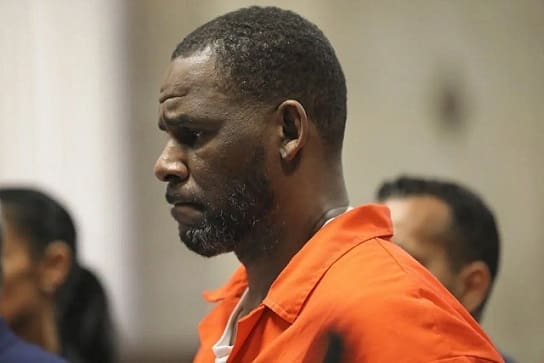
R. Kelly
R&B singer R. Kelly has formally appealed to United States President Donald Trump to commute his 31-year federal prison sentence after submitting an executive clemency request to the U.S. Department of Justice.
According to court records released this week by the Office of the Pardon Attorney and first reported by The Guardian, Kelly’s application is currently under review. The filing requests a commutation of his sentence rather than a full presidential pardon, meaning he is asking for a reduction in the time he must serve instead of having his convictions erased.
Kelly, whose full name is Robert Sylvester Kelly, is serving a lengthy prison term following convictions in two separate federal cases involving sexual abuse-related crimes.
The singer was first convicted in 2021 on federal racketeering charges after prosecutors argued that he operated a criminal enterprise that recruited women and underage girls for illegal sexual activity and the production of child sexual abuse material. The high-profile trial attracted widespread attention and concluded with Kelly receiving a 30-year prison sentence.
The following year, Kelly was convicted again in a separate federal case. A jury found him guilty on three counts related to child sexual abuse images and three counts of child enticement. Although the court imposed an additional 20-year prison sentence, all but one year of that sentence was ordered to run concurrently with the earlier punishment. As a result, Kelly is currently serving a combined federal sentence of 31 years.
The 59-year-old musician is incarcerated at a federal correctional facility in North Carolina. Based on current prison records, he is not expected to be released until January 2046 unless his sentence is reduced or otherwise altered through legal or executive action.
Kelly’s latest appeal represents another effort by his legal team to secure his early release. His attorney, Beau Brindley, has been urging President Trump to grant executive clemency for more than a year, arguing that Kelly’s circumstances warrant intervention.
In 2025, Brindley filed an emergency motion requesting that Kelly be transferred from prison to home detention. The motion alleged that prison officials had conspired with a terminally ill inmate to kill the singer in exchange for an early release. The allegations drew significant media attention, although they were strongly disputed and were never accepted by the court as grounds for relief.
At the time, Brindley publicly appealed for intervention, saying: “The only thing that can protect Mr Kelly behind the prison walls now is the fact that now the world is watching. And we will call on the courts and President Trump to help put an end to the corruption that now threatens Mr Kelly’s life.”
Despite the claims made in the emergency filing, the court ultimately denied the request, leaving Kelly to continue serving his sentence in federal custody.
The current clemency application differs from that earlier legal effort. Rather than seeking release through the courts, Kelly is asking for executive action from the President through the constitutional clemency process administered by the Department of Justice. A commutation, if granted, would reduce the length of his prison sentence but would not overturn his convictions or restore the rights that were lost as a result of those convictions.
Applications for executive clemency are typically reviewed by the Office of the Pardon Attorney before recommendations are made to the President. There is no fixed timeline for such requests, and approval is entirely at the discretion of the President.
Kelly has consistently denied the allegations that led to his convictions and has maintained his innocence throughout the legal proceedings. His legal team has continued to pursue various avenues to challenge his imprisonment while also seeking executive relief.
For now, however, Kelly remains in federal prison in North Carolina as his request for a presidential commutation continues to be reviewed. Whether President Trump will act on the application remains uncertain, and no decision has yet been announced by the White House or the Department of Justice.