
Poor facilities threaten quality of TVET training
Technical and Vocational Education and Training
Technical and Vocational Education and Training (TVET) plays a significant role in Ghana’s development agenda. Ghana stands at a critical point where it must fully utilise these opportunities for economic development and transformation.
Each year, thousands of young people complete Junior High School and Senior High School with hopes of acquiring knowledge, skills and qualifications that will enable them to secure meaningful employment and contribute to society.
Yet, for many young people, the pathway from education to decent work remains difficult and, at times, unattainable.
Technical and Vocational Education and Training (TVET) is one of the most important avenues through which Ghana can address this challenge.
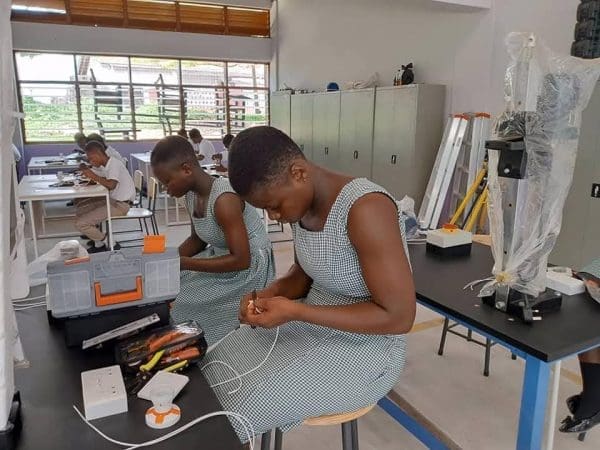
It equips learners with practical skills in areas such as electrical installation, welding, automobile mechanics, carpentry, fashion design, construction, agriculture, plumbing, IT and manufacturing. These skills are essential for building homes, maintaining industries, producing goods and creating employment.
Despite the numerous importance of TVET, concerns about inadequate infrastructure, insufficient equipment, overcrowded classrooms and poor learning environments continue to affect parts of Ghana’s TVET system.
The situation in many TVET institutions is dire and demands a second look. The concern is not to condemn these institutions, nor to disregard the efforts of teachers and administrators, but rather to ask whether Ghana is providing the conditions necessary for these institutions to thrive and fulfil their national mandate.
A country that wants skilled workers, industrial growth and technological advancement must be prepared to invest in the institutions that produce them.
Current state of our TVET institutions
A recent visit to some TVET schools shows that many of them are in a deplorable and shambolic state.
The 2026 Ghana TVET report identifies inadequate and fragmented financing, insufficient infrastructure and equipment, capacity gaps among facilitators, weak industry linkages and inadequate learner-support systems.
Infrastructure remains a significant challenge, as some institutions still lack sufficient classrooms, modern workshops and support facilities, while others operate with temporary or unfinished structures and inadequate water, sanitation and hygiene facilities.
The report notes that delays in completing infrastructure projects have been associated with funding constraints.
Reports by UNICEF and other scholars
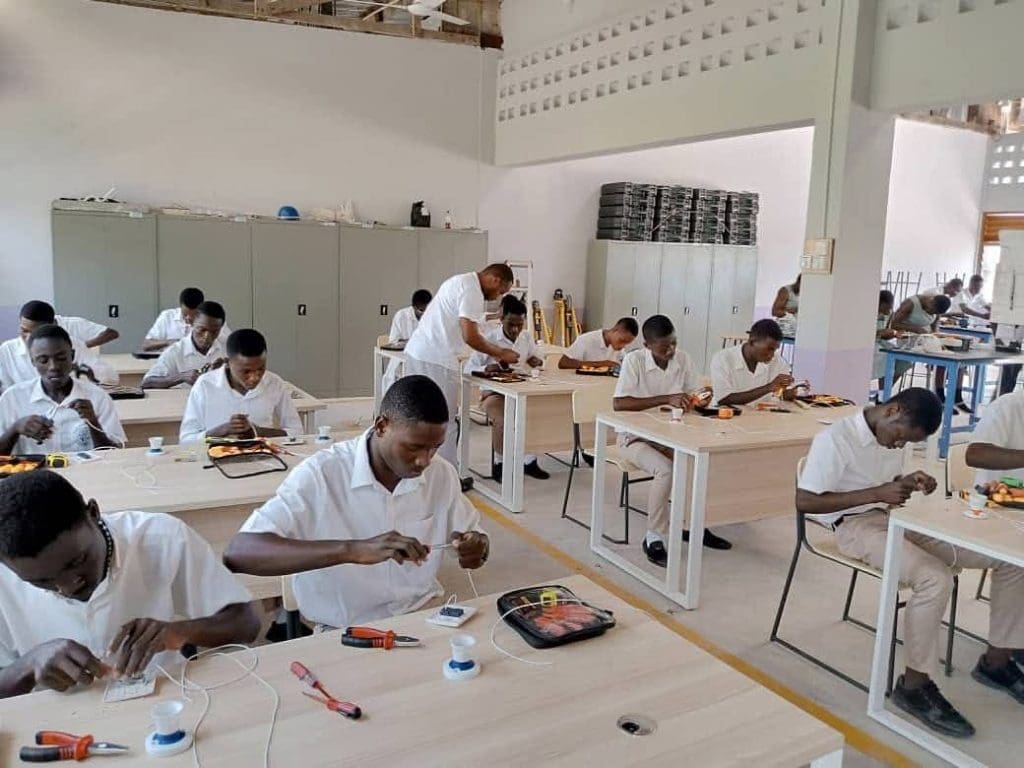
A 2025 study conducted by UNICEF and the Ghana TVET Service in the Ashanti Region provides concrete evidence: only 24 per cent of the institutions surveyed were delivering Competency-Based Training exclusively, while inadequate infrastructure, high implementation costs and shortages of qualified facilitators were identified as persistent barriers.
Weak connections between some institutions and industry constitute another challenge, as limited partnerships may reduce students’ access to workplace experience, internships, apprenticeships and exposure to current industrial practices.
The 2026 CTVET report specifically identifies weak industry linkages, limited workplace experience and learning opportunities as constraints to aligning training with labour market requirements.
Digitalisation is also a challenge, particularly where institutions have inadequate computers, internet connectivity, software and other digital learning resources, even though modern technical occupations increasingly require digital competencies.
The report examined challenges involving skills development and the alignment between training and labour market needs.
A study by Kemevor and Kassah on technical and vocational education in Ghana’s Volta Region also reported inadequate institutional facilities, large class sizes, insufficient training resources and poor infrastructure.
The study described how these conditions can make practical demonstrations difficult and affect the acquisition of technical skills.
The findings raise significant questions about the learning environment in some institutions.
In some institutions, students may learn in buildings requiring rehabilitation, with inadequate ventilation, insufficient lighting and limited space for practical activities.
Workshops that should serve as centres of innovation may lack the facilities needed for effective instruction.
A technical student cannot acquire adequate practical competence if the workshop environment does not support regular hands-on learning.
A student studying welding and fabrication requires an appropriate workshop, welding equipment, protective gear and suitable materials.
If the institution lacks these resources, the student tends to receive more theoretical instruction than practical training. This defeats one of the central purposes of TVET.
Students may also have limited opportunities to practise. Teachers find it difficult to supervise every learner, and practical demonstrations become less effective.
Available tools may not be sufficient for all students, while safety supervision may become more challenging.
Consider a workshop with 20 functional machines serving 80 students.
Unless the institution has an effective rotation and practice arrangement, students may spend considerable time waiting instead of developing their skills.
The question is not whether more students should be admitted, but whether infrastructure and equipment should expand alongside enrolment.
Understanding the importance of TVET to Ghana’s development
Technical and Vocational Education and Training is an educational system that equips individuals with practical, technical and occupational skills for employment, entrepreneurship and further education.
Unlike formal education, which focuses primarily on theoretical knowledge, TVET places considerable emphasis on learning by doing — that is, hands-on learning.
A student studying electrical installation, for instance, is expected not only to understand electrical principles but also to acquire the practical competence required to work safely and effectively.
Similarly, a student studying automobile mechanics should be able to understand vehicle systems and develop the skills needed to diagnose and repair faulty vehicles.
TVET produces skilled manpower. Ghana requires skilled workers to support its construction, manufacturing, transport, agriculture, energy and service sectors.
Carpenters, electricians, plumbers, welders, mechanics and technicians all contribute to the functioning of the economy.
Without a sufficient supply of competent technical workers, industries may struggle to maintain equipment, construct infrastructure, expand production and even remain profitable.
TVET promotes employment and entrepreneurship. A well-trained graduate can use acquired skills to seek employment or establish a small business.
A graduate of a catering programme may establish a food service business, while an electrical installation graduate may work in construction or provide electrical services. This makes TVET an important pathway for young people who wish to become economically active and independent.
TVET supports industrialisation. Ghana’s ambition to develop local manufacturing and reduce dependence on imported goods requires people with practical technical abilities.
Industrial development depends on workers who can operate machinery, maintain production systems, fabricate components and solve technical problems.
Therefore, the condition of Ghana’s technical institutions should be treated as an urgent economic concern, not merely an educational matter.
Outdated equipment and training content
The world of work is changing rapidly. Modern industries depend on digital technologies, automation, computer-aided design, renewable energy systems and advanced machinery.
If TVET institutions continue to rely heavily on obsolete equipment, graduates may find it difficult to adapt to contemporary workplaces.
A student trained only on outdated automobile technology may require additional training before working with modern vehicle diagnostic systems.
Similarly, a student studying electrical engineering needs exposure to current technologies and safety standards. The challenge is therefore not merely to provide equipment, but to ensure that the equipment reflects the needs of the labour market.
Ghana’s TVET institutions should prioritise ICT infrastructure, computer laboratories, multimedia facilities and partnerships with local businesses.
These priorities show that the future of TVET extends beyond traditional workshops.
Modern technical education should prepare students for an economy in which digital skills, technical competence and industry collaboration are increasingly important.
A student in the construction industry should have opportunities to learn modern building methods, while a student in manufacturing should encounter appropriate production technologies, and a student in IT should have access to computers and relevant learning resources.
The absence of such facilities may reduce the relevance of training to the world of work.
Key areas that need urgent attention
The condition and adequacy of classrooms are important for effective teaching and learning in Ghanaian TVET institutions.
Classrooms should be structurally sound, spacious, well-lit and properly ventilated. Overcrowded classrooms can make it difficult for teachers to manage students and for learners to participate effectively.
In some TVET institutions, inadequate classroom space results in large numbers of students sharing limited facilities.
Poor roofing, damaged floors, broken windows and insufficient furniture can create an uncomfortable learning environment.
Adequate ventilation is particularly important because students spend long hours in classrooms and require sufficient airflow for concentration and comfort.
Workshops – space, safety and functionality
Workshops are at the heart of TVET education. Students need practical training to develop occupational skills.
Workshops for areas such as welding and fabrication, automotive engineering, electrical installation, carpentry, plumbing, fashion design and building construction should provide sufficient working space for students and teachers.
Safety is essential because practical training may involve machinery, electricity, heat, sharp tools and other hazards.
Workshops should therefore have appropriate safety equipment, clearly marked working areas, adequate lighting and ventilation, emergency exits and fire-safety facilities.
Equipment – Availability, condition and relevance
TVET depends heavily on practical equipment. Students cannot acquire adequate occupational competencies when institutions lack the necessary tools and machinery.
Equipment should also reflect current industry practices and technological developments.
An automotive engineering department should have appropriate diagnostic equipment, while welding students should have access to relevant welding machines and safety equipment.
Where equipment is obsolete, damaged or insufficient, students may receive more theoretical than practical training.
Sanitation – Toilets, water and waste management
Good sanitation is necessary for the health, dignity and wellbeing of students and staff in TVET institutions. Schools should have sufficient, clean and functional toilet facilities for both male and female students, together with reliable access to safe water.
Waste management is important in workshops where activities can generate metal scraps, sawdust, used oils, chemicals and other waste materials. Poor waste disposal can create health and environmental risks.
Accommodation – Dormitory condition and capacity
For TVET institutions that provide boarding facilities, the quality and capacity of dormitories can significantly affect students’ welfare and learning.
Dormitories should provide safe, clean, adequately ventilated and sufficiently spacious accommodation.
Overcrowding can create challenges relating to privacy, hygiene, security and student wellbeing.
Dormitories should also have adequate beds, mattresses, lighting, ventilation, sanitation facilities and appropriate security arrangements.
Computers – Internet and digital learning facilities
Digital facilities are increasingly important in modern TVET because many occupations now require students to use computers, digital systems and technology-based equipment.
TVET institutions should therefore provide adequate computers, reliable internet connectivity and digital learning resources. Students can use computers and internet facilities for research, computer-aided design, simulations, online learning and accessing technical information.
Limited access to computers or unreliable internet connectivity can reduce students’ opportunities to develop digital competencies required in contemporary workplaces.
Staff numbers and qualifications of instructors
Staffing is a critical component of effective Technical and Vocational Education and Training.
The quality of training students receive depends greatly on the number, qualifications, experience and professional competence of instructors available in an institution.
TVET instructors are responsible for combining theoretical knowledge with practical skills and preparing students for employment, entrepreneurship and further technical education.
The number of instructors should be adequate in relation to the student population, programmes offered and practical training requirements.
When an institution has too few instructors, one instructor may have to teach a very large number of students, making it difficult to provide individual attention and supervise practical activities effectively.
For practical subjects, inadequate staffing can create safety concerns where one instructor may not be able to properly monitor many students while they operate machines, tools and equipment.
These and many more issues surrounding TVET need to be tackled to ensure its sustainability.
Ghana must take a second look at its TVET institutions — not merely at how many students are enrolled, but whether those students have the facilities, equipment and learning opportunities required to become competent professionals.
The country must move from declarations about the importance of TVET to sustained investment in infrastructure and human resources.
The future of Ghana’s economy depends not only on the number of young people educated but also on the quality of skills with which we equip them.
A modern, well-equipped and properly managed TVET system can help Ghana build a skilled workforce, support entrepreneurship, strengthen industry and reduce barriers to economic participation.
Let us therefore give TVET institutions the attention they deserve. Let us rebuild where necessary, modernise where possible and invest in the young people whose hands and minds will shape Ghana’s future.
A nation that neglects its technical institutions risks weakening the very foundation upon which its industrial and economic development depends.
By STEPHEN KOBINA NYAMEKYE