Mahama, Opoku-Agyemang lead nationwide clean-up
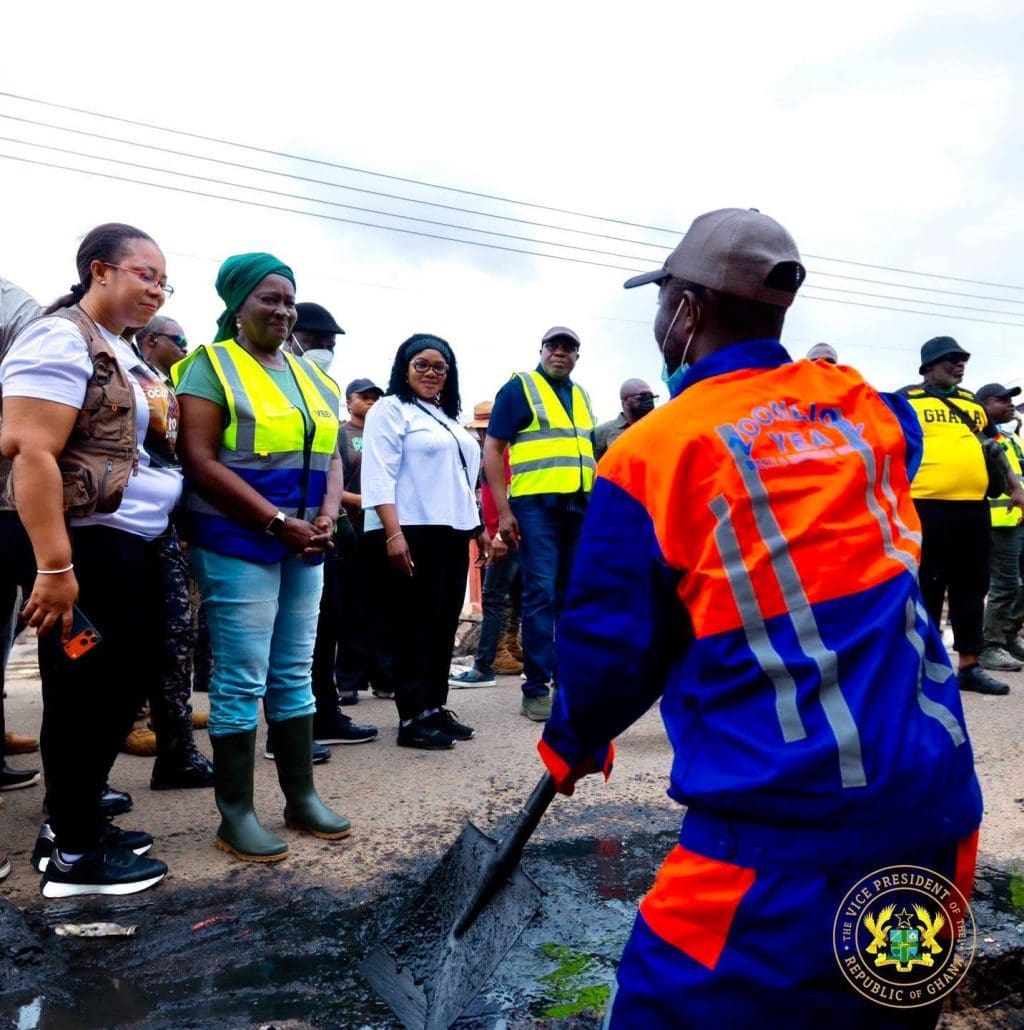
President John Dramani Mahama and Vice-President Professor Naana Jane Opoku-Agyemang on Friday and Saturday led thousands of Ghanaians in a nationwide clean-up exercise aimed at restoring sanitation, clearing choked drains and reducing the risk of future flooding following the devastating June 29 floods that claimed about 29 lives across the country.
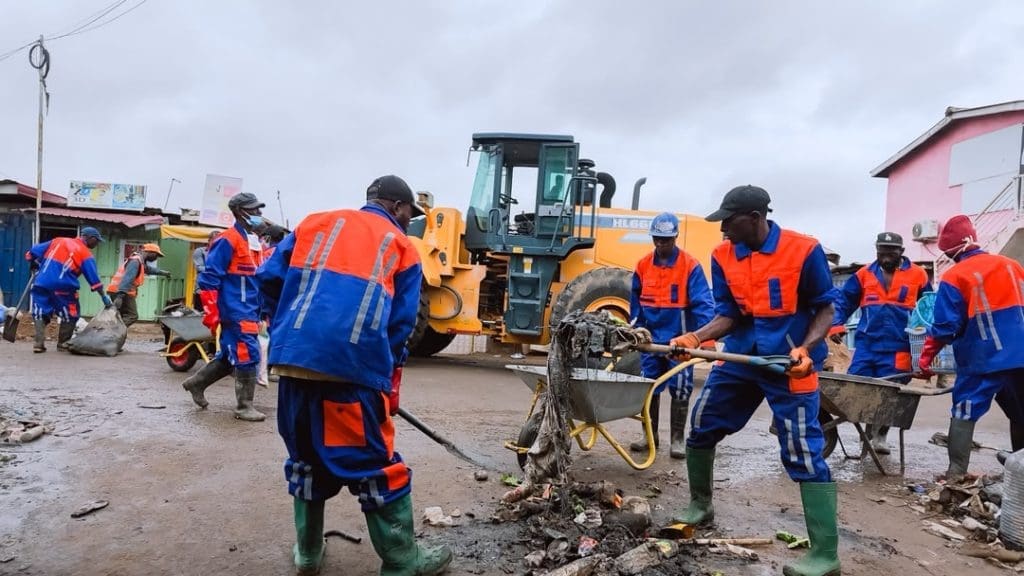
The two-day exercise, organised under the theme “Our Actions, Our Future: Cleaning Ghana after the Floods,” was simultaneously undertaken across seven flood-affected regions, bringing together Ministries, Departments and Agencies (MDAs), Metropolitan, Municipal and District Assemblies (MMDAs), security services, educational institutions, waste management companies, private organisations, sanitation workers and community volunteers.
The campaign, which commenced at 6am on Friday, focused on desilting drains, removing accumulated refuse and debris, disinfecting affected communities, restoring public spaces and improving the free flow of stormwater to minimise the impact of future heavy rains.
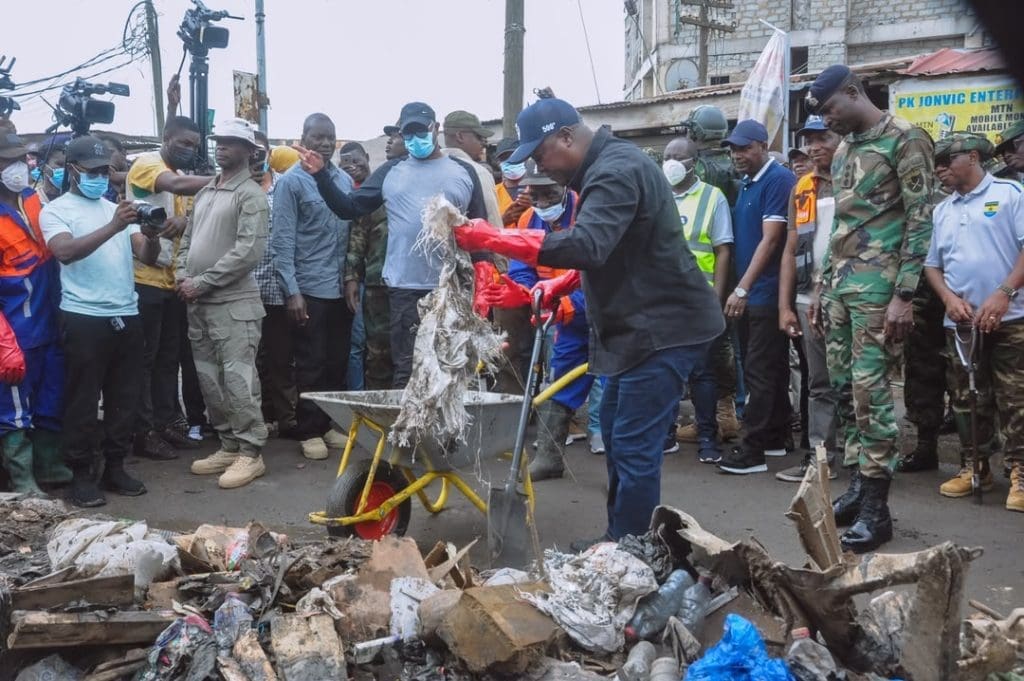
Leading the exercise in Accra, President Mahama joined residents and sanitation workers at Tse Addo before moving to Alajo, where he participated in the clearing of drains and waste-clogged waterways.
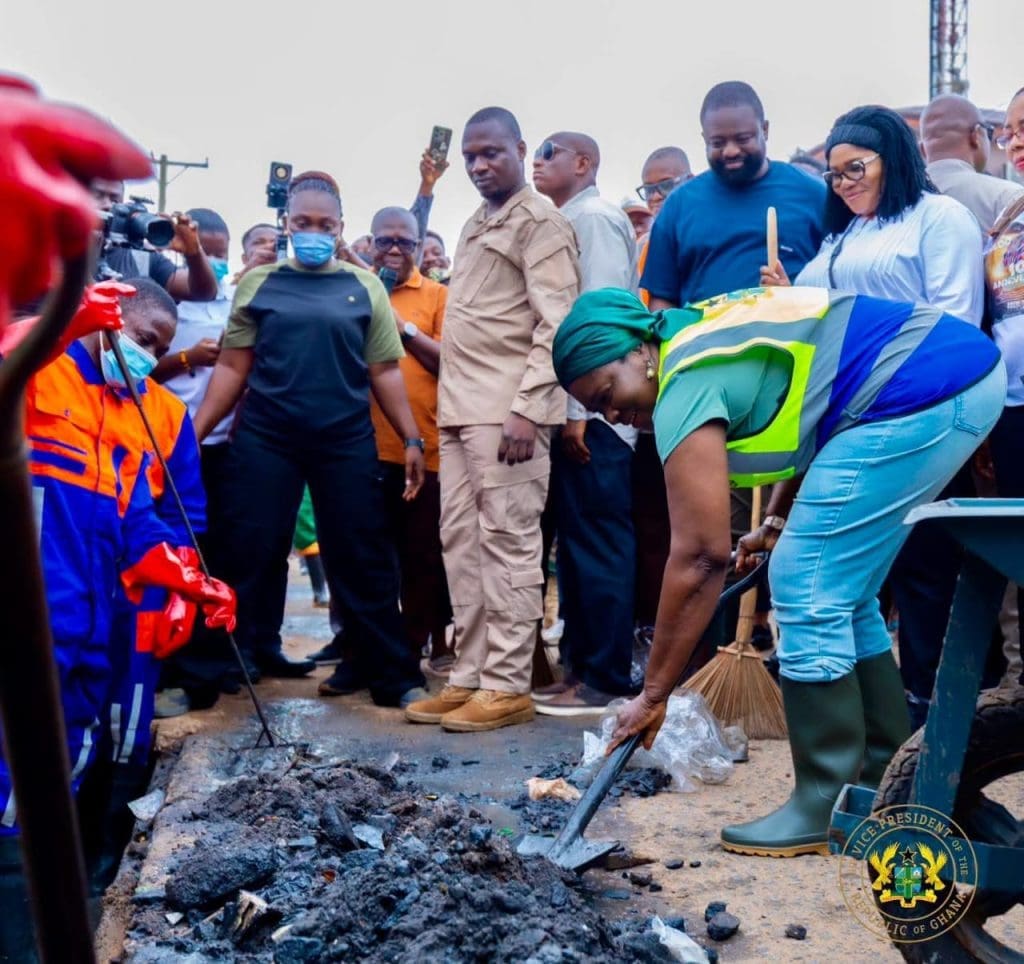
At the same time, Vice-President Professor Opoku-Agyemang led another team at the Nungua Market, where she joined traders and residents in desilting drains and cleaning the market environment.
The nationwide exercise followed torrential rains that caused widespread flooding in parts of Greater Accra and other regions, leaving behind blocked drains, mountains of refuse and damaged public infrastructure while disrupting livelihoods and displacing thousands of residents.
Addressing journalists after participating in the clean-up at Nungua, Professor Opoku-Agyemang thanked Ghanaians for responding positively to the government’s call, describing the massive turnout as a demonstration of collective responsibility and national solidarity.
“We are gathered here today because something has gone wrong, and in many instances, some of the challenges we face are issues that we have contributed to ourselves,” she said.
The Vice-President noted that although heavy rains were natural occurrences, human behaviour often aggravated their impact.
“We recognise that nature will always take its course, but our actions and inactions can sometimes worsen the effects of natural events,” she stated.
She explained that indiscriminate dumping of refuse into drains frequently blocked the free flow of stormwater, resulting in flooding that affected innocent families and businesses.
“For instance, when we dispose of refuse into drains, we may be contributing to situations where another person’s home becomes flooded because the free flow of water has been blocked,” she said.
Prof. Opoku-Agyemang described the exercise as a wake-up call for Ghanaians to adopt responsible sanitation practices throughout the year instead of waiting until disaster strikes.
“We already know the right things to do. We do not need to be reminded through sermons; we simply need to take responsibility and do what is right,” she stressed.
She appealed to citizens to work together in protecting their communities and the country by maintaining clean surroundings and preventing the obstruction of drains.
“Let us work together to protect one another, protect our communities and protect our country,” she urged.
The Vice-President observed that Ghana experiences the rainy season every year and should therefore begin desilting drains and clearing waterways as early as March and April rather than waiting until flooding occurs.
“We all have a responsibility to improve the way we manage sanitation. We know the rainy season comes every year, and ideally, we should have started clearing waterways and drains around March and April to prepare for the rains,” she said.
Although significant damage had already been caused by the floods, she said the tragedy offered valuable lessons that should guide future actions and inspire greater public commitment to environmental sanitation.
Professor Opoku-Agyemang was accompanied by the Minister for Local Government, Chieftaincy and Religious Affairs, Mr Ahmed Ibrahim, the Greater Accra Regional Minister, Madam Linda Obenewaa Akweley Ocloo, and the Minister for Gender, Children and Social Protection, Dr Agnes Naa Momo Lartey.
After participating in the clean-up exercise, President Mahama visited the 37 Military Hospital and the Mamobi General Hospital, where he presented relief items to support the two health facilities following the June 29 flood disaster.
Speaking at the 37 Military Hospital, the President described the floods as one of the country’s most devastating recent disasters.
He disclosed that assessments by the National Disaster Management Organisation (NADMO) showed that 13 people died in Greater Accra while six others remained unaccounted for. Nationally, about 29 people lost their lives in the floods.
Beyond the fatalities, he said the floods displaced approximately 58,000 people, many of whom lost homes, personal belongings and livelihoods.
“It is estimated that about 58,000 people were temporarily displaced as a result of the floods. While some have moved in with family members, others have required support and protection,” President Mahama stated.
He announced that the Minister for Finance had released GH¢200 million to NADMO to procure emergency relief items for victims.
According to the President, NADMO had already completed relief distribution in the Central, Western and Volta regions and was concluding the exercise in Greater Accra.
The relief packages include rice, food items, mattresses, buckets and other household necessities for affected families.
President Mahama also acknowledged the contribution of several Ghanaian companies that donated essential supplies, including diapers, detergents, disinfectants, antiseptics, bleach, beverages, noodles and other food products to support flood victims.
“These items are being distributed to those who need them most. NADMO is not responsible for producing these items; they are donations from private companies and organisations, and it is only appropriate that they are given to the intended beneficiaries,” he said.
Explaining the decision to donate part of the relief items to the hospitals, President Mahama said the facilities played critical roles in emergency healthcare and deserved government support.
“We recognise that the 37 Military Hospital is the country’s number one national emergency and trauma centre, and because of the role you play in saving lives, we cannot distribute these items and leave you out,” he said.
He commended the management, doctors, nurses and other health professionals of the hospital for their dedication and assured them of the government’s continued support to strengthen emergency healthcare delivery.
The national clean-up exercise forms part of the government’s broader strategy to improve sanitation, enhance disaster preparedness and reduce the devastating impact of flooding through greater public participation, environmental responsibility and coordinated institutional action.