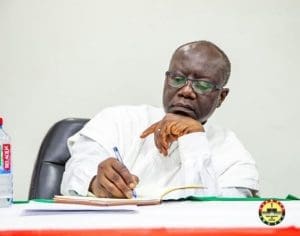
IMF praises Ghana’s economic progress
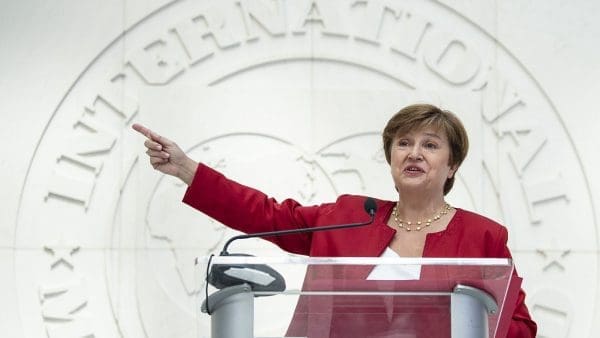
IMF boss
Ghana is better equipped to withstand potential global commodity-price shocks, the International Monetary Fund (IMF) has said, pointing to the country’s improving economic performance and recent credit-rating upgrade as signs of progress in its recovery.
The assessment comes as the IMF and the World Bank conclude their 2026 Annual Meetings in Bangkok, Thailand, with the Fund expressing confidence in Ghana’s economic direction following the completion of its Extended Credit Facility (ECF) programme and the transition to a new reform framework under the Policy Coordination Instrument (PCI).
Director of the IMF’s African Department, Zeine Zeidane, said Ghana had made a strong start under the PCI, while noting that the country’s recent credit-rating upgrade reflected positive developments in the economy.
Speaking at a press briefing on Sub-Saharan Africa during the meetings, Zeidane said: “The performance has been strong up to now. And also, you certainly have seen that recently, there was an upgrade of Ghana. So, things are moving in Ghana in the right direction,” he said.
He acknowledged that volatile global commodity prices remained a risk for countries across the world but maintained that Ghana was now better positioned to manage the potential impact.
“Of course, the risk in terms of commodity prices, every country can face them, but I think Ghana is, if that happens, we will face them from a very strong position,” he added.
The IMF’s latest projections provide further support for its positive assessment. In its October 2026 World Economic Outlook, the Fund revised Ghana’s growth forecast for 2026 upward to 5.7 per cent, from 4.6 per cent in its April projections. Growth is expected to ease to 5.2 per cent in 2027.
Ghana’s transition to the PCI marks a shift from a financing-based programme to a framework focused on sustaining policy credibility and advancing structural reforms. The instrument is expected to consolidate gains under the ECF while strengthening fiscal management, debt sustainability, governance and financial-sector stability, without providing direct financial assistance.
Despite the improved outlook, significant challenges remain. Ghana must sustain economic growth, protect its recovery from external volatility and maintain discipline in public spending to ensure that recent gains translate into lasting economic stability.
The IMF’s assessment offers renewed confidence in Ghana’s recovery, but the durability of that progress will ultimately depend on the government’s commitment to reforms and its ability to manage emerging domestic and global risks.