Ghana’s dawn rising: 24-hour economy set to create 1.7m jobs
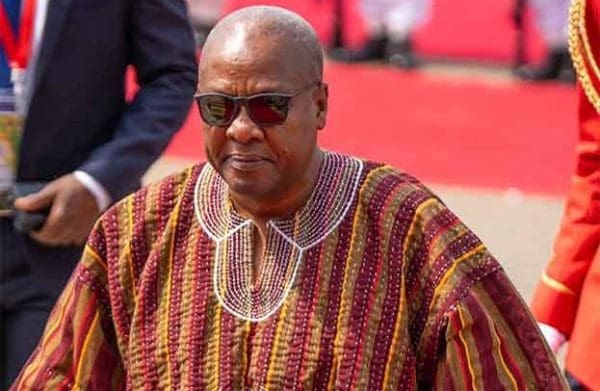
President John Mahama
President John Dramani Mahama has delivered an expansive and data-rich account of Ghana’s direction, declaring that the country is emerging from its most severe economic crisis in recent history and entering what he described as a decisive “take-off” phase.
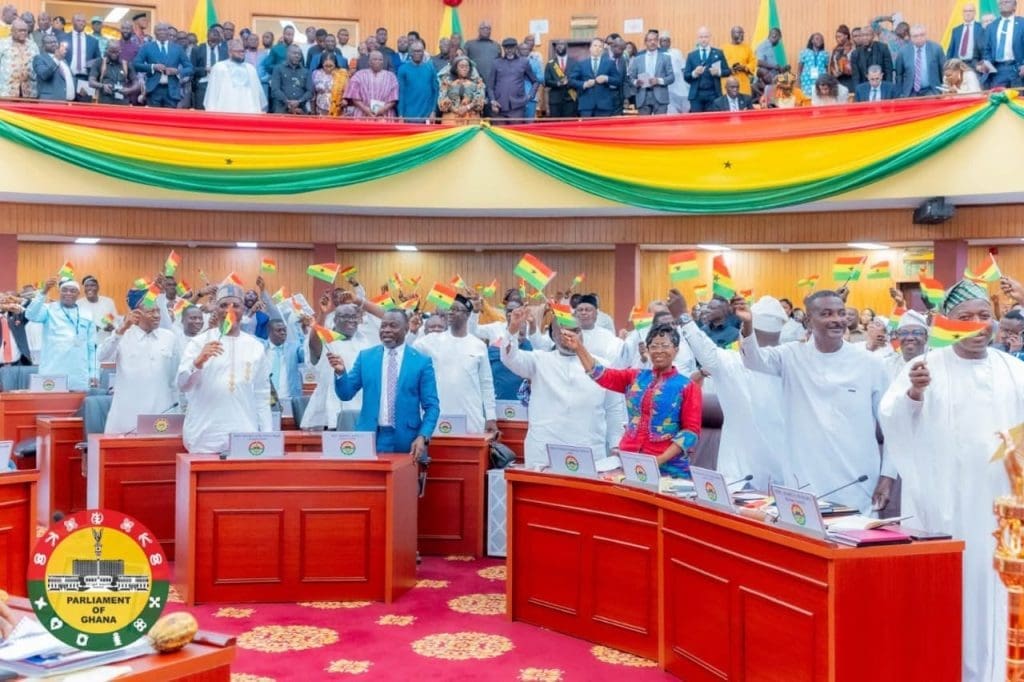
Presenting his 2026 State of the Nation Address to Parliament under Article 67 of the 1992 Constitution, the President outlined a multi-sector transformation agenda anchored on the newly legislated 24-hour economy, sweeping macroeconomic stabilisation, expanded health financing, education reforms, security retooling, cocoa sector restructuring, and power sector renegotiations.
Across agriculture, health, education, infrastructure, energy, and national security, he detailed billions of cedis in allocations, structural reforms, and measurable gains — from inflation falling to 3.8%, foreign reserves rising to US$13.8 billion, and debt reduced by GH₵82.1 billion, to 1.7 million projected jobs under the 24-hour economy and more than 220,000 tertiary students expected to benefit from fee relief in 2026.
Declaring that “Ghana is back” and “open for business,” President Mahama said the nation’s economy had grown from US$83 billion at the end of 2024 to an expected US$113 billion in 2025, placing Ghana among Africa’s top 10 largest economies.
He cited falling petrol prices, a strengthening cedi, improved employment numbers, enhanced health workforce density, and strengthened security coordination as evidence that reforms were yielding tangible results.
Sector by sector, he argued, the direction was clear: restore stability, deepen productivity, protect citizens, and build prosperity rooted in national unity and disciplined governance.
24-Hour economy
At the heart of the President’s address was the formal take-off of the 24-Hour Economy initiative, now backed by law following Parliament’s passage of the 24-Hour Economy Authority Bill on 6 February 2026 and his subsequent assent at a Cabinet meeting.
President Mahama described the initiative as “the boldest economic transformation initiative in Ghana’s recent history,” signalling a shift from planning to full-scale implementation.
Launched in July 2025, the programme aims to transform Ghana into a self-sufficient, export-led economy by promoting round-the-clock productivity across agriculture, manufacturing, logistics, and services.
The 2026 Budget has committed GH₵110 million to operationalise the 24-Hour Economy Authority, which will coordinate incentives, financing partnerships, and regulatory support to businesses willing to extend operations beyond traditional working hours.

The President said strategic partnerships with the Development Bank Ghana and the Ghana Infrastructure Investment Fund would underpin long-term financing.
Businesses registered under the initiative would benefit from duty- and tax-free importation of equipment for expansion or retooling, electricity tax rebates for off-peak usage, enhanced security for night-shift workers, and broader cost-of-doing-business reforms.
He made these assurances during a sod-cutting ceremony for a new float glass manufacturing facility at Shama in the Western Region on February 25.
The initiative is projected to generate approximately 1.7 million jobs, reduce import dependency, deepen value chains, and stimulate exports.
President Mahama called on both Ghanaian and international investors to seize the opportunity, stressing that belief in Ghana would be rewarded with pro-investment policies.
Macroeconomic recovery
Presenting the broader economic picture, President Mahama detailed a dramatic macroeconomic turnaround. Inflation, which peaked at 54.1% at the end of 2022 and fell to 23.5% by the end of 2024, has now declined to 3.8% as of January 2026.
He attributed this to fiscal consolidation, disciplined monetary policy, and currency stabilisation.
The Ghana cedi has appreciated significantly — 40.7% against the US dollar, 30.9% against the pound sterling, and 24% against the euro — reversing years of depreciation.
Foreign reserves have risen to US$13.8 billion, covering 5.7 months of imports, strengthening Ghana’s external position.
Debt restructuring reduced public debt by GH₵82.1 billion, lowering the debt-to-GDP ratio from 61.8% to 45.3%.
In 2025 alone, Ghana settled US$1.4 billion in debt service to restore international credibility.
The country’s current account recorded a surplus of GH₵9.1 billion, equivalent to 8.1% of GDP, compared to GH₵1.5 billion or 1.8% in 2024.
GDP is projected to reach US$113 billion in 2025, up from US$83 billion at the end of 2024.
Major rating agencies — Fitch, Moody’s, and S&P — have upgraded Ghana’s credit outlook.
Interest rates have fallen from above 30% to between 18 and 20%, while over one million Ghanaians secured employment between Quarter 1 and Quarter 3 of 2025.
Health sector
In health, President Mahama announced that domestic financing would account for 72% of total health expenditure in 2026, up from 56.8% in 2023.
Core sector allocations have reached GH₵23.3 billion, with total financing, including NHIS resources, standing at GH₵34.7 billion.
He noted that donor funding had fallen sharply from 19 per cent to 2.2%, creating a GH₵2.4 billion funding gap.
In response, the government uncapped the National Health Insurance Levy, increased provider tariffs by over 100 per cent, and eliminated payment delays that previously stretched up to six months.
NHIS enrolment rose from 57% at the start of 2025 to 66% currently.
Health workforce density increased from 16.6 per 10,000 people to nearly 42 per 10,000.
Public sector health employment has doubled to about 200,000 workers, including the absorption of 13,500 nurses and midwives and hundreds of doctors and pharmacists.
Non-Communicable Diseases account for over 40 per cent of deaths, prompting the creation of the Ghana Medical Trust Fund (Mahama Cares).
GH₵50 million in seed funding has been allocated to the National Vaccine Institute, while immunisation funding rose 46% to over GH₵171 million.
HIV prevalence stands at 1.6%, affecting an estimated 350,000 people.
Education
Education reforms featured prominently, with the No-Fee-Stress policy projected to benefit 220,000 first-year tertiary students in 2026, up from 152,698 beneficiaries in 2025.
Law students are now eligible for student loans to widen access to legal education.
The government plans to construct 600 new schools at kindergarten, primary, and junior high levels, and six regional TVET centres of excellence.
Teacher welfare will be improved through 50,000 housing units.
An additional 12.2 million sanitary pads were distributed to schoolgirls to improve attendance.
Feeding grants for public special schools increased from GH₵8 to GH₵15 per day.
Free SHS will be sustained, and STEM schools have expanded to more regions.
Cocoa and fiscal reforms
In the cocoa sector, President Mahama acknowledged revising producer prices to manage a GH₵32.9 billion liability.
He defended the move as necessary to avoid a renewed economic crisis, promising fair and transparent pricing reforms.
He abolished taxes, including the E-Levy, Betting Tax, Emission Tax, and COVID Levy.
VAT reforms reduced the effective rate from 21.9% to 20% and raised the threshold to GH₵750,000.
These measures returned GH₵6 billion to citizens’ pockets.
Infrastructure and energy
Under the Big Push initiative, 50 road projects covering 1,144 km are underway at an estimated cost of GH₵50 billion.
An additional 23 inherited projects covering 573 km will cost GH₵15 billion to complete.
In energy, renegotiated power purchase agreements with nine IPPs generated US$250 million in immediate savings and restructured US$1.1 billion in legacy debt for repayment between 2026 and 2028.
ECG losses remain high at around 25% of generated power, prompting reforms including private sector participation in billing and collection.
Security and national unity
The President reaffirmed investments in the Armed Forces, Police Service, and border surveillance systems, citing Sahel instability as a risk.
He emphasised inter-agency collaboration and intelligence reforms to protect Ghana’s status as a democratic beacon.
Closing his address, President Mahama described Ghana as “resilient” and “renewing,” urging unity and civic responsibility. “Our nation is on the runway,” he said. “Fasten your seatbelts.”