Fuel subsidy accruing future fiscal burden – COMAC

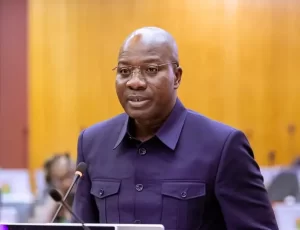
Dr Riverson Oppong, COMAC CEO
The Chief Executive Officer of the Chamber of Oil Marketing Companies (COMAC), Dr Riverson Oppong, has cautioned the government against relying on fuel subsidies without a sustainable financing mechanism, warning that the immediate relief to consumers could eventually translate into a heavier financial burden for households and businesses.
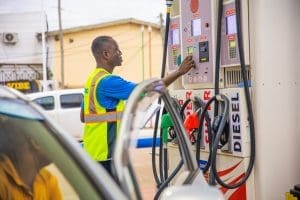
His concerns come amid the government’s GH¢2-per-litre subsidy on diesel, introduced to cushion consumers against rising fuel prices, with calls mounting for a similar intervention on petrol.
Dr Oppong said the diesel subsidy and associated suspended petroleum-sector margins were imposing a substantial financial burden on the downstream industry, with the estimated monthly exposure exceeding GH¢500 million.
Based on average monthly diesel consumption of approximately 259.56 million litres, the suspended margins were estimated to cost GH¢519.12 million every month.
When the component linked to the Unified Petroleum Price Fund (UPPF) was included, the monthly exposure could rise to nearly GH¢683 million.
GH¢519m monthly burden
The financial implications arise from the suspension of several margins within the petroleum pricing structure.
The 12-pesewa-per-litre BOST Energy Margin, for instance, had been suspended, resulting in an estimated monthly revenue loss of GH¢31.15 million.
The margin was intended to support the maintenance and operation of the Bulk Oil Storage and Transportation Company’s storage tanks, pipelines and depots, while also contributing to the expansion of petroleum infrastructure.
The Primary Distribution Margin (PDM), set at 26 pesewas per litre, had also been suspended.
That represented an estimated monthly revenue loss of GH¢67.49 million.
The PDM supports the transportation of petroleum products between depots and helps finance an essential part of the downstream distribution network.
Another component affected was the nine-pesewa-per-litre Fuel Marking Margin, the suspension of which created an estimated monthly revenue loss of GH¢23.36 million.
The fuel-marking system plays an important role in protecting government revenue and combating smuggling, adulteration and other leakages within the petroleum market.
UPPF exposure
The largest component of the exposure was linked to the UPPF, at GH¢1.53 per litre, equivalent to an estimated GH¢397.13 million every month based on the stated consumption levels.
Managed by the National Petroleum Authority (NPA), the UPPF was designed to compensate petroleum transporters for the additional cost of moving products from depots to distant parts of the country.
The mechanism helps maintain relatively uniform fuel prices across Ghana by preventing differences in transportation distances from translating into significantly different pump prices.
Dr Oppong said while the intervention could provide consumers with immediate relief at the pumps, the government must identify a sustainable source of funding to prevent the cost from accumulating within the petroleum industry or elsewhere in the economy.
‘Consumers will eventually pay’
He warned that poorly financed subsidies could create liabilities that consumers would ultimately have to absorb through other charges or higher costs.
“For me, for a developing country like Ghana, giving buffers is very dangerous. Giving buffers is very dangerous because at the end of the day, you and I are going to pay for this in one way or the other,” he said.
Dr Oppong drew parallels with Ghana’s electricity sector, where, he argued, interventions aimed at keeping tariffs low eventually contributed to financial liabilities that had to be absorbed elsewhere.
“It happened with the electricity market,” he said, adding that “years go by and what happened? We saw that we were paying for unrealistic electricity prices.”
He said the experience demonstrated the danger of providing temporary price relief without adequately addressing how the intervention would be financed over time.
‘Where is it coming from?’
Dr Oppong stressed that his objection was not to subsidies in principle but to the financing arrangements and the potential impact on the operations of downstream petroleum businesses.
“I’m not against it. Don’t get me wrong because I’m also a consumer. But where is it coming from? If it’s going to hit the operational account of the industry, that I have a problem,” he said.
He argued that government should explore alternative sources of revenue to finance the intervention rather than allowing the cost to accumulate within the downstream petroleum sector.
The warning comes as the government faces pressure to extend similar price support to petrol consumers. Such an expansion, if not matched by a clearly defined and sustainable financing source, could further increase the fiscal and industry-wide exposure.
The central concern, therefore, is not whether consumers should receive relief from high fuel prices, but whether the relief can be maintained without weakening the financial capacity of the institutions and businesses that underpin the petroleum supply chain.
For COMAC, temporary price relief should not become a deferred cost that households, businesses and taxpayers are eventually required to pay.