
Churches in uncompleted buildings risk collapse — Architect warns
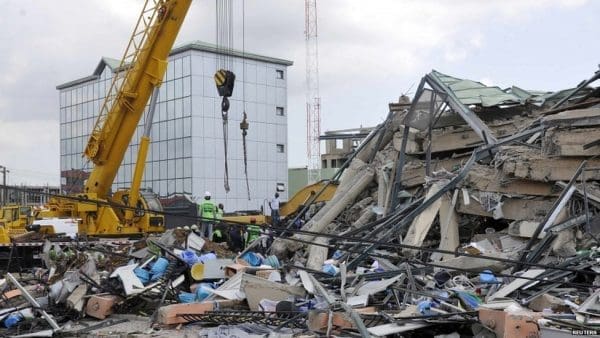
Building collapse.
The President of the Ghana Institute of Architects (GIA), Tony Asare, has raised an alarm over the increasing use of uncompleted buildings for church services, warning that such practices pose a serious risk of structural collapse.
His comments come in the wake of a tragic incident on March 29, 2026, when an uncompleted multi-storey building near the Experimental D/A School at Accra New Town collapsed, killing three people.
At the time of the incident, 23 individuals — 15 females and eight males, including three minors — were inside the structure, which had been repurposed as a makeshift church, when it gave way.
In an interview on Accra-based Joy FM on Monday, March 30, 2026, Asare pointed to the impact of typical church activities on structurally compromised buildings.
“In our churches, we do a lot of drumming and singing, and the rhythm affects buildings,” he said. “These activities actually set buildings on resonance and even weaken it further.”
He warned that the use of incomplete structures for worship has become both common and dangerous.
“These days, you even see churches operating within incomplete structures, including spaces around fuel stations,” he said. “Is it acceptable for a building that is not fully completed to be used for such purposes?”
Legal safeguards overlooked
According to Mr Asare, the law is clear on the requirements for building occupancy, but enforcement remains weak.
“Before a building can be occupied, it must have a certificate of habitation,” he said. “If the building is to be used for a different purpose, then the design must be reviewed to suit that use.”
He stressed that despite years of professional discussions on designing churches to withstand such activities, little progress has been made.
“We have discussed how church buildings should be designed to withstand these activities, but nothing has changed,” he said.
Systemic failures highlighted
Asare described the Accra New Town collapse as symptomatic of broader systemic failures, including poor enforcement, substandard materials and inadequate workmanship. “A lot of our buildings do not meet the required standards,” he said. “Why does this keep happening?”
He also highlighted concerns about the quality of construction materials on the market. “Some companies advertise iron rods as 14mm, but when you check, they measure about 12.5mm,” he said. “People buy them thinking they are getting the right size.”
He noted that while the Ghana Standards Authority is responsible for ensuring compliance, it faces significant capacity constraints.
Gaps in regulation and expertise
Asare further criticised provisions in Act 2465, arguing that they allow unregulated construction practices to persist.
“If you engage a mason or steelbender from the roadside, there is little in the law to prevent it,” he said.
He revealed that the Ghana Institute of Architects is preparing a position paper to advocate for stronger regulatory reforms.
He also pointed to a shortage of qualified professionals within district assemblies, raising concerns about effective supervision. “We have 261 assemblies, but only about 10 architects, possibly not more than 12,” he said. “People without the right training are performing roles they are not qualified to handle.”
He questioned who ensures compliance in the absence of trained professionals.
“If there is no architect or engineer at the assembly, who supervises the building when officials visit sites?” he asked.
Asare concluded with a call for urgent national attention to building safety.w “This country must take the safety of its people seriously,” he said.