Bagbin gives greenlight for Parliament to probe $1.7bn DGPP loss

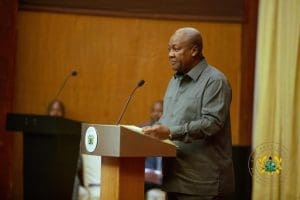
Speaker of Parliament Alban Bagbin
Speaker of Parliament Alban Sumana Kingsford Bagbin has given the green light for Parliament to scrutinise the reported US$1.7 billion loss associated with the Bank of Ghana’s (BoG) Domestic Gold Purchase Programme (DGPP).
The decision follows a motion filed by the Minority Caucus seeking a parliamentary inquiry into the programme and the circumstances surrounding the reported loss. The Minority is also seeking the appearance of Ghana Gold Board (GoldBod) Chief Executive Officer, Sammy Gyamfi, before Parliament to provide explanations on the transactions.
Speaking in Parliament on Tuesday, August 25, 2026, Bagbin said he had reviewed the motion, which was submitted to his office on August 21, and intended to admit it for consideration.
According to the Speaker, Parliament’s scrutiny will help settle the disagreement over whether the US$1.7 billion should properly be described as an actual financial loss or a policy cost associated with the implementation of the DGPP.
“With the motion they have filed, which was received in my office on the 21st of August, 2026, just three days ago, I have gone through the motion myself and I intend to admit the motion because we have to at least have an end to litigation as to whether it’s a loss or it’s a cost,” he said.
IMF reports $1.7 billion loss
The controversy stems from an IMF report on Ghana’s DGPP, which found that the rapid expansion of the programme in 2025 resulted in losses exceeding US$1.7 billion, equivalent to about 1.5% of Ghana’s GDP.
The IMF said the losses were almost entirely associated with doré gold purchases under the Gold for Reserves (G4R) initiative. The Fund noted that the losses included service and assay fees, discounts on gold sold to off-takers and, most importantly, exchange-rate effects arising from differences between the forex bureau rate used to purchase gold and the cedi reference rate used for BoG accounting.
Despite the losses, the IMF also acknowledged that the DGPP played a significant role in Ghana’s foreign-exchange inflows and reserve accumulation. The programme facilitated the export of US$10.9 billion worth of artisanal gold in 2025, while gold-related inflows became a major driver of the BoG’s foreign-exchange reserves.
Minority pushes for answers
The Minority has argued that the reported loss requires a comprehensive investigation into the entire gold-purchasing and trading process.
Earlier, the Minority called for an ad hoc committee to examine the programme, including gold extraction and aggregation, purchasing arrangements, fees, off-take discounts and risk management.
The caucus has also accused GoldBod of downplaying the significance of the IMF’s findings, insisting that it remains a public-finance issue regardless of which state institution ultimately carries the loss.
GoldBod CEO Sammy Gyamfi, however, has rejected the suggestion that the US$1.7 billion loss should be attributed to GoldBod.
Gyamfi has explained that GoldBod acted as a buying agent for the BoG under the DGPP and was responsible for purchasing and aggregating gold for the central bank. He said GoldBod did not determine the eventual selling prices or negotiate the off-take agreements that were linked to the reported losses.
Parliament to establish facts
Speaker Bagbin said Parliament’s examination of the matter would provide an opportunity for lawmakers to go through the details and help the public understand the financial implications of the programme.
The parliamentary process is therefore expected to focus not only on the size of the reported loss but also on how the figure was calculated, which institutions were responsible for the various transactions and whether the financial impact should be classified as an accounting loss, an economic cost or both.
The debate has also gained renewed attention because the IMF says the DGPP was central to Ghana’s reserve accumulation while simultaneously generating substantial losses for the central bank.
He said “This House will have the opportunity to go through it. And please, Ghanaians are very intelligent people. They will listen, they will read in between the lines and they will make their decisions.”
As Parliament prepares to consider the Minority’s motion, the inquiry could provide an opportunity to reconcile the competing claims from the IMF, the Bank of Ghana, GoldBod and the political parties over the true financial impact of the gold purchase programme.
The outcome could also influence future decisions on Ghana’s gold-reserve strategy and the operations of GoldBod, which assumed full responsibility for the DGPP’s operations and costs from July 2026.