VRA and NEDCo staff reject government-private sector plan

John Jinapor, Energy Minister
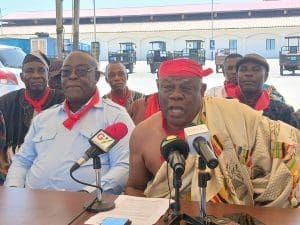
Staff associations of the Volta River Authority (VRA) and the Northern Electricity Distribution Company (NEDCo) have rejected a government plan to introduce private sector participation (PSP) into electricity distribution in northern Ghana, describing it as a disguised form of full privatisation.
The groups insist the proposal would transfer “complete operational control to private entities, while ignoring the structural challenges peculiar to NEDCo’s mandate,” warning further that it is “unsuitable for the unique operational context of northern Ghana,” and effectively “constitutes full privatisation disguised as participation.”
A major concern raised by the workers is the future of more than 1,300 employees, who they fear could be sidelined or left idle under the proposed arrangement.
In a detailed submission dated March 25, 2026, addressed to Energy and Green Transition Minister Dr John Jinapor, the groups said their position followed a “thorough examination of the Guiding Framework” governing the PSP initiative.
They explained that under the proposed structure, NEDCo would retain ownership of key distribution assets, while private entities would control technical and commercial operations.
According to them, this split responsibility would weaken performance across critical areas, including supply reliability, service quality, billing systems, customer engagement, and revenue mobilisation.
They further argued that the arrangement risks rendering a large portion of the workforce redundant, despite years of accumulated technical and operational expertise within NEDCo. As they asked in their submission: “Would this limited role of NEDCo as an asset owner in the Guiding Framework require the retention of the entire workforce?”
The staff groups also questioned the economic viability of the model, citing persistently low tariffs, high numbers of lifeline consumers, and the costly operational environment in northern Ghana.
NEDCo, which serves about 64 per cent of Ghana’s landmass across multiple regions, operates in areas characterised by low customer density, ageing infrastructure, and challenging geographic conditions.
The groups argued that these realities make the PSP model unattractive to investors and unsuitable for ensuring reliable, equitable electricity distribution.
Under the government’s framework, private operators would take power from Bulk Supply Points of the National Interconnected Transmission System (NITS) and assume full responsibility for delivering electricity to consumers, covering both technical and commercial functions.