Over 8,000 jobs created through TOR revival

Tema Oil Refinery
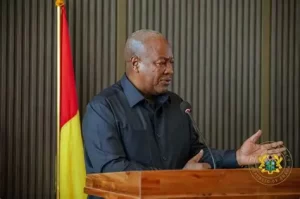
The Managing Director of Tema Oil Refinery (TOR), Edmond Kombat, says the refinery’s return to operations is strengthening Ghana’s fuel security, creating employment opportunities and reducing the country’s dependence on imported petroleum products.
Speaking at a press briefing in October 2026, Kombat said the refinery’s recovery formed part of President John Dramani Mahama’s Reset Agenda and was aimed at restoring local refining capacity to support national economic development.
He said TOR’s rehabilitation would help Ghana retain more value from its petroleum resources, strengthen the domestic energy supply chain and improve the availability of petroleum products for local consumption and regional markets.
According to Kombat, the refinery’s Crude Distillation Unit (CDU), which had been shut down since April 2021, resumed operations on December 19, 2025, following extensive maintenance.
The refurbished unit was officially commissioned by President Mahama on August 1, 2026.
Kombat said the turnaround maintenance was funded through TOR’s internally generated funds and carried out by the refinery’s engineers and technicians.
Boost for fuel security
The Managing Director said TOR’s restoration had become particularly important amid disruptions to international petroleum supplies.
He cited President Mahama’s August 1 remarks that Ghana had largely been spared the effects of the Iran conflict on fuel supply because of the role played by the refinery.
Kombat explained that TOR’s nameplate capacity of 45,000 barrels per stream day was equivalent to approximately 35 per cent of the 128,000 barrels per day of clean petroleum products Ghana imported in 2025.
He said increasing domestic refining capacity would reduce reliance on imported finished products and strengthen the country’s ability to respond to disruptions in international markets.
The refinery has also resumed processing Ghanaian crude, including Jubilee Medium Sweet crude delivered in July 2026 and a 950,000-barrel shipment of Sankofa crude received on September 25, 2026.
Kombat said refining indigenous crude locally would support value addition and strengthen the links between Ghana’s upstream petroleum production, refining and downstream distribution sectors.
He added that TOR’s partnership with the Ghana Oil Company Limited (GOIL) and other petroleum industry players was intended to increase the supply of locally refined products and support greater stability in fuel availability.
Employment opportunities
Kombat said TOR’s recovery programme had generated 1,657 permanent and temporary jobs through direct recruitment and maintenance activities.
The figure included 415 young engineers recruited into permanent positions, 301 temporary workers engaged during CDU maintenance, 287 workers involved in RFCC maintenance and 654 people employed by 35 local contractors operating at the refinery.
He also reported that more than 6,500 indirect and temporary workers were engaged during the turnaround works.
The Managing Director said management had addressed more than 300 staff petitions and promotion-related cases, some of which had remained unresolved for more than a decade.
Other measures included reviewing staff conditions of service, improving workplace security, strengthening engagement with organised labour and providing additional logistical support for refinery operations.
According to Kombat, the measures were intended to restore staff morale and rebuild confidence in the refinery.
Storage and regional petroleum trade
The refinery has also recorded growth in its product storage activities.
Kombat said TOR’s storage volumes increased from 426,954 metric tonnes in 2024 to 1,107,389 metric tonnes in 2025, before rising further to 1.35 million metric tonnes in 2026.
He said the growth reflected renewed commercial activity and improved confidence among petroleum companies and business partners.

TOR’s collaboration with the National Petroleum Authority (NPA), the Bulk Oil Storage and Transportation Company Limited (BOST) and other industry players has also supported petroleum product movements to neighbouring countries.
Kombat said Burkina Faso’s national oil company had increased its petroleum product movements through Ghana from 15 per cent in 2024 to 40 per cent as of October 2026.
He described the development as evidence of the refinery’s potential contribution to regional energy security.
Plans to expand refining capacity
Management is pursuing measures to increase the refinery’s current throughput of approximately 28,000 barrels per day.
Kombat said engineers from Verga Engineering were working with TOR’s technical team on the F-61 crude heater project, which is expected to support increased throughput towards the refinery’s nameplate capacity of 45,000 to 55,000 barrels per day.
Further plans include installing a new air cooler, replacing the existing catalytic reformer, completing work on the RFCC unit and upgrading the Supervisory Control and Data Acquisition (SCADA) system.
President Mahama has also directed the Energy and Green Transition Ministry to work with TOR’s board and management on a roadmap to increase processing capacity to 100,000 barrels per day, with a longer-term target of 200,000 barrels per day.
The proposed expansion combines plans to upgrade the existing refinery with the development of a new facility.
Kombat said the broader programme would include additional storage capacity and petrochemical facilities, alongside proposals for a specialist hospital with a burns and trauma centre and staff housing.
He said management would pursue the projects with strategic partners and provide updates on their implementation.
Financial reforms to sustain recovery
Beyond expanding production, Kombat said TOR was working to strengthen its financial position and improve corporate governance.
The refinery recorded a profit before tax of GH¢1.24 billion in 2025, which management described as its first return to profit in a decade.
The company also completed its outstanding audited financial statements for 2019 to 2025 and submitted them to SIGA.
Kombat said management was pursuing a financial restructuring programme, engaging creditors and improving cash management to support the refinery’s long-term sustainability.
He acknowledged that TOR still faced challenges, including legacy debt, ageing infrastructure and the need to increase production to full capacity.
However, he maintained that the resumption of refining, increased commercial activity and planned expansion had positioned the refinery to play a stronger role in Ghana’s energy security, employment generation and industrial development.