NPP rejects govt-led overhaul of constitution

The New Patriotic Party (NPP) has called for the establishment of a Constituent or Consultative Assembly to deliberate on the proposed amendments to the 1992 Constitution before any of the proposed changes are taken through Parliament or put before Ghanaians in a referendum.
The party says the scale of the proposed reforms, the extent of disagreement between the government and the Constitution Review Committee (CRC), and the proposed timetable for implementation make it inappropriate to treat the exercise as a routine constitutional amendment.
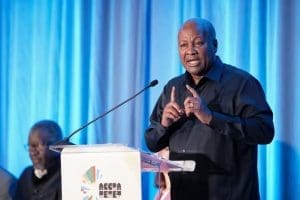
At a press conference in Accra yesterday, the NPP said it supported constitutional reform in principle but was opposed to what it described as the government’s decision to move directly from the work of the independent review committee to government-drafted legislation without a further representative body to deliberate on contentious proposals.
The party’s position, approved by its National Council after consideration of a report prepared by an ad-hoc committee, centres on four broad concerns: the scale of the proposed changes; the government’s rejection or modification of a substantial proportion of the CRC’s recommendations; the absence of what the NPP considers an adequate mechanism for building cross-party and stakeholder consensus; and the speed with which the government intends to prepare and introduce amendment Bills.
The NPP is consequently demanding a legally established Constituent or Consultative Assembly involving political parties, organised labour, professional bodies, traditional authorities, religious organisations, women, persons with disabilities, students and youth, the private sector, civil society and representatives of the regions.
It says the Assembly should deliberate on the contentious issues and produce an agreed text that can subsequently be subjected to the constitutional referendum process.
The party’s position comes amid similar calls from organised labour, civil society groups and the Ghana Bar Association for broader consensus-building in the constitutional reform process. The Trades Union Congress (TUC), for instance, has called for the opposition and other stakeholders to be brought on board, while the Ghana Bar Association has advocated a Constituent Assembly because of the scope of the proposed reforms.
NPP: Reform is necessary, but process matters
The NPP said it was not opposed to amendments to the 1992 Constitution and had itself advocated constitutional reforms, including through the party’s Peduase Report and its participation in the earlier constitutional review process.
However, it said the present exercise had moved beyond ordinary amendments because of the number of provisions affected.
According to the party, the CRC has proposed amendments to 147 of the 299 Articles of the Constitution, representing about 49 per cent of the existing constitutional provisions, in addition to 59 new provisions.
The NPP therefore puts the total number of propositions at 206.
It argues that changes of that magnitude amount, in substance, to an overhaul of the constitutional order rather than a conventional amendment exercise.
The party said this distinction was important because the constitutional processes that produced Ghana’s earlier constitutions involved expert work followed by deliberation by broader representative bodies.
It therefore wants the current process to follow what it describes as Ghana’s established constitutional tradition.
Concern over government’s response to CRC
A major concern raised by the NPP is the extent to which the government has accepted, modified or rejected the CRC’s recommendations.
The party said its ad-hoc committee examined the government’s Position Paper recommendation by recommendation and identified three categories among the 147 proposed amendments to existing provisions.
It said 22 recommendations were accepted as proposed, 25 were accepted in principle but subject to modification, while 100 were not accepted.
On that basis, the NPP calculates that the government departs from the CRC on 100 of the 147 recommendations, representing about 68 per cent.
The party acknowledged that different methods of counting produce different percentages.
The TUC, for instance, has said the government rejected more than 54 per cent of the CRC’s proposals. Its calculation treats recommendations accepted in principle as accepted, producing a lower rejection figure.
The NPP said the difference in methodology did not alter its central concern that a substantial portion of the independent committee’s recommendations had not been adopted by the government.
The party’s argument is that the CRC was established to undertake extensive nationwide consultations and make recommendations after hearing views from different sections of society.
It therefore questioned whether the constitutional reform exercise should ultimately reflect the government’s preferred positions on disputed issues rather than the recommendations of the independent review body.
5-month publication delay questioned
The NPP also questioned the timing of the publication of the CRC’s full report.
It said the CRC submitted its full report, running to more than 500 pages, in February 2026, but that the document was not made public until July 30, 2026.
The party argued that the delay was significant because it occurred before the government’s Position Paper was published and during a period when Parliament considered legislation touching on constitutional matters.
The NPP specifically cited the passage of the Tribunals Bill, which it said went in a direction different from the CRC’s recommendation.
It said stakeholders should have had access to the full report earlier so that they could properly assess the recommendations and contribute to the debate over their implementation.
The official Constitution Review 2025 repository now makes available the CRC’s final report and the Government Position Paper among the documents relating to the review process.
November deadline raises concern
Another major issue for the NPP is the timetable for the implementation of the proposed reforms.
The party said the government had established an 11-member Constitution Review Implementation Committee chaired by former Attorney-General Marietta Brew Appiah-Opong and tasked it with preparing the first amendment Bills by November 2026.
The NPP argues that the committee has effectively been instructed to draft the government’s preferred constitutional changes rather than provide a forum for negotiating differences between the government, opposition parties and other stakeholders.
The party described this as a critical weakness in the current process.
Its concern is that once the government has decided which recommendations it accepts, modifies or rejects, the implementation committee is essentially being asked to translate those decisions into legislative language.
The NPP said there was therefore no formal platform through which the 100 disputed recommendations, under its method of calculation, could be negotiated among the political parties and wider stakeholder groups.
Government has previously said its Position Paper accepts many of the CRC’s recommendations while proposing alternative positions on others.
President John Dramani Mahama disclosed in July that Cabinet had completed its consideration of the recommendations and that the Attorney-General was preparing the government’s Position Paper before the implementation committee was inaugurated.
5-year presidential term among contentious issues
The NPP said some of the issues in dispute went directly to the architecture of Ghana’s political system.
Among them, it cited the proposal to extend the presidential term from four years to five years.
Other issues highlighted by the party include the size and composition of Parliament, whether additional categories of Members of Parliament should be appointed rather than elected, whether MPs should simultaneously serve as ministers, the method for selecting District Chief Executives, and the independence and financing of constitutional oversight institutions.
The five-year presidential term is among the reforms publicly identified by government as emerging from the review process. Other proposals announced by President Mahama include five-year terms for Parliament and District Assembly members, the election of District Chief Executives, an independent emoluments commission and fixed terms for certain constitutional office holders.
The TUC has also raised concerns about some of these proposals. It has opposed the proposed five-year presidential term in its current form and has said the extension should not be considered separately from reforms intended to strengthen governance and accountability.
MPs as ministers
The NPP also identified the relationship between Parliament and the Executive as an important area requiring broader deliberation.
It specifically referred to the question of whether Members of Parliament should continue to be eligible for appointment as ministers.
The CRC recommendation and the government’s position on the matter have attracted attention from organised labour.
The TUC has endorsed a proposal to amend Article 78(1) to prevent MPs from being appointed as Ministers of State, Deputy Ministers or Regional Ministers.
For the NPP, however, the broader issue is not simply whether a particular proposal is desirable but whether major changes to the structure of government should be settled through a process capable of securing broad national agreement.
Local government and election of DCEs
The proposed changes to local government also feature prominently in the NPP’s concerns.
The party cited the proposed method for selecting District Chief Executives as one of the issues that should be subject to detailed deliberation.
The government’s publicly identified reforms include the election of District Chief Executives, alongside changes to the terms of office of the President, Parliament and District Assemblies.
The NPP argues that such changes affect the distribution of political power and the functioning of Ghana’s decentralisation system and should therefore not be settled solely through negotiations within the government.
Independence of oversight institutions
The party further raised concerns about proposals affecting the independence and funding of constitutional and oversight institutions.
It argued that the institutions responsible for holding governments accountable should not have their powers, appointments or financial independence altered without broad agreement.
The NPP placed these matters among what it described as the “architecture” of the Republic, rather than technical drafting issues.
Its position is that disagreements over such matters are normal in a democracy but that there must be a mechanism through which the disagreements can be narrowed and resolved.
NPP invokes Ghana’s constitutional history
To support its demand for a Constituent Assembly, the NPP pointed to Ghana’s constitutional history.
The party cited the processes leading to the 1969, 1979 and 1992 constitutions, arguing that expert committees prepared proposals which were subsequently considered by broader representative assemblies before the final constitutional texts were adopted.
For the 1992 Constitution, the NPP said the Committee of Experts chaired by Dr S.K.B. Asante produced a report which did not itself become the Constitution.
Instead, the report became a working document for a 260-member Consultative Assembly comprising representatives elected by District Assemblies, nominees of identifiable organisations and persons appointed by the PNDC.
The NPP said it was the Consultative Assembly’s draft, rather than the experts’ report in its original form, that proceeded to the referendum in April 1992.
The party said the lesson it drew from that history was that expert recommendations require a second stage of representative deliberation before they become the basis of a national constitutional settlement.
TUC, civil society and Bar raise similar process concerns
The NPP’s position has emerged alongside concerns expressed by other groups about the inclusiveness of the current process.
The TUC has called for deliberate efforts to bring political parties and other stakeholders on board, saying the present CRC consultation was not as inclusive as the Consultative Assembly that produced the 1992 Constitution.
A Citizens’ Platform on Constitutional Reform, comprising civil society, professional and other organisations, has similarly argued that the process of constitutional change requires broad public involvement. It has called for a legal roadmap to guide implementation and raised concerns about how disputed issues are handled.
The Ghana Bar Association has also called for a Constituent Assembly, with its President, Mrs Efua Ghartey, arguing that the scope of the proposed amendments could effectively result in the creation of a new constitution and therefore required a more extensive consultative process.
The NPP cited these positions as evidence of what it considers to be a growing demand for a broader mechanism of consensus-building.
NPP wants Constituent Assembly established by law
The party’s proposed solution is the enactment of legislation establishing a Constituent or Consultative Assembly.
It wants the Assembly to include representatives of the political parties, organised labour, professional organisations, the National House of Chiefs, religious groups, women, persons with disabilities, students and youth, the private sector, civil society and the regions.
The NPP said the Assembly would provide the platform for stakeholders to debate the contentious provisions and determine which reforms should ultimately be presented to the electorate.
It argued that such an arrangement would also provide a formal mechanism for resolving differences between the CRC recommendations and the government’s alternative proposals.
The party described the proposed Assembly as a bridge between the technical work of the CRC and the final political and popular approval required under the Constitution.
Referendum to follow deliberation
The NPP’s preferred sequence is therefore consultation, deliberation and ratification.
Under the party’s proposal, the CRC’s work would constitute the expert and consultative foundation; a Constituent or Consultative Assembly would then deliberate on the proposals; and the agreed amendments would subsequently be presented to the people through the constitutional referendum process where required.
The party said it was not seeking to prevent constitutional reform but wanted to ensure that the eventual reforms enjoyed broad political and societal ownership.
It said a referendum should be conducted only after the disputed issues had been subjected to a process through which competing positions could be considered and reconciled.
NPP rejects government-only referendum package
The NPP has also drawn a clear line on its participation in the referendum process.
It said that, in the absence of a Constituent Assembly or another mechanism capable of producing negotiated consensus, it would not support a referendum based solely on the government’s preferred amendments.
The party also said it would oppose the corresponding parliamentary Bills under those circumstances.
It pointed to Article 290, which governs amendments to entrenched provisions of the Constitution, and the requirement for at least 40 per cent of registered voters to participate in the referendum, with at least 75 per cent of those voting supporting the proposal.
The NPP argued that the constitutional thresholds underscore the importance of broad political support when entrenched provisions are being amended.
The party said government should therefore seek agreement with the opposition and other major stakeholders before committing public resources to the referendum process.
NPP says it wants reforms to succeed
Despite its opposition to the government’s current approach, the NPP said it wanted the constitutional review exercise to succeed.
It said it supported recommendations that would improve accountability, strengthen decentralisation and modernise Ghana’s institutions.
Its objection, it stressed, was primarily to what it considers the process through which the proposed changes are being converted into legislation.
The party said it wanted Ghanaians to participate in a referendum with confidence that the proposals before them had been subjected to sufficient national deliberation.
It argued that constitutional reform should not become an issue that changes with each change of government.
‘Constitution belongs to the people’
The NPP concluded its position by stressing that the 1992 Constitution belonged to the people of Ghana rather than to any political party.
It called on the government to reconsider the current implementation process, establish a Constituent or Consultative Assembly and create a forum through which the disputed proposals could be debated and settled.
The party said it was prepared to participate in such a process and support reforms that emerged from a broad national consensus.
The NPP’s position adds another major political dimension to an already active national debate over how Ghana should amend its supreme law.
With organised labour, civil society groups and the Ghana Bar Association also calling for wider consultation or consensus-building, the central issue is increasingly not only which provisions of the 1992 Constitution should change, but also the process through which those changes should be agreed and presented to the Ghanaian electorate.