NPP: Mahama must apologise or sack Education Minister

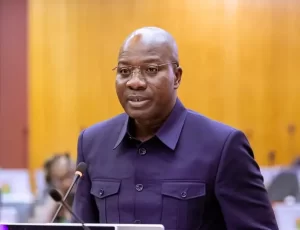
Haruna Iddrisu
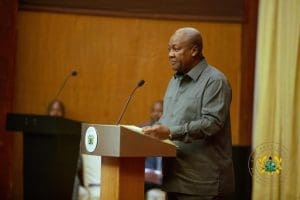
The New Patriotic Party (NPP) has called on President John Mahama to either apologise to the Ghanaian people or sack his Minister for Education, Haruna Iddrisu, over the controversy surrounding the introduction of Arabic and Chinese into the school curriculum.
In a statement issued on 16 September 2026 by its Education Sector Policy Committee, the opposition party said the President’s recent public denial of any new language policy had exposed a serious contradiction within the government.
According to the NPP, the entire nation was shocked when President Mahama last week completely repudiated his Education Minister and insisted there was “absolutely no new policy” to introduce Arabic and Chinese into Ghanaian schools.
The President asked the public to regard the matter as settled. The party, however, argues that the statement has only deepened the confusion.
The NPP maintained that the President now faces only two credible options. If the Minister announced and pursued the policy without presidential or Cabinet approval, he must be sacked. If, on the other hand, the Minister acted with the knowledge or authority of the President or Cabinet, then the President must apologise for denying a policy his government had already set in motion.
The statement recounted that on April 24, 2026, Education Minister Haruna Iddrisu publicly declared that Chinese and Arabic would become compulsory foreign languages at the secondary school level. He linked the decision directly to the President’s vision for education. The NPP notes that the President and his office could not have been unaware of the announcement and the controversy it generated.
Following the Minister’s declaration, the National Council for Curriculum and Assessment (NaCCA) was instructed to undertake the necessary curriculum work. About 160 writers and reviewers were engaged over several months, producing a revised curriculum that included Arabic and Chinese among the foreign-language options.
On 22 July 2026, the revised curriculum was presented to the Minister. Rather than reject it, he referred it to the Ghana Education Service (GES) and directed the service to prepare it for “full implementation readiness.”
On 3 September 2026, NaCCA, with support from the Confucius Institute at the University of Cape Coast, trained teachers to implement the new Chinese language curriculum.
The NPP argued that these steps were presented to the public as legitimate acts of government. When questions later arose about the basic school curriculum, the government clarified only that Chinese and Arabic would be optional at that level, without withdrawing the Minister’s earlier statement that the languages would be compulsory at secondary school.
The party also raised questions about the use of public funds. Curriculum development involves writers, reviewers, workshops and administrative support. If there was “absolutely no new policy,” the NPP asks, why were public resources committed to developing the curricula, preparing the system for implementation and training teachers?
President Mahama has himself questioned where Ghana would find Chinese language teachers given existing shortages of French teachers. The NPP says this concern only sharpens the inconsistency, since the process had already advanced through curriculum development, GES preparation and teacher training.
The statement distinguished between the two languages, noting that Arabic already existed as an optional subject at junior high school level before the current government took office, while Chinese appears to have followed a new 2026 process initiated by the Ministry.
Beyond the curriculum issue, the NPP warned that the episode raises broader concerns about policy coordination and ministerial authority. If a minister can publicly announce a major policy, attribute it to the President, commit public institutions and resources, and move towards implementation without clear approval, the public is entitled to ask what other decisions may be taken without proper authority.
The party insisted the President cannot have it both ways. A minister whose major policy pronouncements are later disowned by the President cannot continue to command the confidence required to lead the education sector.
“The President must choose: apologise to the nation or sack his Education Minister,” the statement concluded.
The NPP said parents, teachers, school administrators and taxpayers are entitled to coherent and transparent communication from government, and that the matter cannot simply be declared closed.