
IMF flags energy risks to global economic growth
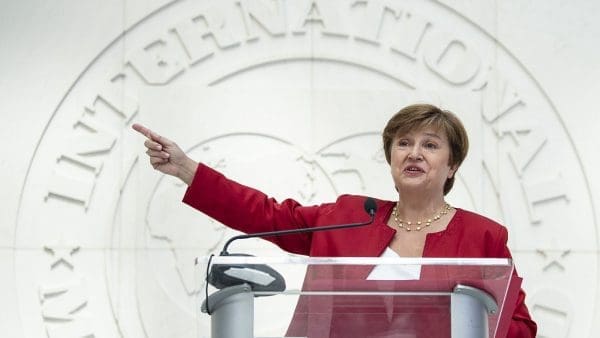
IMF boss
The International Monetary Fund (IMF) has warned that the global economy faces a challenging period, projecting growth to fall to 3.1% in 2026 from 3.5% in 2025, as geopolitical tensions, trade disruptions and rising commodity prices threaten economic stability.
The Fund expects global growth to recover modestly to 3.4% in 2027, but says the outlook remains vulnerable to shocks that could intensify inflationary pressures, weaken investment and constrain governments’ ability to respond to economic challenges.
In its October 2026 World Economic Outlook, titled Resilience Under Strain, Urgent Choices, the IMF also projects global inflation to increase to 4.7% in 2026, up from 4.1% in 2025, before declining to 4.1% in 2027.
Higher energy and food prices could further strain households and businesses by increasing transportation, manufacturing and other operating costs, potentially slowing consumption and economic activity.
Energy supply disruptions pose major risk
The IMF identifies conflict in the Middle East and the possibility of disruptions to energy supplies and shipping routes as significant threats to the global outlook.
Any prolonged interruption to energy flows could push oil and gas prices higher, intensify inflation and undermine growth, particularly in economies that depend on imported fuel to meet domestic demand.
Ghana could face similar pressures if international oil prices remain elevated. Higher crude oil prices could increase the country’s fuel import bill, while rising fuel costs could feed into transportation, electricity generation and production expenses.
The resulting cost pressures could affect businesses across several sectors and make it more difficult for households to manage essential expenses. Higher food and energy prices could also complicate efforts to sustain price stability.
African economies remain exposed
Despite the global headwinds, the IMF projects Sub-Saharan Africa’s economy to grow by 4.5% in both 2026 and 2027.
However, the regional outlook masks significant vulnerabilities, with countries facing varying levels of exposure to commodity-price fluctuations, climate-related shocks, food insecurity and tighter financing conditions.
Limited fiscal space could further restrict governments’ ability to cushion households and businesses against external shocks. Authorities may therefore have to balance immediate relief measures against the need to contain deficits and maintain sustainable debt levels.
The 4.5% projection is for Sub-Saharan Africa collectively and does not constitute an individual growth forecast for Ghana.
Targeted assistance key to managing rising costs
Against this backdrop, the IMF is calling on governments to reinforce public finances, rebuild fiscal buffers and allocate resources towards priority economic and social needs.
The Fund is particularly critical of broad subsidies, price controls and tax cuts intended to protect consumers from rising prices, warning that these measures can be expensive, distort market incentives and weaken government revenues.
It instead advocates targeted support for vulnerable households, arguing that carefully designed interventions can deliver relief at a lower fiscal cost.
The IMF’s analysis indicates that price-suppressing measures can require between three and 22 times the public resources needed by targeted approaches to provide comparable protection. The difference depends on the policy adopted and prevailing economic conditions.
For Ghana, the findings highlight a difficult policy choice: how to shield households from higher fuel and food prices without placing additional pressure on public finances or reducing resources available for infrastructure, social protection and other development programmes.
The Fund also emphasises the need for credible monetary policies to safeguard price stability, stronger domestic revenue mobilisation, improved spending efficiency and sustainable debt management.
These measures, it argues, are important for maintaining economic resilience and ensuring governments can respond to future shocks without compromising fiscal sustainability.
AI investment brings both promise and uncertainty
The IMF identifies investment in artificial intelligence (AI) and technology supply chains as a source of economic support in some countries. However, it notes that the benefits are concentrated rather than evenly distributed across the global economy.
A potential shortfall in returns from AI-related investments could trigger a market correction, reduce capital spending and tighten financial conditions, creating additional risks for the global economy.
For emerging economies such as Ghana, these uncertainties reinforce the importance of sound economic management, stronger revenue collection and disciplined spending priorities.
With growth slowing and inflationary risks rising, the Fund’s outlook underscores the need for policies that protect vulnerable households while preserving the resources required to support investment, development and long-term economic stability.