IEA opposes Growth and Sustainability Levy reduction
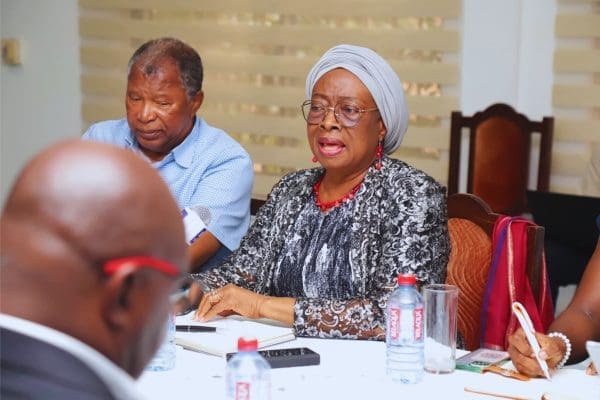
Sophia Akuffo
Ghana’s ability to maximise gains from its vast mineral wealth could be undermined by recent tax policy changes, despite billions of cedis already flowing into state coffers from the extractive sector, the Institute of Economic Affairs (IEA) has cautioned.
At a press briefing in Accra, the policy think-tank raised concerns over the government’s decision to reduce the Growth and Sustainability Levy from three per cent to one per cent, warning that the move could significantly dilute Ghana’s long-term revenue potential from mining.
Mining sector delivers GH₵54.7bn in a decade
The warning comes against the backdrop of substantial contributions by mining companies.
Data from the Ghana Chamber of Mines shows that producing members paid a total of GH₵54.74 billion to the Government of Ghana over a 10-year period from 2014 to 2024.
This amount, equivalent to more than $7.5 billion, underscores the sector’s critical role in supporting public finances.
A breakdown of the figures reveals that GH₵30.51 billion came from corporate income taxes alone, highlighting the importance of the 35 per cent corporate tax regime applied to mining firms. Mineral royalties contributed GH₵15.06 billion, while employee income taxes added GH₵6.83 billion.
Dividends accounted for GH₵2.05 billion, with a further GH₵4.38 billion generated from taxes paid by self-employed workers linked to the industry.
High taxes, but value capture questioned
Beyond these payments, mining companies operate under a complex fiscal regime, including a sliding-scale royalty of between five and 12% tied to global gold prices.
With gold prices now exceeding $4,500 per ounce, Ghana is currently earning at the top royalty rate of 12%.
Companies also pay the Growth and Sustainability Levy—now reduced to one per cent—alongside a 10% free carried interest, import duties, withholding taxes, mineral rights fees, ground rent and Pay As You Earn (PAYE).
Despite this extensive revenue framework, the IEA argues that the reduction of the levy risks weakening Ghana’s overall take from the sector at a time when global trends are shifting toward greater national ownership and value capture.
Levy cut could shrink government earnings
Distinguished Fellow of the IEA and former Chief Justice, Sophia Akuffo, questioned the policy direction, describing it as inconsistent with efforts to maximise returns from natural resources.
“Why did government increase royalties, ostensibly to capture greater value from Ghana’s mineral wealth, only to simultaneously dilute that gain through tax concessions?” she asked.
According to her, the reduction from three per cent to one per cent effectively cuts a key revenue stream by two-thirds, potentially costing the country significant funds that could otherwise support development.
Debt pressures highlight urgency
She further expressed concern about Ghana’s continued reliance on external financial support, noting that despite its resource endowment, the country has repeatedly turned to the International Monetary Fund for bailouts.
She described as troubling recent plans by the Finance Minister to borrow GH₵17 billion to pay public sector salaries, arguing that better resource management could reduce such fiscal pressures.
Window of opportunity for reform
The analysis by the IEA suggests that Ghana stands at a critical juncture. With more than 30 mining leases nearing expiration, record-high global mineral prices, and new discoveries of critical minerals, the country has what it describes as a “once-in-a-generation opportunity” to renegotiate terms and secure greater value.
Justice Akuffo pointed to examples such as Botswana, Burkina Faso, Chile and Venezuela, where governments have increased state participation or restructured agreements to capture more benefits from natural resources.
“These developments have shown that asserting sovereignty does not repel investment; rather, it redefines the terms of engagement in favour of national development,” she said.
Call for balanced, consistent policies
For Ghana, the stakes are high. The mining sector already delivers billions in revenue, supports employment, and contributes significantly to foreign exchange earnings.
However, analysts warn that without coherent and predictable fiscal policies, the country risks losing out on even greater benefits.
The IEA is therefore urging government to adopt a balanced approach that maintains investor confidence while ensuring that Ghana retains a larger share of the value generated from its resources.
This includes exploring service-based contracts that preserve national control while leveraging private sector expertise.
Ultimately, the debate over the levy reduction highlights a broader question: whether Ghana will fully harness its natural resource wealth to drive industrial transformation and long-term economic growth, or continue to leave substantial value on the table.