I sleep on street in UK — Homeless Ghanaian musician Barosky
Musician Barosky
There was a time when Barosky’s voice travelled through some of Ghana’s biggest songs, earning him recognition and placing him in the company of some of the country’s most celebrated musicians.
Tracks that carried his vocal presence once reached wide audiences, linking his name to successful projects and creating lasting associations with major Ghanaian artists. Those earlier contributions positioned him among performers whose work helped define particular moments in the local music landscape.
Today, however, the musician says life has taken him down a path far removed from the fame he once tasted. The distance between past visibility and current realities has become the focus of recent public attention.
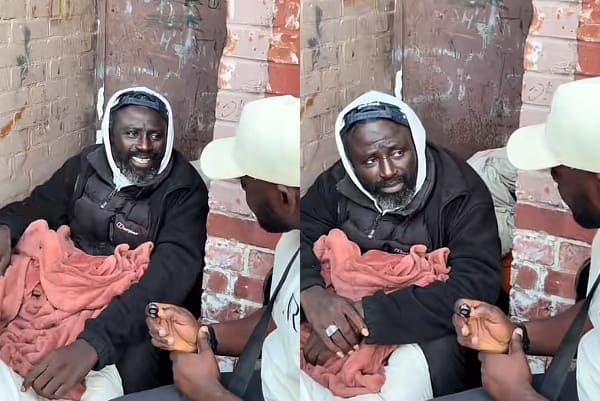
Now living in Manchester in the United Kingdom, Barosky’s living conditions have generated public reaction following an interview with Accra-based Okay FM presenter Nana Romeo. Details shared in that conversation brought to light a period of significant personal difficulty.
The musician opened up about the harsh reality of his present circumstances, saying he does not have a place to stay and has struggled to meet even his most basic needs. His account described nights spent without secure shelter and days shaped by limited access to ordinary comforts.
“I sleep on the street for now. I haven’t even bathed for some time now. People help me to feed,” he said. The straightforward description of his situation prompted responses from those who had followed his earlier musical work and from others encountering the story for the first time.
But in another social media discussion monitored by Graphic Showbiz on TikTok on Sunday night, August 23, 2026, Stajay, a Ghanaian performer, noted that he has since taken Barosky to his home in Manchester following the publication of the interview with Nana Romeo.
This intervention marked a change from the circumstances described in the initial interview. Stajay disclosed that Barosky’s issues were mental health-related and that he and some other friends were managing the situation for now.
He stayed away from publicly disclosing the full details of Barosky’s situation but kept reiterating that it was not an issue of finances, but it was mental health-related. The emphasis on mental health rather than purely material hardship provided important context for understanding the challenges involved.
To confirm that Barosky was indeed at his home at the time of the TikTok live video discussion, he walked into a room where Barosky was sleeping on live video, woke him up, and asked him to confirm to the live audience online who he was.
The moment served as direct verification for those watching and illustrated that temporary accommodation had been arranged through the support of fellow Ghanaians in the UK.
For a musician who was once familiar to Ghanaian music lovers through his contributions to popular songs such as Kofi Nti’s Rakia and Ofori Amponsah’s Toolege, his current situation is a painful reminder that life does not always follow a straight or predictable path. The same creative input that once enhanced well-known recordings now sits alongside a narrative of struggle and uncertainty. Such shifts underscore the reality that artistic success does not always translate into lasting security or continuous public support.
Barosky in the Nana Romeo interview said he has been out of touch with his family in Ghana for some time and has no relatives in the UK to turn to for accommodation or support. Without nearby family networks, the practical challenges of daily life have been compounded.
While finding a place to stay would provide some immediate relief, the musician said his heart is set on one thing: returning home. “I need a room, but if I had to choose between having a room and returning to Ghana, I would choose to come home. I want to return to Ghana. I don’t have any family here in the UK, just a few friends,” he said.
The clear preference for returning to Ghana reveals a strong emotional pull toward familiar surroundings and possible reconnection with roots left behind. As friends continue to assist with present needs and attention turns toward longer-term solutions, the account of Barosky’s experiences stands as a sobering example of how careers in music can encounter unexpected downturns.
It invites reflection on the importance of sustained support systems, mental health awareness, and pathways that might help artists regain stability after periods of difficulty far from home.