Ghana introduces mandatory Ebola screening at Accra Airport
Ebola screening
The Ministry of Health has introduced mandatory Ebola screening for all passengers arriving at the Accra International Airport following an outbreak of the disease caused by the Bundibugyo virus in some African countries.
The measure is aimed at preventing the possible importation of the disease into Ghana and reducing the risk of local transmission through international travel.
In a statement issued on Tuesday, November 3, 2026, Health Minister Kwabena Mintah Akandoh said the intervention was part of efforts to strengthen the country’s preparedness against the outbreak.
Ghana has not recorded any case of Ebola.
The ministry said the measures followed commitments made at a recent Africa CDC ministerial meeting on Ebola, attended by all 55 African member states. Participants agreed to strengthen preparedness, improve border surveillance and keep borders open while taking steps to prevent transmission.
Under the new directive, passengers must complete a Health Declaration Form before travelling and disclose any travel to or transit through Ebola-affected countries within the previous 21 days. They must also report close contact with suspected or confirmed Ebola patients or participation in funeral rites.
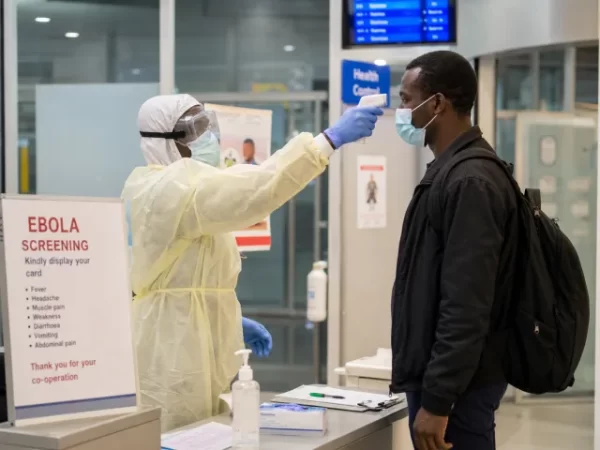
All arriving passengers will undergo screening by Port Health officers, including non-contact temperature checks, a review of their health declaration forms and an assessment of their travel histories.
Passengers with symptoms suggestive of Ebola or recent travel from affected countries will be referred for further assessment and temporarily isolated where necessary.
Those arriving from countries with ongoing transmission will be monitored for up to 21 days, with the Ghana Health Service conducting follow-up checks.
The ministry has also directed hotels and other hospitality operators to report guests arriving from affected countries to the nearest district health directorate and maintain appropriate records.
Passengers are expected to cooperate with health officials, provide accurate information, observe screening requirements, practise regular hand hygiene and report any symptoms immediately.
The ministry warned that deliberate concealment of symptoms, submission of false information or refusal to comply with screening procedures could attract public health measures under Ghanaian law.
It urged the public to follow updates from the Ministry of Health and the Ghana Health Service and avoid spreading misinformation.