
Ghana has only 150 weather stations of 600 required — GMet
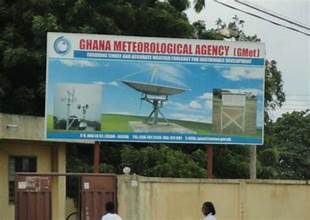
The Ghana Meteorological Agency (GMet) has issued a strong appeal for urgent national investment in modern weather monitoring infrastructure, early warning systems and climate resilience measures, warning that Ghana risks facing worsening flood disasters and extreme weather impacts if critical gaps in forecasting systems are not addressed.
The Agency says although some progress has been made in rebuilding the country’s weather observation network, Ghana still lacks the modern infrastructure needed to accurately predict severe weather events and strengthen national disaster preparedness.
Principal Meteorologist at GMet, Mr Nana Kofi Opoku, stressed that reliable weather forecasting depended heavily on strong observational systems, modern forecasting tools, weather radars and an expanded nationwide network of monitoring stations.
“The more observation networks we have, the better we are able to get data and the better the models will run to generate a forecast. So it is very, very important,” he stated.
Call for modern radar systems
Mr Opoku said one of the country’s biggest needs was the installation of additional weather radar systems capable of tracking storms with greater precision.
Unlike satellites, radar systems provide finer-resolution data by monitoring the movement, speed and intensity of approaching storms and predicting when they are likely to hit specific locations.
“Again, we need multiple number of radars because these radars give us finer resolutions when the systems are approaching the country,” he explained.
According to him, improved radar coverage would significantly enhance Ghana’s ability to issue timely weather alerts and reduce the devastating impact of flooding and extreme rainfall events.
Weather stations still grossly inadequate
Although UNESCO recently supported GMet with nine automatic weather stations, the Agency says current nationwide coverage remains far below required levels.
Mr Opoku disclosed that Ghana previously operated nearly 600 weather stations across the country, but years of poor maintenance and logistical challenges caused many of them to collapse, reducing the operational network at one point to only about 60 stations.
“We need no less than 600 well-equipped stations across the entire country. At the moment, we have just in excess of about 150,” he revealed.
He explained that while efforts were ongoing to gradually rebuild the network, sustained financial support from government, donor agencies and development partners remained critical.
Climate change increasing extreme rainfall
The appeal comes as Ghana enters the peak of the major rainy season amid growing concerns over increasingly erratic rainfall patterns and recurring floods, especially in Accra and other urban centres.
Mr Opoku noted that although long-term rainfall trends in Accra showed a gradual decline, rainfall had become highly variable and more intense over short periods.
“A typical example is last year, for instance, Accra had rainfall around 250 millimetres — very low for the same season. But with what we have recorded so far in this season indicates that obviously we are going to have more than what we had over last year,” he said.
He attributed part of the increasing intensity of rainfall events to climate change, explaining that rising global temperatures were allowing the atmosphere to retain more moisture.
“When the atmosphere warms, it is able to hold more moisture, and the more moisture it holds, the higher the likelihood of extreme rainfall events occurring,” he stated.
Urbanisation worsening flood vulnerability
However, the meteorologist stressed that climate change alone was not responsible for Accra’s flooding crisis.
He blamed rapid urbanisation, poor drainage systems, uncontrolled construction, encroachment on waterways and wetlands, indiscriminate waste disposal and excessive paving of surfaces for worsening flood vulnerability.
“Most of the drainage systems have become too small. The city is developing, the population is increasing and many areas that should not be built on are being developed,” he explained.
According to him, the replacement of natural surfaces with concrete and pavement was reducing water infiltration into the soil and increasing surface runoff during heavy rains.
“All these factors come together to make vulnerability in Accra very high,” he warned.
Major flood-prone areas identified
Mr Opoku identified several communities that remain highly vulnerable to flooding during heavy rains.
These include Alajo, Odawna, Circle, Kaneshie, Kasoa, Weija, Adenta, Madina and Malam.
He cautioned that many newly developing areas were also beginning to experience flooding due to poor planning and drainage challenges.
“If we are not careful, we will have multiple places across Accra being flooded at the same time, and institutions like NADMO have limited resources to respond,” he stated.
Push for climate resilience infrastructure
GMet is now urging authorities to significantly expand drainage infrastructure, protect waterways and wetlands from encroachment, and invest in long-term flood resilience systems.
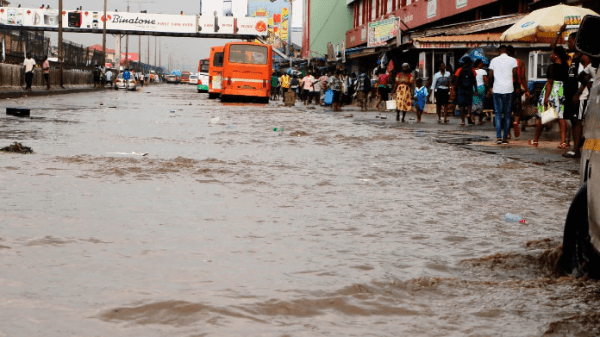
Mr Opoku stressed that climate resilience must become a national development priority, warning that flood disasters could wipe away decades of investment and livelihoods within hours.
“It can take people 10, 15 or 20 years to acquire property, but one flood event can destroy everything,” he cautioned.
He also called for stronger public education on disaster risk reduction and greater collaboration among citizens, local assemblies and national institutions.
Technology-driven early warning systems
Mr Opoku disclosed that GMet was expanding its use of digital technology to improve weather communication and public safety.
The Agency currently issues daily weather forecasts three times each day at 5am, 11am and 5pm, while emergency weather alerts are released immediately severe conditions are detected.
Forecasts and warnings are shared with institutions including the National Disaster Management Organisation (NADMO), Ghana Police Service, Ghana Armed Forces, Ghana Civil Aviation Authority, media organisations and other stakeholders.
He added that GMet also disseminated information through WhatsApp, Instagram, YouTube, X and other social media platforms.
The Agency is additionally introducing a Common Alerting Protocol (CAP) system that will allow severe weather warnings to be sent directly to mobile phones and digital platforms.
Citizens urged to take warnings seriously
Despite improvements in public awareness, Mr Opoku said many citizens still ignored weather advisories until disasters occurred.
“Most Ghanaians normally do not pay heed to some of these things until the event has occurred and probably cost them in a way,” he lamented.
He advised residents in flood-prone areas to relocate temporarily whenever warnings were issued, avoid walking near open drains during heavy rainfall and refrain from driving through flooded roads.
He also appealed to the public to stop dumping refuse into drains, stressing that clogged drainage systems significantly worsened flooding across urban communities.
As the rainy season intensifies, GMet says the country stands at a critical point where investment in modern forecasting systems, climate resilience infrastructure and responsible urban planning can no longer be delayed.
Officials warn that without urgent action, the human and economic costs of flooding and extreme weather events could continue to rise sharply in the years ahead.


