GH¢500m monthly fuel subsidy chokes NPA, BOST – NPP
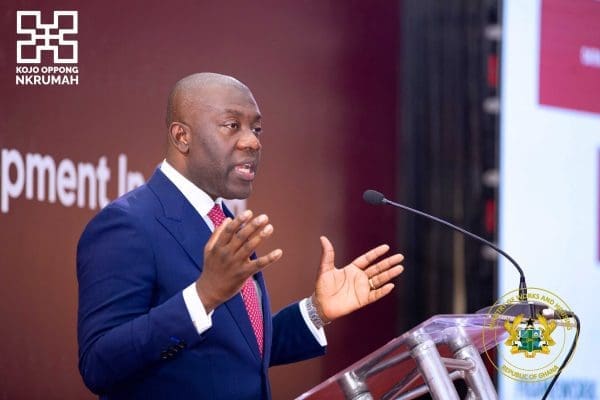
Kojo Oppong Nkrumah
The Government’s decision to maintain a GH¢2-per-litre reduction in diesel prices is creating a monthly financial burden of more than GH¢500 million on Ghana’s downstream petroleum sector, according to the Chairman of the New Patriotic Party (NPP) Policy Co-ordination Committee, Kojo Oppong Nkrumah.
Mr Oppong Nkrumah, who is also the MP, said the intervention was effectively shifting the cost of providing relief to motorists from Government’s own revenues to institutions and companies whose statutory margins had been suspended.
He said the suspended margins amounted to an estimated GH¢519.12 million every month, based on average monthly diesel consumption of approximately 259.56 million litres.
He further estimated that when the implied support to the Unified Petroleum Price Fund (UPPF) was included, the monthly exposure could rise to nearly GH¢683 million.
According to him, the cumulative amount withheld from BOST, distributors, fuel-marking operations and the UPPF across April, May, August and September 2026 had reached GH¢2.076 billion, with the affected revenues yet to be replaced.
He cautioned that the apparent relief at the fuel pump could therefore become a debt burden elsewhere in the petroleum sector.
BOST faces GH¢31.15m monthly loss
Mr Oppong Nkrumah said the 12-pesewa-per-litre BOST Energy Margin had been suspended, resulting in an estimated monthly revenue loss of GH¢31.15 million.
He explained that the margin was intended to support the maintenance and operation of BOST’s storage tanks, pipelines and depots, as well as expansion of petroleum infrastructure.
He argued that suspending the revenue did not remove BOST’s operational responsibilities.
According to him, storage facilities still had to be maintained, pipelines operated and strategic petroleum infrastructure kept functional.
He warned that prolonged revenue shortfalls could result in deferred maintenance, unpaid suppliers, delayed projects and institutional borrowing, eventually creating obligations that could require Government intervention.
NPA, distributors lose GH¢67.49m
Mr Oppong Nkrumah said the Primary Distribution Margin (PDM) of 26 pesewas per litre had also been suspended, resulting in an estimated GH¢67.49 million monthly loss.
He said the PDM supported the movement of petroleum products between depots and therefore helped finance an essential part of the downstream distribution chain.
He argued that the suspension of the margin did not eliminate the cost of transporting and distributing petroleum products, leaving distributors to absorb the resulting funding gap.
He said this could ultimately translate into supplier arrears and other financial obligations within the sector.
Fuel marking loses GH¢23.36m
Mr Oppong Nkrumah further said the suspension of the nine-pesewa-per-litre Fuel Marking Margin had created an estimated revenue loss of GH¢23.36 million.
He said the fuel-marking system was important for protecting Government revenue and preventing smuggling, adulteration and other leakages within the petroleum market.
He argued that the regulatory function had to continue even when the revenue financing it was withheld, creating another potential funding gap.
UPPF faces GH¢397.13m squeeze
The largest component of the financial pressure, according to Mr Oppong Nkrumah, was the UPPF.
He put the UPPF-related component at GH¢1.53 per litre, equivalent to an estimated GH¢397.13 million.
He said the UPPF, managed by the National Petroleum Authority (NPA), was designed to compensate petroleum transporters for the additional cost of moving products from depots to distant parts of the country.
He explained that the mechanism helped maintain relatively uniform fuel prices across Ghana by preventing transportation distances from translating into significantly different pump prices.
Mr Oppong Nkrumah therefore warned that reducing revenue into the UPPF while maintaining its obligations could create pressure on the NPA and petroleum transporters.
GH¢519.12m monthly exposure
Mr Oppong Nkrumah said the affected margins, taken together, represented an estimated GH¢519.12 million monthly revenue shortfall based on diesel consumption of 259.56 million litres.
He said the scale of the exposure meant the intervention could not be treated as a minor adjustment to petroleum pricing.
According to him, one month of suspended margins represented about GH¢519 million, rising to GH¢1.04 billion over two months and GH¢1.56 billion over three months.
When the implied UPPF support was included, he said the exposure could rise to GH¢683 million for one month, GH¢1.37 billion for two months and GH¢2.05 billion for three months.
He said the figures demonstrated the need for Government to identify a sustainable source of financing for the intervention.
Diesel could cross GH¢18
Mr Oppong Nkrumah also warned that the intervention was becoming increasingly expensive as international petroleum prices rose.
He said diesel was already selling in the GH¢17-plus per-litre range at major Oil Marketing Companies and could rise above GH¢18 per litre even with the GH¢2 intervention.
He based the projection on a 4.85 per cent increase in international diesel prices and a 0.88 per cent weakening of the cedi.
Without the intervention, he estimated that the underlying diesel price could exceed GH¢20 per litre.
He said the situation presented Government with a difficult choice: continue the GH¢2 reduction while accumulating more than GH¢500 million in monthly downstream obligations, or withdraw the intervention and expose consumers to higher pump prices.
International prices drive pressure
Mr Oppong Nkrumah said the pressures were being driven partly by developments in the international petroleum market.
For the September 16–30, 2026 pricing window, he said crude oil had risen from US$92.11 to US$98.18 per barrel, representing a 6.59 per cent increase.
He said international petrol prices had increased by 14.57 per cent, diesel by 4.85 per cent and LPG by 13.47 per cent, while the cedi had weakened from GH¢11.40 to GH¢11.50 to the US dollar.
He attributed the international pressures to renewed hostilities involving Iran, the United States and Israel, disruptions around the Strait of Hormuz and declining global petroleum inventories.
Use oil windfall to fund relief
Mr Oppong Nkrumah said Government had an alternative to shifting the burden onto BOST, NPA and other downstream operators.
He pointed to the 2026 Budget’s crude oil benchmark of US$76.22 per barrel and projected production of 37.95 million barrels, equivalent to 103,959.73 barrels per day.
With crude prices reaching as high as US$110 per barrel and averaging about US$89 per barrel for the year, he estimated that Government had generated an additional GH¢8 billion to GH¢9 billion in petroleum-related revenue.
He said the estimated windfall was about six times the downstream debt burden he attributed to the suspended margins.
Mr Oppong Nkrumah therefore urged Government to use part of the additional petroleum revenue to provide consumer relief rather than depriving downstream institutions of resources required for their operations.
Suspend taxes instead of margins
Mr Oppong Nkrumah specifically proposed the suspension of selected petroleum taxes and levies.
He cited the Energy Sector Shortfall and Debt Repayment Levy, through which Government collects GH¢1.93 on every litre of diesel, following a GH¢1-per-litre increase in 2025.
He said the GH¢1.93 levy was almost equivalent to the GH¢2-per-litre relief currently being achieved through the suspension of margins.
He argued that reducing selected Government taxes and levies would make the cost of the intervention visible in the national budget, allowing Parliament and the public to scrutinise it.
He said such an approach would also ensure that BOST, distributors, fuel-marking operations and the UPPF continued receiving the revenues required to perform their respective functions.
Previous interventions cost billions
Mr Oppong Nkrumah said Ghana had already spent significant amounts on previous fuel-price interventions.
He estimated that an earlier diesel intervention cost about GH¢800 million over two months, while a petrol intervention cost approximately GH¢99.4 million for one month, based on a GH¢0.36-per-litre reduction.
He said if the current diesel intervention continued into a third month, the cumulative value of successive petroleum price interventions could approach GH¢2.5 billion.
He therefore called for Government to disclose the full cost of the intervention rather than presenting it only as a GH¢2-per-litre reduction.
Warning over new energy debt
Mr Oppong Nkrumah warned that the current arrangement risked recreating the conditions that contributed to Ghana’s previous energy-sector debt problems.
He said the issue was not whether Government should protect consumers from international petroleum price shocks, but who should finance that protection.
He argued that international crude prices and geopolitical developments were beyond Ghana’s control, but Government could determine whether the cost of domestic relief was absorbed through the national budget or shifted to institutions within the downstream petroleum sector.
He said a policy creating more than GH¢500 million in monthly obligations could not continue indefinitely without consequences.
He maintained that the longer the intervention remained in place without a sustainable funding source, the greater the risk of arrears, deferred maintenance and institutional borrowing.
NPP calls for change in approach
Mr Oppong Nkrumah called on Government to restore the statutory margins that had been suspended and instead use part of its petroleum revenue to finance consumer relief.
He said the objective should be to protect consumers without weakening the financial position of BOST, NPA, distributors, fuel-marking operators and the UPPF.
He warned that every additional month of suspended margins could add another GH¢519.12 million to the estimated burden.
For three months, he said, the suspended-margin exposure would reach GH¢1.56 billion, rising to GH¢2.05 billion when the implied UPPF support was included.
Mr Oppong Nkrumah said the central issue was therefore not simply the price consumers paid for diesel today, but the financial obligations being accumulated elsewhere.
He cautioned that reducing the pump price without removing the underlying cost did not eliminate the liability, but merely shifted it from the fuel pump to the balance sheets of downstream institutions and potentially, ultimately, to the taxpayer.