Frimpong-Boateng: 1D1F, 1V1D, Nkokonkitinkiti unsustainable

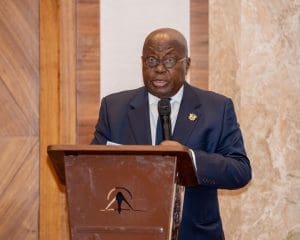
Professor Kwabena Frimpong-Boateng
Former Minister of Environment, Science and Technology, Prof. Kwabena Frimpong-Boateng, has called for the development of a long-term national plan that successive governments can adopt and implement regardless of political changes.
According to him, Ghana’s development agenda has lacked the consistency and continuity needed to achieve sustainable national progress, with successive administrations introducing new initiatives instead of building on long-term strategies.
Prof. Frimpong-Boateng cited programmes such as the One-District-One-Factory (1D1F), One-Village-One-Dam (1V1D), Nkoko Nkitinkiti and the Big Push as examples of initiatives he believes have not provided the sustainable development framework the country needs.
Speaking in an interview on Channel One TV on Wednesday, September 16, 2026, Prof. Frimpong-Boateng argued that Ghana needs a development framework that remains in force even when there is a change in government or political party.
“I don’t see any clear picture being laid out by the politicians,” he said.
He contrasted the current approach with Ghana’s earlier development planning under the country’s first President, Dr Kwame Nkrumah, arguing that long-term plans have been abandoned in favour of successive government initiatives.
“For example, we abandoned Kwame Nkrumah’s Seven-Year Development Plan. We abandoned it and now replace it with One-District-One-Factory, One-Village-One-Dam, Nkoko Nkitinkiti, and Big Push and all that. These are not sustainable things.”
The former minister stressed the need for political commitment to a single, comprehensive development blueprint capable of guiding the country over several years.
“There must be a solid plan that we can all follow, long-term, something that the government, even your own party, will maintain. But some of them, even the next government from the same party, will be rejected,” he said.
He said the absence of a consistent long-term development direction had left Ghana repeatedly revisiting fundamental decisions about the country’s future.
Prof. Frimpong-Boateng used the analogy of a vehicle going around a roundabout to describe what he sees as Ghana’s prolonged uncertainty over its development path.
“We are at a roundabout. We are dancing around, driving around a roundabout for years. We’ve gone past the crossroads. We’ve come to a point where we have to decide whether to go to the left or to the right, or maybe forward,” he said.
He maintained that a national development plan, backed by broad political commitment, would provide continuity and ensure that development programmes are not discarded whenever there is a change in government.