Domestic violence response needs collaboration — Stakeholders
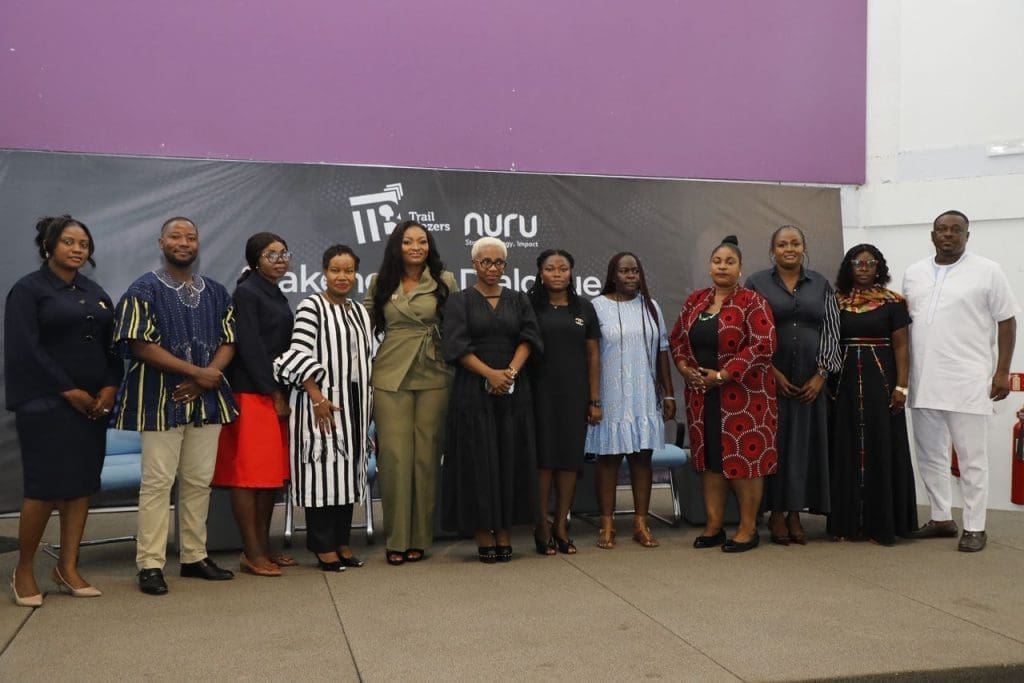
Speakers at a stakeholder dialogue on domestic violence organised by Trail Blazers, a non-profit organisation dedicated to supporting underprivileged women, and Nuru Communications Group, have advised victims of domestic violence to speak up when they experience abuse.
They stressed that remaining silent only emboldens perpetrators to continue.
In her welcome address, the organiser noted that domestic violence is a pressing reality affecting homes, schools, and communities.
“Domestic violence is not distant or abstract. It is real, present, and urgent—affecting our homes, schools, and communities, and ultimately the fabric of our nation,” she said.
While acknowledging that awareness has improved over the years, she emphasised that awareness alone is insufficient.
“Awareness without action leaves too many voices unheard and too many lives affected. Today is about moving beyond conversation into coordination, and beyond intention into impact,” she added.
She called for reflection on response gaps and urged institutions to collaborate more effectively to ensure that no victim feels alone or unsupported.
The wife of the Chief of Staff, Victoria Debrah, who delivered the keynote address, said domestic violence cuts across gender, religion, and social class, affecting individuals from all walks of life.
She described it as “one of the most pervasive yet often hidden challenges facing our society,” noting that many victims endure physical harm, emotional trauma, psychological abuse, and economic deprivation in silence.
“Behind closed doors, many endure abuse, but beyond the statistics are real people—women, men, and children—whose voices are often silenced by fear, stigma, or lack of support,” she said.
Mrs Debrah called for the silence surrounding domestic violence to be broken and urged communities to play an active role in addressing the issue.
“Communities are not just witnesses to domestic violence; they are key to ending it,” she stated.
She stressed the need for coordinated institutional action, noting that no single body can tackle the problem alone.
“We need law enforcement to ensure justice, health professionals to provide care, social services to support recovery, faith leaders to guide and counsel, policymakers to create protective frameworks, and community members to speak up and stand together,” she said.
She also called for the creation of safe spaces where victims can access counselling, legal protection, and economic empowerment.
“Empowering communities to understand and respond to domestic violence is not just a social issue, but a moral imperative,” she concluded.
During a panel discussion, Lawyer Kezia Peace Kenneth Azumah reiterated that domestic violence is not limited by class or gender and includes physical, emotional, financial, and social abuse.
She advised victims to consider engaging private legal representation, even though such cases fall under the Attorney-General’s Department and police prosecutors.
According to her, private legal support can help victims navigate cases more effectively, particularly within a patriarchal societal context that may influence institutional responses.
She also encouraged victims who lack financial resources to seek assistance from the Legal Aid Commission.
Lawyer Azumah further explained that many domestic violence cases, especially those involving sexual assault, are difficult to prosecute due to lack of evidence.
Esther Ennin of the Ark Foundation, an NGO supporting victims of abuse, criticised delays in the justice delivery system, urging authorities to fast-track cases involving survivors.
She highlighted the Foundation’s “Orange Support Centre,” which provides counselling and psychosocial services to victims.
Assistant Director at the Department of Social Welfare, Esther Maku Addico, noted that abuse cases are criminal matters initially handled by the Domestic Violence and Victim Support Unit (DOVVSU) of the Ghana Police Service.
She explained that many cases stem from family-related issues such as neglect and custody disputes, with Social Welfare intervening to mediate before referring unresolved cases to legal aid and the family court.
Rev. Desmond Anderson of the Assemblies of God Church acknowledged the role of religious institutions in addressing domestic violence but stressed the need for greater action.
“Although the churches are doing much in settling marital disputes and resolving domestic abuse situations, we must do more. We need to go beyond counselling,” he said.