
Bagbin blocks parliamentary inquiry into drugs
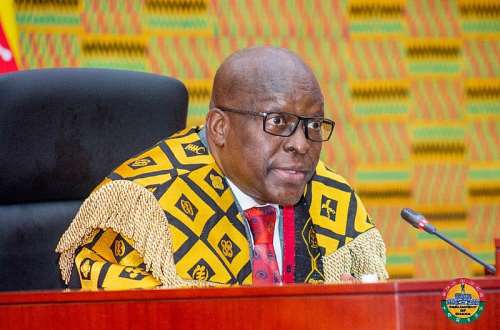
Alban Sumana Bagbin
The Speaker of Parliament, Alban Bagbin, has blocked a request by the New Patriotic Party (NPP) Minority for a bipartisan parliamentary inquiry into a series of major narcotics seizures involving consignments linked to Ghana, ruling the motion inadmissible because of its overlap with matters before the courts.
Mr Bagbin delivered the ruling on Tuesday, September 29, 2026, during an emergency sitting of Parliament convened after the Minority petitioned for the House to examine the seizures and possible weaknesses in Ghana’s systems for inspecting and clearing cargo.
The proposed inquiry, filed by the First Deputy Minority Whip and Member of Parliament for Tolon, Habib Iddrisu, sought the establishment of an Ad Hoc Committee to conduct what its sponsors described as a transparent and bipartisan investigation into the drug seizures.
However, Mr Bagbin said he had considered the terms of reference of the proposed committee alongside the ongoing investigations, pending judicial proceedings, Parliament’s constitutional oversight responsibilities and the Standing Orders of the House.
Inquiry overlaps court cases
The Speaker said there was substantial factual overlap between the proposed parliamentary investigation and issues currently before the courts.
He explained that allowing the inquiry to proceed could require Parliament to examine transactions, assess the conduct of individuals and institutions and determine why particular actions were taken or opposed at Ghana’s ports of entry.
Such an exercise, he said, could ultimately require Parliament to determine matters that properly fell within the jurisdiction of the courts.
“The combined effect of undertaking this evaluation, assessment, and investigation would be, at the end of the day, to determine the very issues that the Court of Competent Jurisdiction is supposed to determine,” Mr Bagbin said.
He further expressed concern that the proposed inquiry could prejudice the interests of parties involved in the pending cases.
“I therefore rule, pursuant to Standing Orders 5, 6, and 103, Sub-Rule F, that the Party Member’s motion is inadmissible,” he declared.
The ruling effectively halted the Minority’s immediate attempt to establish the proposed committee.
Minority had sought systems review
The Minority had argued that its proposed inquiry was not intended to determine the guilt or innocence of suspects but to examine institutional and systemic weaknesses surrounding the movement of narcotics consignments. The caucus reiterated that position after the Speaker’s ruling.
The request followed a series of major drug seizures involving consignments allegedly linked to Ghana.
The Minority cited the seizure in March 2025 of more than 3.3 tonnes of cocaine, reportedly valued at more than US$350 million, at Pedu Junction near Cape Coast.
It also referred to the seizure by Australian authorities in June 2026 of about 320 kilogrammes of methamphetamine concealed in containers declared as charcoal and traced to Ghana, with an estimated street value of about US$208 million.
Another major seizure occurred in September 2026, when French customs officials at Dunkirk intercepted nearly 3.9 tonnes of cocaine concealed among recycled plastic in a container reportedly shipped from Ghana.
The Minority said the incidents raised questions about cargo inspection, export controls, port security, intelligence gathering and the effectiveness of institutions responsible for combating narcotics trafficking.
It wanted Parliament to examine how the consignments were assembled, inspected and cleared, as well as the roles of state institutions and private-sector actors.
The caucus also sought comprehensive information on drug seizures, arrests and prosecutions recorded since January 2025.
Parliament recalled from recess
The emergency sitting followed Mr Bagbin’s decision to recall Parliament from recess for one day.
In a notice dated September 24, the Speaker invoked Article 112(3) of the 1992 Constitution and Order 53 of Parliament’s Standing Orders to summon the House to sit at noon on September 29.
The recall came amid growing concerns over the series of narcotics seizures involving consignments linked to Ghana.
Bagbin cautions on free speech
In a separate communication to Parliament, Mr Bagbin cautioned against the misuse of freedom of expression to justify threats, incitement and the deliberate spread of false information.
He said the national debate over social media regulation and misinformation must balance the protection of free expression with accountability.
The Speaker said the discussion should be broad, inclusive and measured and should neither suppress legitimate dissent nor shield public officials from criticism.
“Neither should legitimate concerns about freedom of expression become an excuse for threats, incitement, deliberate falsehoods or the reckless abuse of others,” he said.
He called on media organisations, civil society groups, technology companies and social media users to contribute constructively to the debate and urged citizens to verify information before sharing it.
Mr Bagbin said any future measures should comply with the Constitution and respect fundamental rights, including privacy and access to information.
Walewale MP apologises
The sitting also saw the Member of Parliament for Walewale, Dr Kabiru Tiah Mahama, withdraw his description of the Speaker’s decision to recall Parliament as “rude” and apologise to Mr Bagbin and the House.
The apology followed criticism from the Speaker over comments the MP made during a press engagement.
Mr Bagbin said MPs were entitled to criticise his decisions but cautioned that such criticism should not undermine the dignity of Parliament or the authority of the Speaker’s office.
Dr Tiah Mahama subsequently acknowledged using the word and said he had misunderstood its meaning before withdrawing the remark and apologising.