Agbodza justifies 81 sole-sourced Big Push road contracts
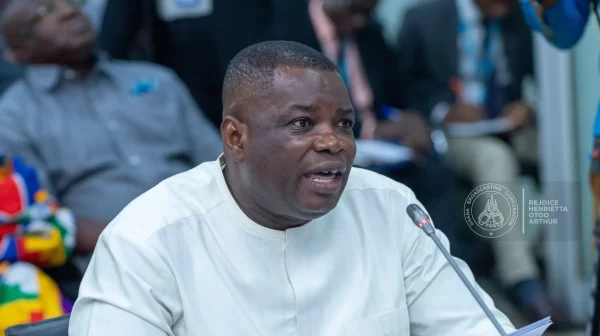
Kwame Governs Agbodza, Road Minister
The Minister of Roads and Highways, Kwame Governs Agbodza, has dismissed claims that the government’s flagship Big Push Infrastructure Programme is dominated by sole sourcing, stressing that all contracts awarded under the initiative are fully compliant with Ghana’s public procurement regulations.
Addressing Parliament, Agbodza described allegations of widespread sole sourcing as “misleading and unfounded,” noting that only 44% of major contracts, including those under the Big Push, were procured through direct awards.
Over 400 other contracts have been awarded through open competitive tendering.
Urgency and procurement choices
The Minister explained that a mix of procurement methods is permitted by law and was necessary to respond to the urgent need to rehabilitate Ghana’s deteriorating road network.
Relying solely on prolonged tendering processes, he argued, would have delayed critical projects and increased costs.
He revealed that 23 abandoned road projects, valued at GHS 14.88 billion and inherited from the previous administration, have now been incorporated into the Big Push programme with dedicated funding.
Key projects include the Suame Interchange, Ofankor–Nsawam Road, and Adenta–Dodowa Road. Agbodza emphasized that many of these projects would still be stalled without the current approach.
Economic corridors and scope
According to the Minister, the Big Push programme is structured around 12 key economic corridors, divided into 54 lots to promote competition and accelerate project delivery.
He added that more than 2,000 kilometres of roads across all 16 regions are currently under construction or rehabilitation.
Ensuring value for money
Agbodza said rigorous safeguards have been implemented to guarantee cost efficiency and quality delivery.
Projects undergo government-led surveys, design, and costing before independent value-for-money assessments are carried out on contractor proposals.
He also highlighted the introduction of stricter monitoring systems to ensure payments are made strictly for completed work.
The Minister rejected criticism based on “cost per kilometre” comparisons, arguing that such evaluations fail to account for variations in project scope, engineering requirements, and the inclusion of additional infrastructure such as interchanges and bridges.
Addressing historical challenges
Agbodza pointed out that projects awarded in 2024 often lacked proper financial commitment and competitive procurement processes, contributing to arrears exceeding GH₵40 billion.
He noted that the government has so far paid more than GH₵11 billion to settle part of these obligations.
Reaffirming his position, the Roads and Highways Minister said there has been no breach of procurement laws, describing sole sourcing as the exception rather than the rule under the Big Push programme.
He urged Parliament and the public to support the initiative, warning against misinformation that could undermine a programme critical to improving national road infrastructure, reducing transport costs, and boosting economic activity.
“The Big Push is delivering real results across the country,” Hon. Agbodza said, calling for broad national backing to sustain its momentum.