GoldBod to formalise small-scale mining in 6 months – CEO

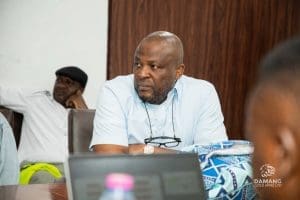
Chief Executive Officer of GoldBod, Sammy Gyamfi
GoldBod is moving to formalise informal small-scale mining within six months, with a new programme designed to organise miners into cooperatives, secure licences and promote responsible mining practices.
The initiative, known as the Responsible Cooperative Mining and Skills Development Programme (rCOMSDEP), seeks to bring artisanal miners operating outside the regulatory framework into a structured, licensed and environmentally responsible mining sector.
Chief Executive Officer of GoldBod, Sammy Gyamfi, said the programme would combine cooperative registration, skills development and licensing to address informality in small-scale mining while creating sustainable employment opportunities, particularly for young people.
In a statement issued on Saturday, October 31, 2026, Mr Gyamfi said the programme would “facilitate the full formalization and licensing of registered cooperatives within a six month period.”
Under the scheme, eligible miners will be organised into cooperatives through the Department of Cooperatives and trained in sustainable mining practices, mercury-free processing, land reclamation and environmentally friendly extraction methods.
The registered groups will then be directed to suitable mineralised areas approved by the Minerals Commission, Environmental Protection Agency, Water Resources Commission and the Ministry of Lands and Natural Resources.
The programme has received Cabinet approval and is provided for in an amendment bill to the Minerals and Mining Act currently before Parliament.
GoldBod is collaborating with the Ministry of Lands and Natural Resources to implement the initiative as part of its statutory responsibility to promote formalisation in the small-scale mining sector.
Mr Gyamfi said rCOMSDEP was expected to complement enforcement operations by the National Anti-Illegal Mining Operations Secretariat (NAIMOS), strengthening the government’s response to illegal mining through a combination of regulation, skills development and access to approved mining areas.
Strict eligibility conditions
The programme will not offer blanket access to mining. Eligibility will be restricted to miners who are not operating in areas covered by existing mineral rights or locations where mining could threaten water bodies, forest reserves and communities.
The restrictions are intended to ensure that formalisation does not legitimise mining in environmentally sensitive or legally encumbered areas.
By requiring miners to operate through registered cooperatives, obtain licences and follow approved environmental practices, the programme seeks to move informal operators into a system where their activities can be regulated and monitored.
The emphasis on mercury-free processing and land reclamation also reflects an effort to address the environmental damage associated with irresponsible small-scale mining.
Formalization as a pathway to indigenous ownership
Mr Gyamfi said the programme was informed by formalisation initiatives in countries including Colombia, Mongolia, Peru and Tanzania, which Ghana could draw lessons from in developing its own approach.
He argued that a properly organised artisanal and small-scale mining sector could create opportunities for greater indigenous participation in the country’s mineral industry.
“I hold the view that, properly organized artisanal and small-scale mining offers one of the clearest pathways from mineral ownership in law to indigenous ownership in practice,” he said.
He added that formalisation supported by modern technology could improve safety, environmental protection and employment while strengthening the contribution of indigenous enterprises to national development.
The six-month target places the emphasis on moving eligible miners beyond registration and training to full licensing, although the programme’s impact will depend on implementation, enforcement and compliance with its environmental and regulatory conditions.
If effectively executed, rCOMSDEP could provide a structured route for eligible informal miners to enter the legal mining sector while supporting the government’s wider efforts to curb illegal mining and protect Ghana’s natural resources.