GBA rebukes CJ over SOEs political comments

Mrs Efua Ghartey, GBA President and Paul Baffoe-Bonnie, Chief Justice
The Ghana Bar Association (GBA) has criticised Chief Justice Paul Baffoe-Bonnie over comments he made about the performance of state-owned institutions, warning that remarks of a political or governmental nature by the head of the Judiciary could raise concerns about judicial impartiality.
The GBA President, Efua Ghartey, said the association was particularly concerned about the Chief Justice’s decision to commend public institutions under the current administration while comparing their performance with that of the previous government.
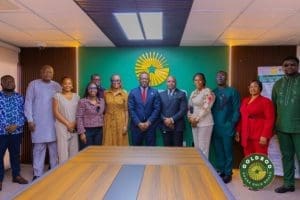
Justice Baffoe-Bonnie made the comments during a visit to the Minerals Income Investment Fund (MIIF) on September 2, where he praised developments at MIIF and other public institutions and said some of what he had witnessed had left him wondering what Ghana had been doing over the previous eight years.
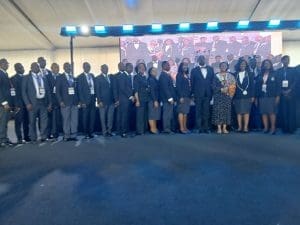
Speaking at the GBA Conference 2026/27 at Ada on Monday, September 14, Mrs Ghartey said the comments were inappropriate given the constitutional and independent nature of the Chief Justice’s office.
The conference was held under the theme, “150 Years of Ghana’s Legal Evolution: Transforming the Profession and Driving its Future with Industry.”
“The recent commendation of a public institution and the comparison to a past government’s output, by no mean a person than the Chief Justice of the Republic of Ghana, left much to be desired,” she said.
Mrs Ghartey said while the Bar was reluctant to interpret the comments as evidence of any underlying sentiment, it was concerned about the implications of such public pronouncements by a holder of high judicial office.
She referred to the biblical admonition in Matthew 12:34, saying: “We do not want to believe that what happened is a fulfilment of Matthew 12:34, which says, ‘Out of the abundance of the heart, the mouth speaketh.’”
Judicial independence
The GBA President said the association’s concern was not intended to undermine the Judiciary or its independence, but rather to reinforce the need for judicial officers to remain within the constitutional boundaries of their offices.
She said judicial independence, guaranteed under Article 128(4) of the 1992 Constitution, was fundamental to the administration of justice and must be protected.
“The Bar wishes to serve a reminder that much as it is poised to protect the independence of the Judiciary, as per Article 128(4) of the 1992 Constitution of the Republic of Ghana, the guarded must stay within their bounds as dictated by their calling in the Constitution,” she said.
Mrs Ghartey also criticised an explanation offered by the Judicial Secretary in an apparent attempt to defend the Chief Justice’s comments, describing it as inadequate.
“Respectfully, the Judicial Secretary’s attempted defence of the Chief Justice was, at best, lacklustre,” she said.
She stressed that persons entrusted with constitutional responsibilities had an obligation to exercise restraint and remain within the limits of their respective mandates.
Deputy Attorney-General hits back
The Deputy Attorney-General, Dr Justice Srem-Sai, however, accused the GBA of applying its standards selectively in responding to comments by Chief Justices.
He questioned why the association had criticised Justice Baffoe-Bonnie if its position was that judicial officers should avoid comments that could be interpreted as political, arguing that the same principle should apply regardless of the individual occupying the office or the government in power.
“If the Ghana Bar Association is of the view that Chief Justices should not make comments that are seen as political, then anytime a Chief Justice or any judge makes such a comment, then the Ghana Bar Association should condemn it,” he said.
Dr Srem-Sai said the Bar could choose to remain silent on such matters or consistently speak out, but should not condemn some comments while overlooking others.
“So, our point is that if you decide to be quiet, then be prepared throughout. If you decide to talk, then talk throughout,” he said.
He accused the GBA of creating a perception that its interventions were influenced by political considerations, particularly when comments by judicial officers appeared to favour or disadvantage particular political interests.
Political neutrality questioned
Dr Srem-Sai stopped short of directly accusing the GBA of being aligned with the opposition New Patriotic Party (NPP), but said the perception of such an alignment persisted.
“We hope they are not. It is our prayer that they are truly not,” he said.
He said the pattern of criticism attributed to the association had fuelled suspicions about its political neutrality.
“The point we are making is that the perception or the reality seems to persist. They pick and choose as and when they want to criticise. All their picking and choosing seem to align to a particular political party’s interests. That’s the issue,” he said.
The Deputy Attorney-General also pointed to comments from the parliamentary Minority in defence of the GBA, arguing that such reactions had contributed to perceptions of a relationship between the association and the opposition.
He said the controversy had reinforced a longstanding public perception that the GBA was not always seen as politically neutral.
According to him, the association’s credibility would be strengthened if it applied its principles consistently to comments by judicial officers irrespective of their political implications.
The dispute follows the Chief Justice’s September 2 visits to SSNIT and MIIF, during which comments comparing the performance of the institutions under the current administration with that of the previous government attracted criticism from sections of the public and the political opposition.
The controversy has since raised broader questions about the boundaries of public commentary by holders of constitutionally independent offices and the responsibility of professional bodies such as the GBA to defend judicial independence while maintaining political neutrality.