Dogboe reveals battle beyond the ring
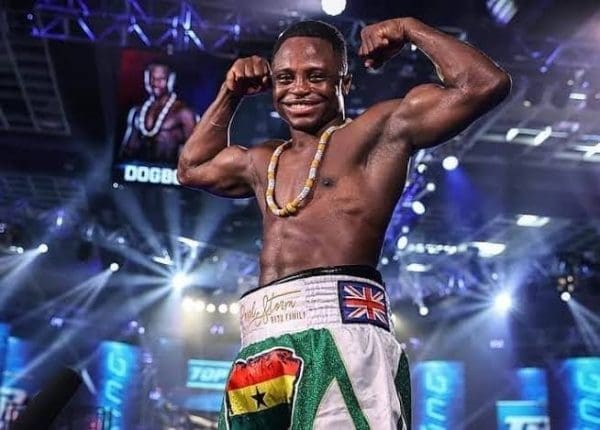
Isaac Dogboe
For years, Isaac Dogboe built his reputation on courage, resilience and an unwillingness to surrender.
Inside the ring, the Ghanaian was known as the “Royal Storm”, a fighter whose aggressive style, punching power and relentless pressure made him one of the country’s most recognisable boxers.
But as Dogboe walks away from professional boxing, he has revealed that some of the toughest battles of his career were not fought under the lights. They were fought in his mind.
The former WBO super bantamweight world champion has opened up about the mental and emotional strain of professional boxing, calling for greater awareness and support for athletes struggling with their mental health.
“It drives you nuts. Sometimes it’s a little bit deeper than it seems,” Dogboe said.
“Our sport or industry is such that we’re constantly portraying strength. When you’re hurt, you have to get up and act like you’re okay.”
His comments offer a different perspective on a career that included a world championship, painful defeats and a determined attempt to rebuild.
At 31, Dogboe has decided the time is right to retire.
A difficult decision
Retirement was not an easy decision for Dogboe.
After more than a decade of training, fighting and preparing for the next opponent, stepping away meant leaving behind an identity that had shaped much of his life.
“It’s been a tough decision to make. Sometimes I’ll be there and get the itch,” he said.
Even after considering retirement, offers continued to come his way. Each one forced him to ask whether he was prepared to return to the demanding life of a professional fighter.
“An offer will come to the table, but I ask myself, ‘Do I really want to take this fight?’ So, I had to take a minute to arrive at this decision.”
Money, he stressed, was not the deciding factor.
“It’s never been about the money for me when it comes to boxing; I just wanted to be sure I was making the right decision.”
Eventually, he chose to close the chapter.
His retirement, announced in September 2026, ended a 13-year professional career that produced 24 victories, four defeats and 16 knockouts.
The hidden cost of toughness
Dogboe’s revelations have also drawn attention to the psychological demands of professional boxing.
The sport celebrates toughness. Fighters are expected to absorb punishment, overcome setbacks and maintain an image of strength regardless of what they may be experiencing internally.
For Dogboe, that culture can make it difficult for fighters to seek help.
“It’s difficult to find someone to talk to through all of this because you’re constantly thinking about your previous fights, your next bout…so many things running through your mind,” he said.
“Sometimes, combining that with family becomes difficult.”
The public sees the punches, victories and defeats. What it does not always see is what happens after the lights go out.
A boxer must cope not only with the physical demands of training and competition, but also with injuries, criticism, expectations, defeat and uncertainty about the future.
Dogboe’s experience has therefore become a call for greater support for athletes, particularly those struggling behind the public image of strength.
From Accra to world champion
Born in Accra on September 26, 1994, Dogboe began his professional career in 2013 after representing Ghana at the 2012 London Olympic Games.
He quickly established himself as one of the country’s most promising fighters, winning the West African Boxing Union West Featherweight title in 2015 before adding the WBO Africa Featherweight title later that year.
Further regional success followed, including the WBC Youth Silver Featherweight and WBO Oriental titles in 2016, as well as the WBO International Super Bantamweight title.
In January 2018, Dogboe defeated César Juárez to win the WBO interim super bantamweight championship.
Then came the defining night of his career.
On April 28, 2018, he faced Jessie Magdaleno in Philadelphia for the WBO world super bantamweight title.
Dogboe stopped Magdaleno in the 11th round to become world champion at just 23.
The victory made him Ghana’s youngest-ever world boxing champion and the country’s eighth world champion.
It was the realisation of an ambition that had grown after his disappointing Olympic experience.
Dogboe successfully defended his world title against Japan’s Hidenori Otake, stopping him in the first round.
At that point, the future appeared bright.
But boxing can change everything in a single night.
The Navarrete setback
In December 2018, Dogboe faced Mexico’s Emmanuel Navarrete and lost his world title.
He was given an opportunity to reclaim the championship in their rematch in May 2019, but Navarrete won again.
The two defeats marked the most difficult period of Dogboe’s career.
Only months earlier, he had been at the top of the boxing world. Suddenly, he was dealing with the loss of his championship and the pressure to prove that the setbacks did not define him.
The experience provides important context to his reflections on mental health.
A scorecard records a defeat, but it cannot capture the emotional consequences that follow.
There are questions about what went wrong, pressure from fans and family, uncertainty about the next fight and the constant desire to prove oneself again.
Dogboe continued.
He rebuilt his career at featherweight, winning the North American Boxing Federation title against Adam Lopez in 2021 and the WBO International Featherweight title against Joet Gonzalez in 2022.
He later challenged Robeisy Ramirez for the WBO featherweight championship in 2023 and also competed in a WBC final eliminator against Nick Ball.
But the pursuit of another world title ultimately came to an end.
More than a record
Dogboe retires with a 24-4 record and 16 knockouts, but statistics tell only part of his story.
His résumé includes a world championship, regional and international titles, Olympic representation and more than a decade competing at the highest level.
Yet his legacy is also defined by his ability to recover from adversity.
He became world champion at 23, lost his title, suffered another defeat in the rematch, moved up in weight and continued fighting.
Now, despite being at an age when many boxers remain active, he has decided not to continue simply because he still can.
Recent reports indicate that Dogboe intends to remain connected to boxing through youth development and mentorship, while supporting the next generation of Ghanaian fighters.
The legacy of the Royal Storm
Dogboe’s legacy will always be linked to the night he defeated Magdaleno and made Ghanaian boxing history.
But his story now carries another message.
By speaking openly about mental health, he has reminded fans that fighters are human beings before they are competitors.
A boxer can be physically strong and still struggle emotionally.
A world champion can still need someone to talk to.
And sometimes, strength means recognising when it is time to walk away.
Dogboe leaves professional boxing as a former world champion, a Ghanaian history-maker and a fighter who experienced both the highest rewards and deepest challenges of the sport.
The Royal Storm spent years proving that he could withstand punishment inside the ring.
In retirement, his willingness to speak about the battles outside it may become one of his most important contributions to boxing.
His gloves may be hung up, but his message remains: mental health deserves the same attention as physical health, and no athlete should have to suffer in silence.