
The rising menace of street beggars in Accra
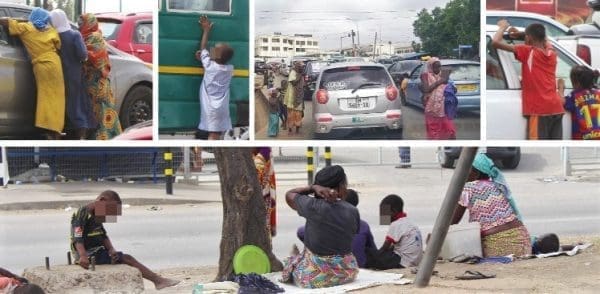
Street beggars in Accra
In recent years, Accra has witnessed a sharp rise in street begging, known as beggars, a trend that is increasingly shaping the city’s social and economic landscape.
From major intersections and markets to traffic lights and commercial hubs, the presence of beggars—both young and old—has become a daily reality for residents and visitors alike. While the situation evokes sympathy, it also raises serious concerns about public safety, urban management, and long-term social welfare.
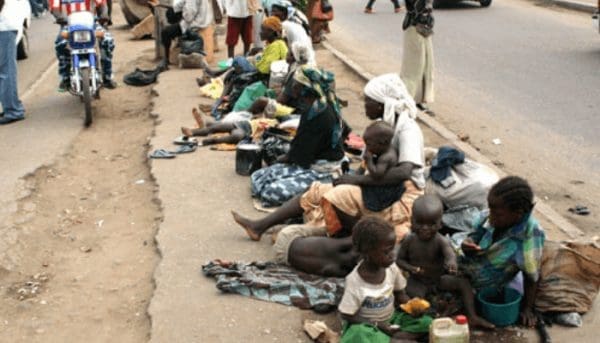
Street begging in Accra is not a new phenomenon, but its scale and visibility have grown significantly. A drive through busy areas such as Kwame Nkrumah Circle, Kaneshie Market, as well as Ashaiman and Madina, reveals clusters of individuals soliciting alms from motorists and pedestrians.
Many are children, often seen weaving through traffic or approaching vehicles at red lights, while others are persons with disabilities or elderly individuals who appear to have limited means of survival.
Several factors contribute to this growing challenge. Poverty remains a key driver, particularly among migrants from rural communities who move to the capital in search of better opportunities but end up struggling to make ends meet.
In some instances, organised networks are believed to exploit vulnerable individuals—especially children—forcing them into begging as a source of income. This raises deeper concerns about human trafficking and child labour.
Another major factor is the gap in social support systems. Although institutions such as the Department of Social Welfare are mandated to address issues of vulnerability, limited resources and constrained outreach have reduced their effectiveness.

As a result, many individuals in need of rehabilitation, shelter, or vocational training are left without adequate support, pushing them onto the streets.
The implications of widespread street begging extend beyond mere visibility. For motorists, individuals darting between vehicles create dangerous situations and increase the risk of accidents.
For businesses, the constant presence of solicitors can deter customers and disrupt commercial activity. Moreover, the normalisation of begging may undermine long-term solutions, as daily almsgiving—though compassionate—can inadvertently sustain the cycle.
Authorities have made several attempts to address the issue. The Accra Metropolitan Assembly has periodically undertaken decongestion exercises aimed at clearing beggars from major streets.
Similarly, the Ghana Immigration Service has announced targeted enforcement operations within the Greater Accra Region to rescue vulnerable individuals and address irregular migration.
In May 2025, a major operation in Accra led to the roundup of 2,241 foreign nationals involved in street begging, comprising 909 adults and 1,332 children.
The exercise began in areas such as Kaneshie, Abossey Okai, and the Kwame Nkrumah Circle. Despite such efforts, interventions often provide only temporary relief, as many individuals return to the streets due to the absence of sustainable alternatives.
In a statement dated April 14, 2026, the Ghana Immigration Service reaffirmed plans to intensify its crackdown on street begging. The operation is expected to involve coordinated street sweeps at selected locations, although specific areas have not been disclosed to protect operational integrity and the safety of vulnerable populations.
The initiative will focus on rescuing vulnerable groups—particularly children and distressed individuals—from exploitative begging, while also apprehending unregistered immigrants to ensure compliance with Ghana’s immigration laws.
Addressing the menace of street begging requires a comprehensive and humane approach. Stronger enforcement is needed to dismantle exploitative networks that profit from the vulnerability of others.
At the same time, greater investment in social welfare programs is essential to provide shelters, counselling, and skills training for those willing to transition off the streets. Public education campaigns can also help shift the focus from short-term charity to long-term empowerment.
Collaboration will be critical. Government agencies, non-governmental organisations, community leaders, and faith-based groups all have a role to play in rehabilitation and reintegration efforts. The private sector, too, can contribute by supporting job creation initiatives targeted at at-risk populations.
Ultimately, the rise in street begging in Accra reflects broader socio-economic challenges that demand urgent and sustained attention.
Compassion must be matched with strategic, long-term action to break the cycle of poverty and restore dignity to those affected. If left unaddressed, the issue risks becoming further entrenched, undermining the city’s development and the quality of life for all who live and work in the capital.