Centrism key to Ghana’s sustainable development — Afenyo-Markin
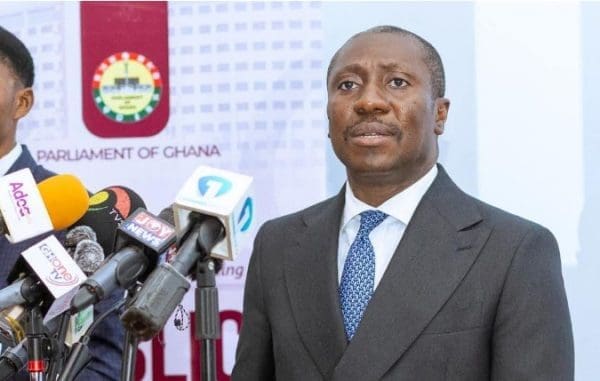
Afenyo-Markin
Centrism, rather than ideology-driven politics, is Ghana’s pathway to sustainable development, the Minority Leader in Parliament, Mr. Alexander Kwamena Afenyo-Markin, has said.
Speaking at the maiden public lecture organised by Parliament’s Public Affairs Subdivision, Mr. Afenyo-Markin emphasized that pragmatic, moderate governance has historically underpinned Ghana’s democratic stability and that centrism offers a balanced approach to addressing the country’s development challenges.
“Ghana’s choice is between short-term advancement and sustained transformation. May we choose sustainable development over short-term gains, stability over volatility, productivity over populism, and constitutional purpose over partisan convenience,” he said during the lecture held at Parliament House in Accra. The event was themed “Centrism: Formulating Policies that Serve a Growing Democracy.”
Mr. Afenyo-Markin, who is also the New Patriotic Party (NPP) Member of Parliament for Effutu, proposed several reforms to strengthen national development planning. Key among them was the reconstitution of the National Development Planning Commission (NDPC) to prioritize technical competence and economic expertise.
He also called for a supermajority parliamentary confirmation for key appointments, the adoption of binding medium-to-long-term developmental frameworks, institutionalized policy impact evaluations, and continuity audits to ensure evidence-based, non-partisan planning.
“The ultimate test of a democracy is how wisely it manages continuity. It’s time for Ghanaians to demand action, accountability, and a commitment to sustainable development,” Mr. Afenyo-Markin said, stressing that reforms must balance technical efficiency with inclusivity and citizens’ rights.
In his remarks, the Majority Leader, Mr. Mahama Ayariga, highlighted the practical aspects of centrism in Ghana, describing it as “pragmatism, not ideology—focusing on policies that work, improve lives, and are sustainable.”
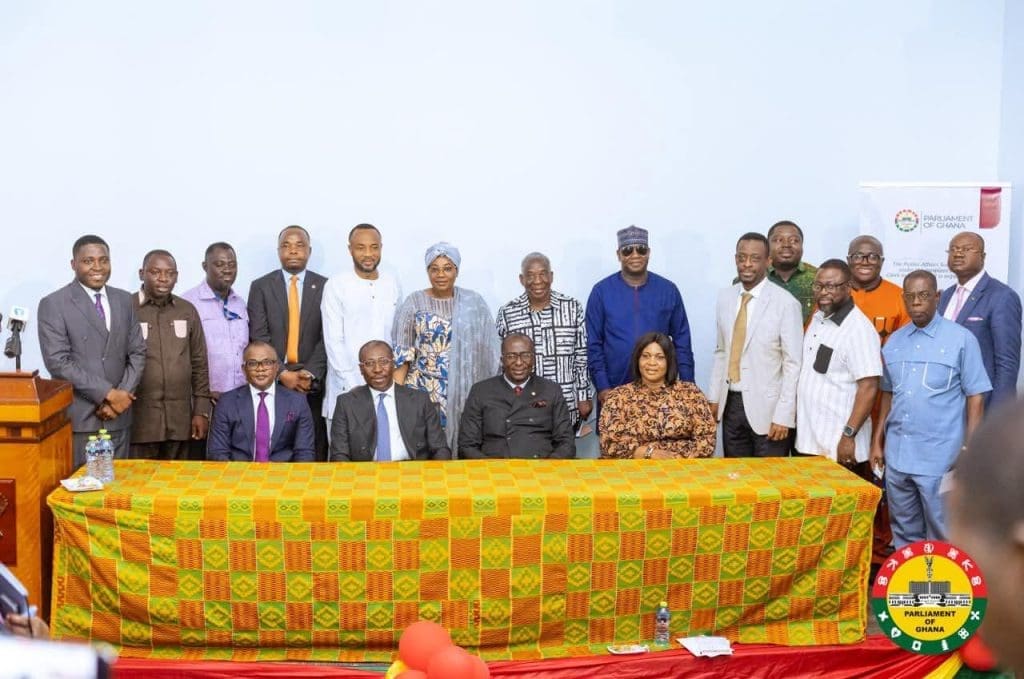
He noted that Ghana’s history and constitutional framework naturally encourage a balanced approach, positioning centrism as a pathway to stability, growth, and national progress.
The Clerk of Parliament, Mr. Ebenezer Ahumah Djietror, underscored the need for policies rooted in social equity, inclusive growth, and dialogue guided by intellectual honesty and mutual respect.
He expressed hope that the lecture would deepen public understanding of centrism and strengthen Parliament’s role in fostering Ghana’s democratic and developmental aspirations.
Mr. Andrew Amoako Asiamah, the Second Deputy Speaker and Chairman of the lecture, added that centrism is “not indecision or neutrality, but a disciplined commitment to principled pragmatism.”
He emphasized that Ghana’s diversity demands measured, evidence-driven, and constitutionally grounded policymaking.
The lecture attracted notable dignitaries, including Dr. Mathew Opoku Prempeh, former NPP MP for Manhyia South; Mr. Gabby Asare Otchere-Darko, lawyer and leading NPP member; and Mr. Farouk Aliu Mahama, former NPP MP for Yendi.
The maiden public lecture, part of Parliament’s broader initiative to demystify its work and deepen public engagement, seeks to foster participatory democracy by encouraging citizens’ understanding of legislative procedures and practices.
Mr. Afenyo-Markin concluded that for Ghana to achieve sustainable development, national development planning must strike a careful balance between technical competence and inclusivity, with transparency, accountability, and evidence-based decision-making at its core.