Ghana sitting on 35m-tonne rice potential — IFS
The Institute for Fiscal Studies (IFS) has urged the government to commit at least 5.9 million hectares of Ghana’s total 12.6 million hectares of agricultural land to rice production, warning that the country’s continued dependence on imports is both costly and unnecessary.
Currently, only 2.6% of Ghana’s available agricultural land is used for rice cultivation—a figure the IFS says is woefully inadequate for a nation that spends over a billion dollars annually on rice imports.
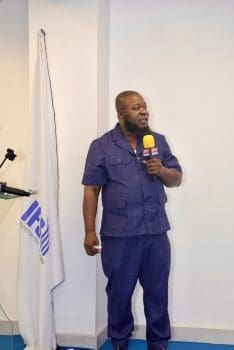
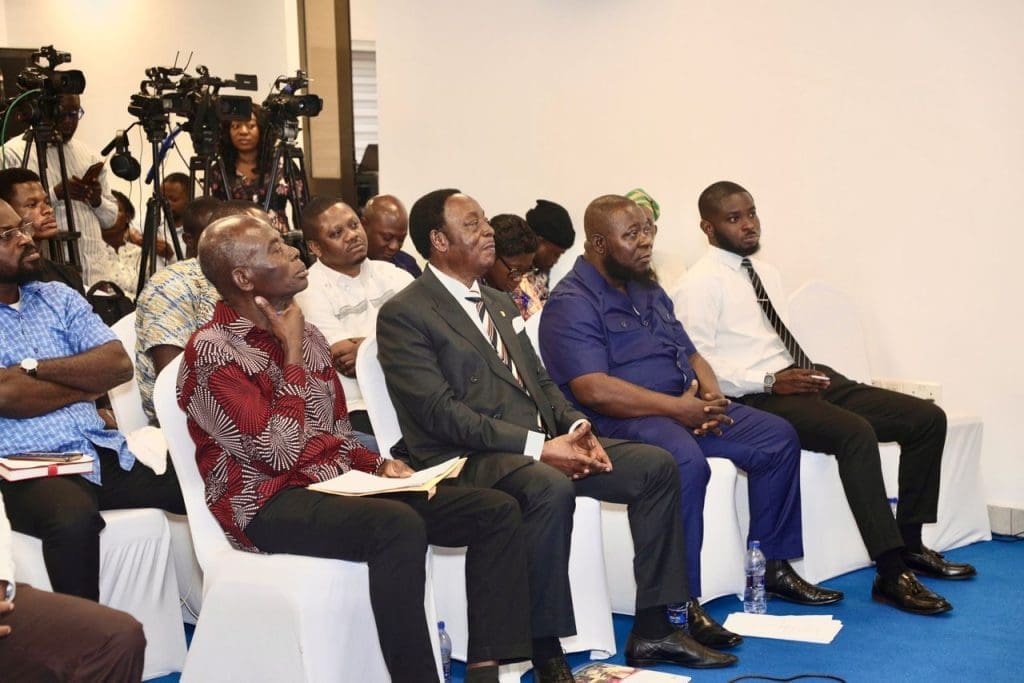
Speaking at a policy dialogue on “Increasing Importation of Rice in Ghana: Can the Country Transform its Fortunes in the Rice Sector?”, Dr Said Boakye, Senior Research Fellow and Acting Executive Director of IFS, said Ghana has the potential to rival leading global producers like Vietnam and Thailand if it adopts a more coordinated and interventionist approach.
Ghana’s untapped potential
According to Dr Boakye, if Ghana achieved yields comparable to Vietnam’s average of 6 metric tonnes per hectare, the country could produce as much as 35.4 million metric tonnes of paddy rice annually—a volume equal to what Thailand and Vietnam produce today.
He explained that had Ghana produced just 7.4 million metric tonnes of milled rice in 2022, it could have exported 6.6 million tonnes, earning roughly $3.2 billion, the same amount Vietnam made from rice exports that year.
“Ghana has all the necessary conditions for a very successful rice sector. If the right policies are pursued, the country can completely transform its fortunes and become a major exporter of rice,” Dr Boakye said.
He added that the global rice market is projected to grow by $61.77 billion between 2025 and 2030, creating an opportunity for Ghana to strategically position itself as a competitive rice-exporting country.
A call for a rice development board
To drive this transformation, Dr Boakye proposed the establishment of a Rice Development Board (RDB) — a statutory body to coordinate, finance, and oversee Ghana’s rice industry.
He said the proposed Board would serve as the central institution for active government intervention, addressing long-standing structural issues such as limited access to land, poor seed quality, inadequate irrigation, and weak mechanisation.
“Unlike Vietnam and Thailand, where governments play a strong coordinating role, Ghana has largely left the sector to market forces, resulting in repeated failures,” he noted.
The RDB, according to Dr Boakye, would correct these gaps by managing the entire rice value chain, from seed development and fertiliser distribution to mechanisation, irrigation, milling, and marketing.
He emphasised that “passive facilitation will not transform the sector”, urging the government to take direct leadership and ensure the Board is adequately funded, legally empowered, and insulated from political interference.
Lessons from Asia
Drawing lessons from Vietnam and Thailand, Dr Boakye said Ghana must adopt a strategic, state-led model tailored to its local conditions.
The two Asian countries, he explained, achieved rice self-sufficiency and export dominance through consistent policy frameworks, state financing, and active government involvement in the value chain.
He suggested that the RDB could partner with the Ghana Irrigation Development Authority (GIDA) to develop irrigation systems across 1.9 million hectares of land identified as suitable for rice cultivation.
To tackle high input costs, the Board could also establish fertiliser factories, offer tax incentives to private producers, and manage a nationwide fertiliser distribution network to ensure availability and affordability for farmers.
On mechanisation, Dr Boakye recommended collaboration with local manufacturers, including Kantanka Automobile, to produce machinery suited to Ghana’s environmental conditions, reducing dependency on imported equipment.
Boosting local production and exports
Beyond production, Dr. Boakye proposed that the RDB should support local rice processors and distributors, ensuring that farmers receive fair market prices and that locally produced rice becomes competitive both domestically and internationally.
He also urged the Board to directly engage in purchasing and exporting locally milled rice to boost Ghana’s visibility in global markets.
“The government must not only create an enabling environment but actively participate in solving the bottlenecks that constrain rice production,” he stressed.
He said the establishment of the RDB would not only increase production but also ensure policy consistency, reduce import dependency, and create jobs, particularly for the youth and women in rural areas.
From self-sufficiency to export ambition
Dr. Boakye argued that Ghana’s goal of achieving self-sufficiency in rice production—as outlined in the National Rice Development Strategies I and II (NRDS I & II)—was not ambitious enough.
While these strategies helped improve yields between 2008 and 2018, he said they failed to close the gap between domestic production and consumption, leading to increased imports.
“Ghana must move beyond self-sufficiency targets and aim to become a net exporter of rice,” he said.
“The current strategy is too modest for a country with our potential.”
He emphasised that with the right investments in irrigation, mechanisation, and market systems, Ghana could match the performance of Vietnam and Thailand within a decade.
International support and collaboration
At the same event, Brazil’s Ambassador to Ghana, Mariana Madeira, expressed her country’s readiness to support Ghana’s rice expansion drive.
She noted that Brazil, ranked ninth globally in rice production, had ongoing partnerships with Ghanaian farmers through technology transfers and large-scale cultivation projects.
“Brazilian investors already engaged in rice cultivation in Ghana are prepared to share best practices and innovations to help Ghana reach its full potential,” the Ambassador said.
Similarly, Prof. Gabriel Nii Noi Dowuona, a soil scientist at the University of Ghana, called for deliberate policies to shift consumer preference from imported rice to locally grown varieties.
He said promoting local rice consumption through public campaigns, branding, and quality assurance would be key to sustaining Ghana’s rice revolution.
A billion-dollar opportunity
As global demand for rice continues to grow, experts agree that Ghana stands at a turning point.
With vast arable land, favourable weather, and a growing domestic market, the country could become a major player in Africa’s rice trade if it backs reforms with strong political will and investment.
Dr Boakye concluded that the creation of a Rice Development Board represents the single most transformative step Ghana can take to achieve food security, boost exports, and strengthen its economy.
“If Ghana wants results comparable to Vietnam and Thailand,” he said, “then the government must take the driver’s seat. Passive facilitation will not transform the sector.”