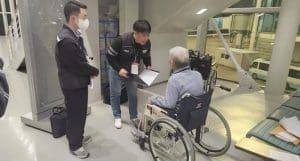
$3.6bn cocaine kingpin hiding in Ghana since 2004 extradited

Ghana’s border control and immigration systems are facing renewed scrutiny after an alleged South Korean cocaine trafficker, accused of transporting more than five tonnes of cocaine worth an estimated US$3.6 billion, was extradited after reportedly living in the country as an undocumented immigrant for more than 22 years.
The man, who is in his 80s and whose identity has not been disclosed, was repatriated to South Korea on October 20 following cooperation between Ghanaian authorities, the Korean National Police Agency (KNPA) and the Busan Coast Guard.
He had allegedly been on the run since around 2004, when he fled after the arrest of his suspected accomplices.
His prolonged stay in Ghana raises questions about how a foreign national wanted in connection with a multibillion-dollar international narcotics operation could reportedly remain in the country for more than two decades without legal immigration status, and what the case reveals about Ghana’s capacity to detect, track and apprehend internationally wanted fugitives.
South Korean investigators accuse the suspect of participating in five cocaine shipments between 2002 and 2004 while working as a supervisor aboard a deep-sea fishing vessel.
The shipments, allegedly transported through international waters off South America on behalf of a drug trafficking organisation, are believed to have contained a combined 5,385 kilogrammes of cocaine.
The drugs were valued at approximately 4.8 trillion South Korean won, equivalent to about US$3.6 billion.
Investigators allege that the suspect received payments for facilitating the shipments.
Following the arrest of his alleged accomplices, the suspect reportedly escaped and eventually settled in Ghana around 2004, where he remained undocumented until his location was established through international police cooperation.
The case highlights a critical distinction between controlling a country’s physical borders and monitoring the immigration status of people already inside its territory.
While Ghana’s borders are the first line of defence against illegal entry, effective immigration enforcement also depends on the ability to identify undocumented residents, verify identities, act on international wanted notices and share intelligence across law enforcement agencies.
The reported 22-year period also raises questions about whether the suspect entered Ghana legally before losing his status, crossed into the country without authorisation or used another means to evade detection.
The available information does not establish how he entered Ghana or explain why his presence remained undetected for so long.
His eventual identification followed intelligence sharing between South Korean and Ghanaian police after the Busan Coast Guard placed him on Interpol’s wanted list.
That cooperation culminated in his deportation on October 20 and return to South Korea, where he is expected to face the allegations against him.
The operation demonstrates the value of international police collaboration in pursuing fugitives across jurisdictions. However, the circumstances surrounding the suspect’s lengthy stay raise broader questions about the effectiveness of systems for checking immigration status and responding to international alerts.
For Ghana, the case presents an opportunity to examine how immigration authorities, border agencies and domestic law enforcement coordinate to identify undocumented foreign nationals who may be wanted abroad.
It also underscores the importance of timely intelligence exchange and effective mechanisms for following up on international alerts.
The suspect’s return to South Korea marks the end of his reported years on the run in Ghana, but the case leaves important questions about the country’s ability to detect and locate wanted persons within its borders.
His extradition is a significant outcome of international cooperation; the circumstances that allowed him to remain undocumented for more than two decades warrant closer examination.
The allegations against him remain subject to proceedings in South Korea.