2025 fiscal rebound as debt drops GH¢82.1bn and inflation at 3.8%
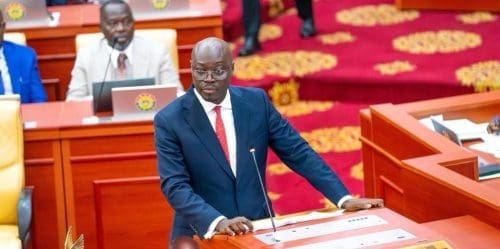
Cassiel Ato Forson, Finance Minister
The government has announced what it describes as one of the most significant economic turnarounds in Ghana’s history, citing strong fiscal consolidation, sharp declines in inflation and interest rates, currency appreciation, and a substantial reduction in public debt in 2025.
According to an official statement issued in Accra on Monday, the 2025 fiscal year marked a decisive reversal of the economic pressures that characterised the end of 2024.
At that time, the primary balance on a commitment basis stood at a deficit of 3.0 per cent of GDP, the 91-day Treasury bill rate had climbed to 27.7 per cent, the Ghana cedi had depreciated by 19.2 per cent against the US dollar, and inflation was at 23.8 per cent.
The government said a combination of fiscal discipline, strict commitment controls, structural reforms, and prudent monetary policy restored macroeconomic stability and placed public finances back on a sustainable path.
Fiscal performance exceeds targets
The 2025 fiscal outturn significantly outperformed targets. The overall fiscal balance on a commitment basis recorded a deficit of 1.0 per cent of GDP, better than the 2.8 per cent target. The primary balance on a commitment basis improved to a surplus of 2.6 per cent of GDP, exceeding the programmed surplus of 1.5 per cent.
On a cash basis, the overall fiscal deficit narrowed to 3.1 per cent of GDP, outperforming the 3.8 per cent target. The primary balance on a cash basis recorded a surplus of 0.5 per cent of GDP, compared to a projected deficit of 0.5 per cent.
The government attributed the improved fiscal position to strengthened revenue mobilisation and tighter expenditure controls.
Public debt declines sharply
One of the most notable developments was the reduction in public debt. Ghana’s total public debt stock declined by GH¢82.1 billion, from GH¢726.7 billion, equivalent to 61.8 per cent of GDP in December 2024, to GH¢641.0 billion, representing 45.3 per cent of GDP in December 2025.
Officials described the reduction as one of the sharpest debt declines recorded in the country’s history.
Growth rebounds, inflation falls
Provisional data show that real GDP grew by 6.1 per cent year-on-year in the first three quarters of 2025, driven largely by the services and agriculture sectors. Non-oil GDP growth was even stronger at 7.5 per cent over the same period, compared to 5.8 per cent in 2024.
Inflation has declined for thirteen consecutive months, falling by 19.7 percentage points from 23.5 per cent in January 2025 to 3.8 per cent in January 2026. Over the broader 2024 to 2025 period, inflation dropped from 23.8 per cent to 5.4 per cent by the end of 2025 and has continued trending downward.
Interest rates have also eased significantly. The 91-day Treasury bill rate fell from 27.7 per cent at the end of 2024 to 11 per cent by December 2025 and further to 6.5 per cent in February 2026. The average commercial bank lending rate declined from 30.25 per cent in 2024 to 20.45 per cent in 2025.
The government said the lower rates have reduced borrowing costs and improved credit conditions for the private sector. Credit to the private sector expanded by GH¢17.1 billion in 2025, with further growth projected in 2026.
Cedi appreciates, external position strengthens
The Ghana cedi appreciated by 40.7 per cent against the US dollar by end-December 2025, reversing the 19.2 per cent depreciation recorded in 2024. The currency also gained 30.9 per cent against the pound sterling and 24.0 per cent against the euro.
The country’s external position strengthened considerably, with the current account recording a surplus of US$9.1 billion at the end of December 2025, compared to US$1.5 billion in 2024. Gross international reserves reached US$13.8 billion, sufficient to cover 5.7 months of imports.
Commitment to sustained gains
The government described the turnaround as broad-based and comprehensive, stating that all sectors of the economy have shown measurable improvement.
The administration of President John Dramani Mahama, the statement said, remains committed to consolidating the gains achieved, with a focus on job creation, sustained growth, and long-term economic transformation.