Journalism exists for one reason above all others: to inform, educate, and serve the public interest without fear or favour. History has shown that when journalists abandon this duty and become sycophants, bootlickers, or silent observers of abuse, power concentrates dangerously.
Heads of state drift toward authoritarianism, institutions weaken, and citizens lose their moral compass. The cost of silence is always paid by the people

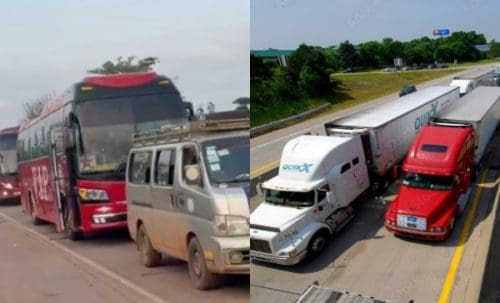
Ghana’s experience on December 31, 2025, offers a painful reminder.
On that day, a self-styled “national prophet” transformed a religious watch night into a national security failure.
A major section of the Accra–Kumasi Highway, part of the vital West African corridor extending toward Burkina Faso, was blocked for nearly three days.
Vehicles were immobilised. Goods and services ground to a halt. Ambulances struggled to move patients. Fire engines could not respond effectively to emergencies.
Commercial trucks carrying frozen food risked massive spoilage. Yet astonishingly, the Ghana Police Service appeared powerless.
Such a scenario would be unthinkable in a well-functioning state. In no serious country should a single religious event be allowed to paralyse a national highway.
That it happened at all exposes deep failures not only in security planning but in media responsibility.
Mainstream journalists largely failed to highlight the suffering of ordinary citizens trapped on the road. Had they done so promptly and boldly, public pressure might have forced swift corrective action.
Instead, silence prevailed. And silence, in moments like these, becomes complicity.
Even more troubling was what followed. Independent journalists who attempted to document events at the gathering were reportedly harassed and manhandled by men in paramilitary-style uniforms.
Videos circulated online show officers confronting journalists, questioning their presence, and bluntly declaring: “You are not allowed to cover this. We have our own media. This is a church programme on private property.”
This statement strikes at the heart of the debate. Can a space that draws tens of thousands of people, blocks a national highway, and affects national security suddenly become “private property” immune from scrutiny?
If so, then the concept of public interest has been dangerously hollowed out.
This problem is not uniquely Ghanaian. Canada, often celebrated for its strong democratic institutions, faces a similar creeping confusion.
Across North America, property law is built on balance. Owners have rights, yes but those rights are not absolute.
In Canada, property and civil rights are largely provincial, yet federal regulations, zoning laws, taxation, and public funding ensure that ownership exists within a social contract.
A business open to the public is not the same as a private bedroom.
Yet increasingly, journalists in Canada are expelled from coffee shops, clinics, malls, and libraries under claims of “private property,” even when these spaces actively invite the public and, in many cases, receive government funding.
The misuse of property law has become a convenient excuse to avoid scrutiny.
Cases like that of Canadian journalist Tamara Ugolini illustrate the danger. While investigating allegations involving a Tim Hortons franchise in Picton, she was told to leave because the premises were “private property.”
Police were called. But when officers arrived, they clarified the law that a publicly accessible business is not a strictly private space, and a journalist conducting a lawful inquiry has the right to be there. That clarification should be obvious, but increasingly, it is not.
The same confusion now affects ordinary citizens. Today, pulling out a phone to record an incident, document wrongdoing, or even take a selfie can invite confrontation. Someone appears from nowhere, declaring, “Stop recording. This is private property.” The chilling effect is real. When people fear removal or arrest for documenting what happens in plain sight, transparency dies quietly.
The contradiction is glaring. Governments collect taxes from citizens and use those funds to support institutions directly or indirectly through infrastructure, security, subsidies, and regulation.
Yet when citizens seek accountability, they are told to look away. One cannot, in good conscience, accept public money while rejecting public oversight.
This is why Ghana and Canada must confront this issue head-on. Ministries of Justice, legislatures, journalist associations, and legal scholars must clearly define the boundary between genuinely private spaces and public or quasi-public spaces.
Laws must be updated to reflect modern realities, where recording devices are ubiquitous and journalism no longer belongs exclusively to large media houses.
Such reform is not an attack on property rights. It is a defense of democracy.
The right to exclude should never be weaponised to conceal incompetence, abuse, fraud, or corruption.
From labour reforms to civil rights victories, history shows that progress is driven by those who refuse to be silenced.
The growing reliance on “private property” claims to expel journalists reveals a deeper truth: fear of exposure.
Transparency becomes a problem only when wrongdoing exists. Sunlight, as ever, remains the most effective disinfectant.
In conclusion, Ghana and Canada stand at a crossroads. Either the law is clarified to protect transparency, press freedom, and the public interest, or silence becomes the new norm. And where silence reigns, injustice thrives.
If nothing is being hidden, transparency should never be feared.
From Stephen Armah Quaye