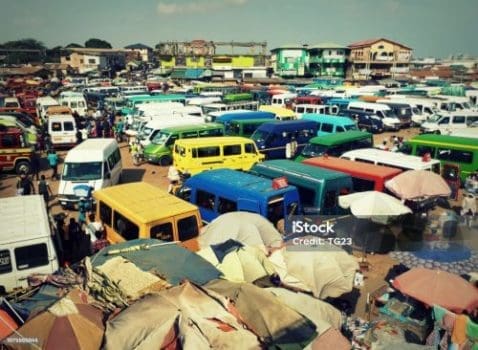
Accra, Ghana’s capital city, is facing one of the gravest transport crises in its modern history.
In recent weeks, worsening traffic congestion, the unavailability of commercial vehicles, and prolonged waiting times at terminals have left thousands of commuters stranded daily.

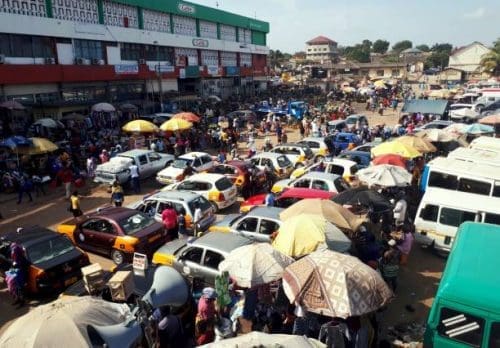
Across the city, workers wake as early as 4:00 a.m. to begin journeys that often stretch well beyond two hours, while others abandon transport altogether, walking long distances or resorting to expensive and dangerous motorcycle taxis, commonly known as okadas.
The numbers are troubling
The numbers tell a troubling story. On a typical weekday, an estimated 270,000 to 300,000 vehicle trips enter or exit Accra’s central business area.
Each day, over 2.5 million people commute into the city for work, education, healthcare, trade and services.
During business hours, the population of the Central Business District (CBD) alone swells by more than two million people, placing extraordinary pressure on roads, terminals and transport services.
Traffic congestion peaks not only during the traditional morning and evening rush hours but also between 10 a.m. and 12 noon, and again from 2 p.m. to 4 p.m., reflecting the city’s constant movement rather than fixed commuting windows.
More than 50% of commuters spend between 16 and 45 minutes in traffic, while 46.3% spend more than 45 minutes, with the average resident losing 2 hours 38 minutes of productive time each day purely to commuting.
This is not merely a story of inconvenience. It is a story of economic loss, social strain, and institutional failure that has been unfolding for more than a century.
Colonial beginnings
The roots of Ghana’s transport system date back to the 1890s, when British colonial authorities constructed the first railways, beginning with the Takoradi–Tarkwa railway.

These rail lines were not designed to support urban mobility or commuter needs.
Their primary purpose was economic extraction, linking mineral-rich hinterlands to coastal ports.
Urban transport during the colonial era relied largely on informal passenger lorries and shared trucks that carried both goods and people.
These vehicles operated without structured routes, schedules or safety standards, yet they became the earliest form of mass mobility in Accra.
Colonia transport l department started in 1909
In 1909, a colonial transport department was established, later evolving into what would become the State Transport Corporation (STC).
While STC would eventually play a major role in intercity transport, urban mobility remained fragmented and largely informal.
The rise of state transport
Following independence, Ghana’s leaders recognized that transport was essential to national development.
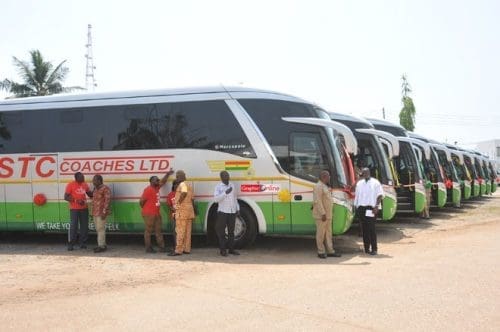
In 1965, STC was transformed into a commercial entity, tasked with providing reliable intercity services.
Around the same period, Accra’s population was expanding rapidly due to rural–urban migration, high fertility rates, and the city’s growing role as Ghana’s administrative and commercial hub.

OSA started in 1969
To address urban transport needs, the government established the Omnibus Service Authority (OSA) in 1969.
OSA was designed to provide structured, affordable urban bus services within Accra and other major cities.
For a time, it brought order to urban commuting, offering predictable routes and regulated fares.
However, OSA soon became a victim of weak corporate governance, severe revenue leakages, political interference and poor maintenance culture.
As costs rose and fare adjustments lagged behind inflation, the authority fell into financial distress.
Competition from informal operators further eroded its viability.
By the late 1990s, its fleet had deteriorated badly, and services had become unreliable.
In 2002, OSA’s operations collapsed entirely.
City Express, Metro Mass, Ayalolo
In 1981, the government launched the City Express Service (CES) to link rural and urban areas.
Like OSA, CES suffered from poor management, weak planning and structural inefficiencies.
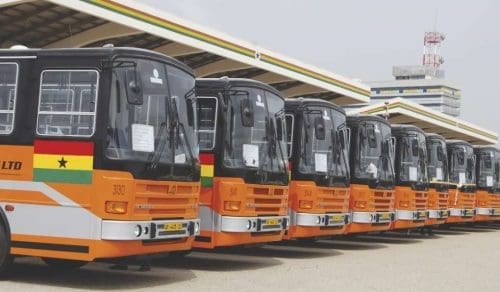
It eventually collapsed, reinforcing scepticism about state-led transport initiatives.
A more comprehensive intervention came in 1993 with the Urban Transport Project (UTP), the first major attempt to improve urban transport quality, equity and efficiency.
While the project laid important groundwork, its impact was limited by institutional fragmentation and weak enforcement.
In 2003, the government established Metro Mass Transit (MMT) to provide high-capacity, affordable bus services in major cities. Initially, MMT made a visible difference, carrying millions of passengers nationwide and offering an alternative to trotros.
However, MMT soon encountered familiar problems.
Fares were kept low for social reasons, making it difficult for the company to break even.
Political patronage undermined efficiency, with leadership changes driven by loyalty rather than expertise.
By January 2026, reports indicated that over 400 MMT buses were broken down, leaving only about 115 operational nationwide.
The COVID-19 pandemic further reduced revenue by an estimated 60 percent.
The BRT vision and the Ayalolo Setback
The most ambitious reform emerged under the Ghana Urban Transport Project (GUTP) between 2008 and 2012, which envisioned a Bus Rapid Transit (BRT) system for Accra and Kumasi. Branded as Ayalolo, the system promised reliable schedules, modern buses and faster travel times.
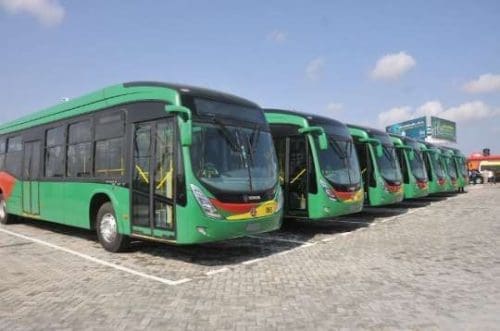
The World Bank estimated that a properly implemented BRT could serve 50% of traffic flow on Accra’s arterial roads and increase average traffic speeds by 30%.
However, the system failed to secure dedicated, uninterrupted bus lanes. Ayalolo buses became stuck in the same congestion as private cars and trotros, eliminating any advantage.
Unreliable schedules eroded public trust, ridership remained low, and financial mismanagement plagued the operator.
Poor maintenance soon grounded many buses, repeating the cycle of promise and disappointment.
Electric buses
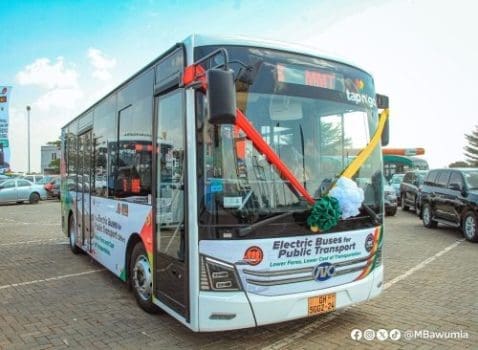
In 2024, the government commissioned 10 out of the first batch of 100 electric buses to augment the fleet of the Metro Mass Transit Limited.
The buses were expected to reduce the cost of operations of the MMT Limited by 40% and minimise the cost of transportation for the public.
The objective for the deployment of the buses was their energy efficiency.
The emergence of the trotro and the informal revolution
While state-run systems struggled, an alternative transport system was quietly taking over Accra.
How tro-tro started
In the late 1950s, a Ga driver named Anane began operating a small passenger vehicle, charging a flat fare of three pence.
The Ga word tro, meaning “three,” gave birth to the term trotro.
Trotros evolved from colonial-era passenger lorries, initially carrying mixed loads of goods and people.
Unlike their earlier “pirate” predecessors, post-independence governments formally recognized trotros as lawful public transport operators, allowing them to operate alongside municipal buses.
By the mid-1960s, trotros were running the same routes as state buses, often charging slightly higher but standardized fares within municipal boundaries.
As OSA declined through the 1970s and 1980s, trotros filled the gap almost completely.
By the end of the twentieth century, Accra’s public transport system was dominated by trotros and shared minibuses.
Today, an estimated 85% of movement within Accra is carried by this entrepreneurial transport network.
Across the Greater Accra Metropolitan Area, trotros account for approximately 3.5 million passenger trips every day.
From a commuter’s perspective, trotros are both indispensable and deeply frustrating.
They are affordable and widely available but often overcrowded, unreliable and unsafe.
For vehicle owners, rising fuel prices and maintenance costs translate directly into fare increases.
For drivers and conductors, many of them young men excluded from formal employment, the sector offers survival rather than prosperity.
Intense competition has flooded the system with vehicles, reducing profit margins and limiting owners’ ability to reinvest in maintenance.
The trotro sector has become a defining feature of Accra’s informal economy, thriving where formal systems have failed, yet constrained by its own structural limitations.
Inadequate road network under siege
While transport services faltered, Accra’s road network came under immense pressure.
Vehicle registrations have grown rapidly for decades, while road length expansion has lagged far behind.
The result is a severe mismatch between road capacity and traffic volume.
Cars now occupy an estimated 75% of road space, despite serving only a fraction of the population.
High-volume corridors such as the Kasoa–Mallam Road, which carries over 50,000 vehicles per day, experience chronic congestion.
Many roads are in deplorable condition: heavily potholed, poorly drained, and in some cases unpaved.
During rains, sections become impassable, worsening gridlock. Infrequent maintenance accelerates deterioration, increases vehicle operating costs, and contributes to frequent breakdowns of commercial vehicles.
The World Bank’s 2017 Implementation and Completion Results Report found that average traffic speed on Accra’s main arterial roads is just 28 kilometres per hour, underscoring the severity of congestion.
The present crisis: Stranded commuters
These long-standing weaknesses have converged into the acute crisis now gripping Accra.
Road construction, worn-out commercial vehicles, and reduced fleet availability have made transport scarce during peak hours. Commuters queue for hours, only to be told there are no vehicles.
Transport unions such as the GPRTU, which controls about 80 percent of the transport market, insist the problem is gridlock rather than deliberate vehicle withdrawal.
Drivers avoid congested routes where trips become unprofitable. For commuters, the distinction offers little relief.
Light rail, water transport alternatives
A critical weakness of Accra’s transport system is its over-reliance on road transport.
Cities that have successfully managed congestion have diversified into light rail and water transport, reducing pressure on roads.
Accra lacks a functional light rail system that could transport commuters from peripheral settlements to central hubs before distributing them by road.
Such a system could dramatically reduce daily car inflows into the city.
Similarly, a water transport system operating along the coast from Ada to Winneba could serve communities traveling into Accra.
Commuters could disembark at locations such as La, Behind Black Star Square or Jamestown and continue their journeys by road, freeing up thousands of vehicles daily.
What must change
Experts agree that Accra’s transport crisis cannot be solved by buses alone. Solutions must include:
Establishing a Metropolitan Transport Authority with real planning and enforcement powers
Integrating land use, housing and transport planning
Rehabilitating and formalizing the trotro system
Expanding BRT with genuinely dedicated lanes
Investing in light rail and water transport
Improving road maintenance, drainage and intersection design
Strengthening enforcement and adopting electronic ticketing
Without these reforms, Accra risks remaining trapped in a cycle of congestion and decline.
A city at a crossroads
Accra’s transport story is one of repeated experiments, missed opportunities and structural neglect.
From colonial railways to trotros, from OSA to Ayalolo, each era reflects choices made—and choices avoided.
Efficient public transport is not a luxury.
It is the backbone of economic productivity and social cohesion. Until Accra treats it as such, gridlock will remain the city’s defining reality.