
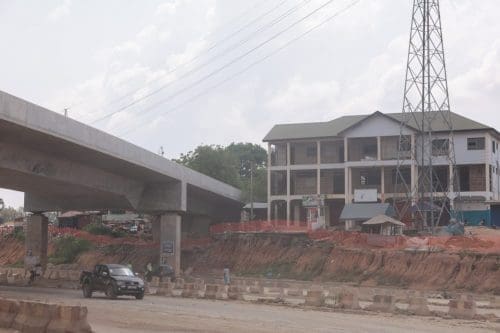
The practice of allowing—or failing to prevent—construction directly beside high-tension power lines and directly beneath high-voltage cables represents a profound institutional and regulatory failure.
This goes beyond mere oversight; it is a dereliction of the fundamental duty to safeguard public health and safety.


The core irresponsibility lies in ignoring established science and safety codes for short-term gain or bureaucratic inertia.
Duty bearers, including planning authorities, utility regulators, and local governments, have a non-negotiable obligation to enforce safe buffer zones.
Known health risks
Decades of epidemiological studies suggest a correlation between prolonged exposure to high-level electromagnetic fields (from power lines) and increased risks of certain childhood leukemias and other health issues.
To permit homes in this zone is to willingly expose residents to a potential, and avoidable, hazard.
Immediate physical danger
High-tension lines carry catastrophic fault currents. Construction or activity too close risks electrocution from arc flash or contact. Furthermore, these structures can fail in storms, posing a direct physical threat to anything built beneath them.
Prioritising convenience over safety
Often, the path of least resistance is to overlook violations or grant exceptions, placing the convenience of developers or the difficulty of enforcement above the long-term well-being of families.
This establishes a dangerous precedent of impunity.
The emotional consequence of this failure is a deep-seated sense of betrayal.
Citizens rightly trust that the systems in place will protect them from obvious dangers.
When those systems fail, it breeds cynicism and fear, communicating that their lives are not valued sufficiently to enforce basic, common-sense protections.
The imperative for a highway buffer zone
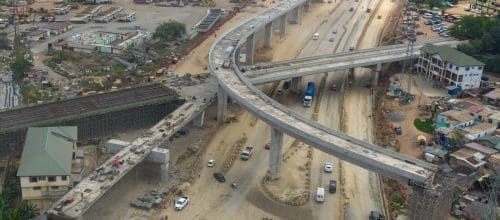
The 30 to 90-Metre Rule
The call for demolishing structures within a minimum of 90metres of a potential highway is not an overreaction; it is a necessary, albeit drastic, correction of a past planning disaster.
This distance represents a critical minimum buffer for fundamental human safety and quality of life.
The non-negotiable safety buffer
Run-Off Risk: 90 metres provides enough protection from a vehicle leaving the roadway.
This distance is outside the impact zone for most accidents, avoiding the possibility of turning a home into a potential crash site.
Emergency & Maintenance Access: This buffer is essential space for emergency service vehicles (fire, ambulance, police) and highway maintenance crews to operate without entering private property or blocking traffic.
The health and livability threshold
Pollutant Plume: Airborne pollutants from tailpipes concentrate within the first 10-20 metres of a roadway.
A 90-metre distance guarantees maximum exposure to toxic particulates and gases, making healthy indoor air quality nearly impossible to maintain.
Acoustic Assault: At this proximity, traffic noise is not just background sound; it is a constant, intrusive vibration.
It shatters peace, prevents restorative sleep, and constitutes a severe form of environmental stress.
A lesson in forward-looking governance
Allowing such construction in the first place was a failure of foresight.
Demolishing these buildings, with fair compensation and relocation support, is a painful but essential step to:
Rectify a Past Mistake: It acknowledges the error and stops perpetuating the harm onto future generations of residents.
Uphold a New Standard: It firmly establishes that some zones are simply incompatible with human habitation.
The primary purpose of land near a high-speed highway is for transportation and its safety buffer, not for residential life.
Conclusion
Both scenarios—homes under power lines and homes abutting highways—are stark symbols of a system that has failed in its most basic duty: to say “no” to dangerous development. Addressing them requires not just technical fixes, but a restoration of the principle that public safety is an absolute priority that cannot be compromised for development or convenience.
It is a matter of moral responsibility and intelligent planning.
The author, David Kwaku Sakyi is a Broadcast Journalist with Channel One TV and Citi 97.3FM