
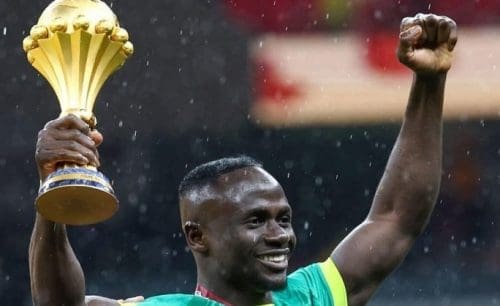
On 18 January 2026, the Africa Cup of Nations final produced far more than a continental football champion.
It became a defining moment of leadership in action, illustrating how character, judgment, and responsibility are revealed under intense pressure.
You might also like


Played on one of Africa’s biggest sporting stages and watched by millions across the continent and the global diaspora, the final between Senegal and Morocco transcended sport.
It evolved into a real time demonstration of how individuals respond when emotions are high, stakes are unforgiving, and the margin for error is razor thin.
At the heart of this defining moment stood Sadio Mané. Beyond his technical ability and reputation as a world class footballer, Mané emerged as a leader whose conduct shaped the outcome of the contest.
His choices under stress, his influence over teammates, and his refusal to surrender responsibility transformed a volatile situation into an opportunity for collective resolve.
In doing so, he offered lessons that extend well beyond the football pitch and into the everyday realities of leadership.
These lessons are particularly relevant for Ghana’s political leaders, public servants, business executives, entrepreneurs, and citizens who are navigating uncertainty in an era marked by economic strain, governance reform, and heightened public expectations.
Like high pressure sporting moments, national and institutional challenges demand calm judgment, emotional discipline, and the courage to remain engaged when withdrawal feels tempting. Leadership in such contexts is not about reacting to pressure, but about directing it toward constructive outcomes.
That night reinforced a timeless truth. Leadership is rarely tested when conditions are comfortable, predictable, or fair.
It is revealed when systems are strained, decisions are unpopular, and the cost of staying the course is high.
In moments of discomfort and adversity, true leaders distinguish themselves not by brilliance alone, but by their willingness to stand firm, influence others positively, and see responsibility through to its conclusion.
The moment that defined leadership
With the score level deep into stoppage time, a controversial penalty was awarded against Senegal.
Emotions erupted. Senegal’s players and officials walked off the pitch in protest, risking automatic defeat and forfeiture of the match. Anger threatened to override judgment.
The contest stood on the brink of collapse.
One man refused to walk away.
Sadio Mané remained on the field. Still protesting the decision, he nevertheless refused to abandon responsibility.
He ran into the tunnel, called his teammates back, and insisted they complete the match.
The penalty was taken and saved. Senegal regrouped, found composure, scored in extra time, and lifted the AFCON trophy.
What transformed near defeat into victory was not superior talent alone.
It was calm influence, emotional discipline, and the courage to stay when leaving felt justified.
Why this moment matters for Ghana
Ghana today stands at a critical crossroads in its national development.
The country is simultaneously pursuing economic recovery, restoring fiscal discipline, managing intense political competition, reforming public institutions, and responding to heightened citizen awareness and scrutiny.
These pressures are unfolding in an environment where public trust is fragile, expectations are high, and tolerance for error is limited.
Decisions taken in this period will shape not only short term outcomes, but the long term credibility of leadership and institutions.
In such demanding circumstances, leadership failures rarely occur because leaders lack education, experience, or technical advice. More often, they arise from emotional reactions to criticism, the temptation to prioritise short term political or personal survival, or the quiet abandonment of responsibility when challenges become unpopular or politically costly.
Under sustained pressure, the impulse to withdraw, delay difficult choices, or shift blame can be stronger than the commitment to see reforms through.
It is within this context that Sadio Mané’s decision to remain on the pitch acquires deeper meaning.
Faced with a moment of perceived injustice and collective frustration, he chose composure over outrage and responsibility over retreat.
His refusal to walk away preserved the integrity of the contest and kept open the possibility of success.
For Ghana, this serves as a compelling metaphor for effective leadership.
Progress in economic reform, institutional strengthening, and national cohesion will not come from dramatic exits or emotional protests, but from leaders who stay engaged, absorb pressure, and guide others calmly through moments of uncertainty. Remaining on the pitch, even when conditions feel unfair, is often the difference between national setback and sustainable progress.
Political leadership under pressure
In recent years, Ghana’s political leadership has confronted severe economic headwinds.
Inflation peaked above fifty percent in 2023. Public debt exceeded ninety percent of GDP at its height.
Confidence in state institutions weakened under the weight of fiscal stress and social pressure.
By 2025, however, difficult and politically costly reforms began to yield results.
Public debt ratios declined. Legacy energy sector debts exceeding 1.4 billion dollars were cleared.
Macroeconomic stability gradually returned.
These outcomes required leaders who stayed engaged when criticism was loudest and trust was lowest. Walking away from reform would have been easier.
Remaining committed demanded resilience similar to Mané’s insistence that the game must be finished.
Political leadership, like football leadership, is not about avoiding controversy.
It is about managing it without surrendering long-term objectives.
Business leadership and economic resilience
Ghanaian businesses have operated in an environment shaped by high interest rates, currency depreciation, and reduced consumer spending.
Between 2023 and 2024, several firms downsized or exited the market entirely.
Yet by mid 2025, economic growth rebounded above six percent, driven largely by services, agriculture, and non oil activity.
This recovery was sustained by business leaders who adapted rather than withdrew.
Manufacturers renegotiated supply chains. Financial institutions strengthened risk management frameworks and wrote off bad loans exceeding one billion cedis to protect balance sheets.
Entrepreneurs pivoted business models rather than abandoning ventures.
The Mané principle applies directly here. When conditions deteriorate, abandoning the pitch guarantees defeat.
Staying engaged creates space for innovation, recovery, and eventual success.
Public sector leadership and institutional credibility
Public institutions operate under constant pressure from citizens demanding efficiency, fairness, and tangible results.
Reforms in revenue administration, mining royalties, service digitisation, and public financial management have often encountered resistance and scepticism.

Institutional progress, however, is rarely achieved through protest or withdrawal.
It is built when leaders remain present, absorb criticism, refine strategy, and persist with implementation.
Just as Senegal needed a goalkeeper on the goal line, Ghana’s institutions require leaders who remain accountable, steady, and visible when systems are tested.
Personal leadership in everyday Ghana
Leadership is not confined to presidents or chief executives.
It is exercised daily in households, workplaces, communities, and personal financial decisions.
Many Ghanaians face moments when systems appear unfair, opportunities are delayed, or rules shift unexpectedly.
The instinct to disengage or give up is human. Mané’s response offers an alternative lesson.
Focus on what can be controlled. Maintain discipline. Finish the race.
Resilience at the personal level accumulates into resilience at the national level.
The strategic logic of staying
From a business and financial perspective, resilience should not be confused with emotional optimism or blind hope.
It is a deliberate strategy focused on protecting value, managing risk, and positioning for future growth.
True resilience is expressed through disciplined decision making, cost control, adaptation, and the willingness to endure short term discomfort in order to secure long term advantage.
History consistently shows that firms which survive economic downturns are often the strongest performers when recovery begins.
Companies that restructure early, renegotiate obligations, diversify revenue streams, and continue investing selectively during difficult periods emerge leaner, more competitive, and better positioned to capture market share.
By contrast, competitors that exit prematurely or abandon core capabilities forfeit not only present value but also future opportunity.
The same principle applies to governments. States that implement difficult but necessary reforms during periods of economic hardship tend to restore macroeconomic stability and investor confidence more rapidly.
Though such reforms may attract criticism in the short term, they signal credibility, policy discipline, and long term commitment. Investors and development partners reward consistency and resolve, particularly when leadership demonstrates the capacity to stay the course under pressure.
At the individual level, resilience manifests in the decision to continue building skills, professional networks, and productive habits during challenging times.
Individuals who invest in education, adaptability, and personal development when conditions are unfavorable increase their lifetime earning potential and career resilience.
Choosing disengagement or inaction during difficulty may offer temporary relief, but it compounds long term disadvantage.
Walking away, whether in business, governance, or personal development, often locks in losses and eliminates optionality. Staying engaged preserves flexibility, learning, and the chance to benefit when conditions improve.
Sadio Mané’s choice to remain on the pitch did not guarantee victory. What it did was far more important. It preserved the possibility of victory.
That distinction captures the essence of effective leadership and sound economic decision-making.
Leaders cannot always control outcomes, but they can control whether opportunities remain open.
Those who endure pressure, adapt intelligently, and remain committed give themselves the only condition under which success is possible.
Conclusion
The AFCON 2026 final was not merely a sporting triumph. It was a lesson in leadership when the pressure is highest, and the rules feel unfair.
Ghana’s future depends on leaders who stay on the pitch. Leaders who resist emotional exits.
Leaders who influence through composure rather than intimidation.
Leaders who understand that delay is not defeat, and adversity is not destiny.
Sadio Mané’s leadership aligns powerfully with Rudolph Giuliani’s reminder that “weddings are discretionary and funerals are mandatory for leaders.”
True leaders show up when duty demands it, not when comfort permits it.
His composure and responsibility during the tense 18 January AFCON Final also echo René Carayol’s insight that “when the sea is calm, everyone is a great swimmer, but it is when the sea is turbulent that great leaders are found.”
Across politics, business, public service, and personal life, the message is unmistakable. Until the final whistle blows, the work is not done.
Those who remain focused, composed, and committed give themselves and their nation the best chance to win.
By Prof. Samuel Lartey
www.pefghana.org