
The Ministry of Finance has announced a major policy shift aimed at strengthening the insurance industry, directing that all cargo imports into the country must be insured locally effective February 1, 2026.
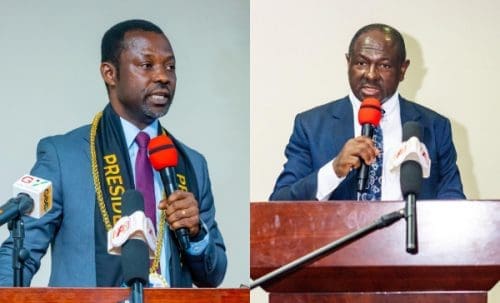
The Director of the Financial Sector Division at the Ministry of Finance, Mr Louis Amu, announced the decision at the investiture of the 11th President of the Insurance Brokers Association of Ghana (IBAG), Mr Stephen Kwarteng Yeboah, and the swearing-in of the association’s new Executive Council.


He explained the directive issued under Section 222 of the Insurance Act, 2021 (Act 1061), will be enforced through collaboration between the Ghana Revenue Authority (GRA), the National Insurance Commission (NIC) and the Bank of Ghana (BoG).
Mr Amu said the directive was being introduced at a time when Ghana’s macroeconomic indicators were improving and creating opportunities for insurers and brokers to expand their operations.
“Compliance with this directive is not optional,” he stressed.
He said the economy had stabilised and returned to a path of inclusive growth, pointing to a gross domestic product (GDP) growth rate of 6.1 per cent in the first three quarters of 2025. Inflation, he added, had eased to 5.4 per cent by December, while the exchange rate had also shown greater stability.
According to him, these developments should enable players in the insurance industry to expand market reach, improve risk coverage and support productive economic activity across key sectors of the economy.
Mr Amu also revealed that government would roll out a 10-year Insurance Master Plan beginning in 2026. The plan, he said, would focus on expanding insurance penetration, promoting financial inclusion, encouraging innovation and digitalisation, and positioning Ghana as a competitive insurance hub within the West African sub-region.
Despite recent growth, he noted that the insurance sector remained relatively small compared to the needs of the economy. Industry assets, he said, increased by 18.6 per cent to GH¢17.9 billion, but described this as insufficient given the size and structure of Ghana’s economy.
He said the performance gap would require higher standards of professionalism, stronger regulation and greater market impact from insurers and brokers going forward.
Responding to the announcement, the President of IBAG, Mr Stephen Kwarteng Yeboah, said the association fully supported the policy, describing it as a “double win” for both the economy and importers.
Mr Yeboah said the policy had generated unnecessary controversy and urged stakeholders to focus on its long-term benefits rather than short-term concerns.
“One key benefit Ghana will gain is improved currency stability. Cargo insurance premiums that used to be paid offshore will now remain in the country,” he said.
He added that the policy would also improve claims support for importers, as local insurers would be directly responsible for handling losses arising from cargo damage.
“When goods get damaged, a local insurance company will support you. Importers must see this as protection, not punishment,” he said.
Beyond the cargo insurance directive, Mr Yeboah outlined a number of bold initiatives that would define his two-year tenure as IBAG President.
He said the new council would focus on creating a better enabling environment for brokers, strengthening professional capacity, deepening collaboration with stakeholders and adequately resourcing the IBAG Secretariat.
He said the council would pursue regulatory reforms to improve professionalism and protect the public, including the development of clear guidelines for broker engagement and disengagement to promote fairness and transparency in the market.
Mr Yeboah also announced plans to revisit the establishment of an upstream energy pool for brokers.
He said IBAG would seek amendments to L.I. 2435 to have IBAG Energy recognised as a pool broker for upstream oil and gas business, a move he said would open new opportunities for local brokers.
In addition, he said the association would prioritise professional training by introducing practical programmes led by experienced brokers in Ghana and abroad.
IBAG, he added, would work with the Ghana Insurance University College to introduce affordable, practice-oriented courses for members.
The IBAG President further raised concerns about regulatory fragmentation and the burden of multiple licensing requirements on brokers.
He disclosed that the NIC had engaged him on discussions to ensure it remains the sole regulator of insurance broking, a move he said would streamline licensing and reduce confusion.
He welcomed government’s intention to review the regulatory framework for insurance business and urged stakeholders to support reforms that would create a more efficient operating environment.