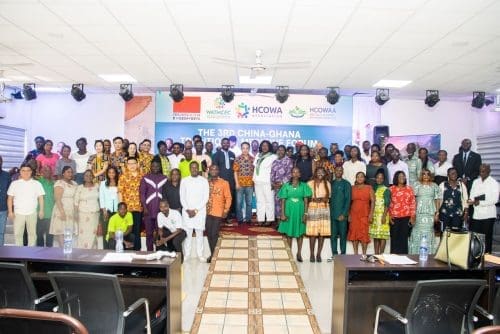
Medical experts from China and Ghana have called for the strategic use of traditional medicine as a vital pillar in addressing women’s health challenges, stressing its preventive, holistic and long-term benefits during the 3rd China–Ghana Traditional Medicine Forum held at the Confucius Institute, University of Ghana.
Held under the theme “Empowering Women, Sharing Health: Perspectives and Solutions from China–Ghana Traditional Medicine,” the forum brought together clinicians, researchers, traditional medicine practitioners and policymakers to examine how integrative approaches can improve women’s health outcomes across different stages of life.

The forum was organised by the 14th China Medical Team to Ghana, in partnership with the Health Community of West Africa (HCOWA) Association, the West African Traditional Medicine Cooperation and Exchange Centre (WATMCEC), and the HCOWAA Medical & Academic Exchange Committee (H-MAEC).
Opening the forum, Dr. Hao Linduan, Associate Chief Physician of Guangdong Medical University, emphasised that women’s health goes beyond treating disease and must focus on prevention, balance and long-term wellbeing.
“Women play irreplaceable roles in families and society. When women are healthy, families are stable and communities progress. Traditional medicine focuses on restoring balance in the body, preventing disease before it occurs, and treating the root causes rather than only symptoms,” he explained.
Dr. Hao noted that both Traditional Chinese Medicine (TCM) and Ghanaian traditional medicine share similarities in philosophy, particularly in their emphasis on natural therapies, individualised treatment and lifestyle regulation, making collaboration between the two systems both practical and necessary.
Representing the Ministry of Health, Dr. Anastasia Yirenkyi, Director of the Traditional and Alternative Medicine Directorate, described traditional medicine as an essential component of Ghana’s healthcare system, especially for women, rural populations and underserved communities.
She revealed that a significant proportion of Ghanaians rely on traditional medicine for primary healthcare and stressed the government’s responsibility to ensure safety, quality and effectiveness.
“Our goal is not to replace conventional medicine, but to ensure that traditional medicine is safe, regulated and evidence-based. When properly integrated, it can complement orthodox care and expand access to quality healthcare for women,” she said.
Dr. Yirenkyi added that the Ministry is strengthening practitioner training, product registration and clinical documentation to support responsible integration into the national health system.
Delivering an online presentation, Dr. Ye Qiuli of Guangdong Medical University focused on women’s health across the entire life cycle, from adolescence and childbirth to menopause and ageing.
She explained that TCM places strong emphasis on regulating hormones, improving blood circulation and strengthening the body’s internal systems, which are critical in managing menstrual disorders, postpartum recovery, fertility challenges and age-related conditions.
“Rather than treating each condition in isolation, traditional medicine views women’s health as a continuous journey. This approach allows for early intervention and sustained well-being,” she noted, calling for joint research and clinical exchanges between China and Ghana.
Providing local clinical evidence, Dr. Sandra Ashong, President of the Ghana Association of Medical Herbalists, shared results from Lekma Hospital, where TCM techniques such as acupuncture, cupping therapy and herbal support have been incorporated into patient care.
According to her, women suffering from infertility, chronic pelvic inflammatory disease and menstrual irregularities have shown improved outcomes when traditional therapies are combined with conventional treatment.
“Empowering women’s health requires openness and respect for different medical systems. Our experience shows that integrative care can reduce pain, improve recovery and enhance quality of life for patients,” she stated.
Dr. Hao Linduan later delivered a detailed clinical presentation on practical TCM interventions for gynaecological conditions. He explained how personalised herbal prescriptions, moxibustion therapy and external treatments are used to improve blood flow, reduce inflammation and strengthen reproductive health.
He highlighted chronic pelvic inflammatory disease as a condition where TCM has demonstrated strong results, particularly in cases where conventional treatment alone has provided limited relief.
On regulation and policy, Dr. Yakubu Tobor Yusuf, Registrar of the Traditional Medicine Practice Council (TMPC), announced decisive reforms aimed at strengthening oversight of traditional medicine practice in Ghana.
“We are introducing mandatory Good Manufacturing Practices for all traditional medicine products and developing comprehensive standards for practitioners. A new legislative bill is also being prepared to support enforcement,” he disclosed.
Participants at the forum agreed that the future of women’s healthcare lies in structured collaboration, scientific validation and mutual respect between traditional and orthodox medical systems.
The forum concluded with networking sessions and a renewed commitment to advancing integrative, patient-centred healthcare to improve women’s health outcomes in Ghana and across West Africa.
The 14th China Medical Team to Ghana remains a symbol of sustained Sino-Ghanaian health cooperation, while HCOWA and its partners continue to champion medical dialogue, research and collaborative health solutions across the region.
By Prince Opoku Dogbey, Accra