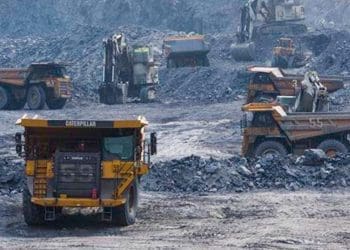
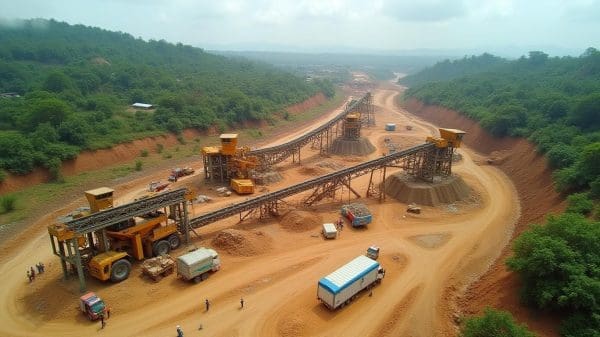
The Ghana Extractive Industries Transparency Initiative (GHEITI) has raised red flags over the potential political risks associated with the government’s planned takeover of the Damang gold mine, cautioning that without strict governance safeguards, the move could undermine productivity, revenues and investor confidence.
In its 2023 report, GHEITI warned that any decision to return the Damang mine to full state control must be supported by robust oversight mechanisms to prevent political capture and operational inefficiencies.


The transparency body stressed that weak controls and undue interference could compromise the long-term sustainability and economic contribution of the asset at a time when Ghana is seeking to stabilise its economy and maximise returns from the extractive sector.
The warning follows government’s decision not to renew the mining lease of the Damang mine, currently operated by Abosso Gold Fields Limited, after the lease expired.
Authorities subsequently directed Gold Fields to cease operations and vacate the lease area by April 18, 2026.
Gold Fields has indicated that it is taking steps to wind down operations in a safe and orderly manner, with priority given to the safety of personnel and the management of high-risk activities during the transition period.
Abosso Gold Fields Limited (AGL), a Ghana-registered company, operates the Damang mine. Gold Fields Ghana Holdings Limited holds a 71.1 percent stake in AGL, while IAMGold owns 18.9 percent and the Government of Ghana retains a 10 percent interest.
The Damang operation oversees five prospecting licences and two mining leases — the Damang Mining Lease and the Lima South Mining Lease — covering 8,111 hectares.
The broader concession spans 27,174 hectares. Its processing plant has the capacity to treat approximately 5.1 million tonnes of ore annually, drawing from both oxide and fresh ore sourced from open-pit operations and stockpiles.
The pending takeover has sparked intense debate over the future structure of Ghana’s mining industry and the appropriate balance between state participation and private sector involvement.
The Institute of Economic Affairs (IEA) has advocated a new policy framework anchored on stronger state ownership of mineral resources, proposing that private firms operate strictly under service contracts rather than holding long-term leases.
However, other civil society organisations have urged caution. The Africa Centre for Energy Policy (ACEP) has warned that abrupt changes in lease arrangements could damage investor confidence and expose the country to legal and reputational risks.
“Any stakeholder truly aligned with this national goal must be transparent and factual in demonstrating how their decisions maximise public benefit,” ACEP’s Executive Director, Benjamin Boakye, said when concerns about the lease renewal first surfaced.
Presenting GHEITI’s recommendations, Technical Officer Fadil Iddi emphasised that transparency and competitiveness must guide whichever course government ultimately adopts.
He noted that if authorities decide to offload the mine to a foreign investor, local participation should be given high priority to ensure broader national benefits.
Mr. Iddi further suggested that government could establish a wholly Ghanaian-owned company to operate the mine, provided it is insulated from political interference and backed by strong managerial and technical capacity.
In all scenarios, he stressed, the allocation process must be open and competitive.
GHEITI also proposed the establishment of a Special Purpose Vehicle (SPV), domiciled in Ghana, to serve as the primary investor and operator of the asset.
Such an entity, it argued, could mobilise both equity and debt financing to sustain operations while maintaining a transparent governance structure.
As an alternative, the report suggested that qualified local mining firms could form a consortium to manage the mine under clearly defined commercial terms.
The debate over Damang’s future underscores broader questions about governance, state participation and investor confidence within Ghana’s extractive sector.
With the mine representing a significant industrial asset, stakeholders agree that the path chosen must balance national interest with operational efficiency and long-term sustainability.