
Ghana loses GH¢6.2 billion annually to poor sanitation — ISSER

Poor sanitation
Ghana loses more than GH¢6.2 billion every year to diseases linked to poor waste management and sanitation, a new study by the Institute of Statistical, Social, and Economic Research (ISSER) at the University of Ghana has revealed.
The findings were presented at a high-level stakeholder engagement in Accra on Thursday, February 26, 2026, which brought together policymakers, Members of Parliament, local government officials, development partners, and private sector actors to discuss the economic case for increased investment in sanitation.
The study, led by Prof. Peter Quartey and Dr. Kwame Adjei-Mantey, is titled “An Economic Analysis of the Benefits of Adequate Investment in Waste Management and Sanitation in Ghana.” It assessed both the economic and social impacts of current sanitation practices and modelled the potential gains from improved financing.
According to the research, five diseases closely linked to poor sanitation—malaria, cholera, pneumonia, typhoid fever, and diarrhoea—account for nearly 31.9 million lost workdays and an estimated 177,222 deaths each year.
Direct medical costs amount to about GH¢5.8 billion annually, with an additional GH¢650 million lost in productivity, bringing the total economic burden to over GH¢6.2 billion.
Despite this, Ghana currently spends only about GH¢38 per ton of waste generated—a modest sum compared to the scale of the health and economic damage.
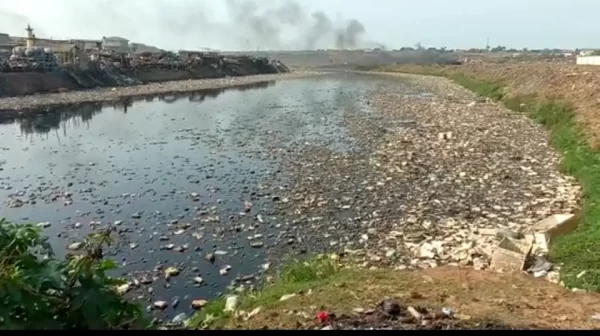
The study’s cost-benefit analysis shows that under current spending levels, every GH¢1 invested in waste management generates approximately GH¢180 in economic returns. Under a best-case scenario—raising investment to around GH¢1,028 per ton, aligned with lower-middle-income benchmarks—returns could increase to GH¢556 per GH¢1 invested.
Nationally, projected benefits under the enhanced investment scenario could reach GH¢58 billion by 2025 and GH¢67.2 billion by 2032, primarily through reduced disease incidence, lower mortality, and fewer productivity losses.
Prof. Quartey urged the government to treat sanitation as a high-return development investment rather than a residual expenditure, emphasising its role in protecting public health and driving economic growth.
During the forum, participants raised questions about attributing disease burden to waste, the feasibility of the best-case investment scenario in slum and rural communities, and the issue of uncollected waste.
The research team explained that their modelling assumed 45% of the selected diseases were linked to waste exposure and incorporated standardised ranges for lower-middle-income countries, accounting for infrastructure gaps and collection inefficiencies.
Stakeholders discussed institutional coordination, with some advocating for a National Sanitation Authority, while others recommended strengthening existing structures. Education and job creation in waste management, including green jobs and recycling, were also highlighted as key opportunities.
The study concluded that Ghana’s annual losses from poor sanitation far exceed current spending. It calls for increased and sustained investment, targeted interventions in high-risk communities, and stronger data and budgeting systems within Metropolitan, Municipal, and District Assemblies to prioritize sanitation as a central pillar of national development.