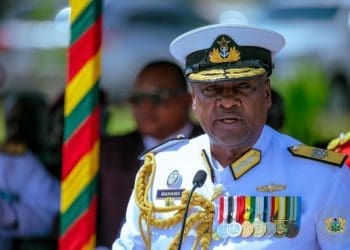

President John Dramani Mahama has emphasised that Ghana must take full responsibility for financing its own education sector rather than depending on external donors.
Speaking at Qatar during the Doha Forum 2025 at the invitation of the Emir of Qatar, Mahama argued that long-term national progress can only be achieved when the country invests consistently and independently in its educational systems.
Mahama noted that while international partners have supported Ghana over the years, donor funding is unpredictable and often tied to conditions that may not fully align with Ghana’s priorities.
According to him, although external support continues to play a role in Ghana’s development, the country’s education sector cannot depend on it for lasting progress.
He argued that long-term improvement requires consistent, predictable domestic funding grounded in national ownership and accountability, noting that “while international assistance remains important, true progress in education requires consistent and reliable internal funding anchored in national ownership and responsibility.”
To illustrate this point, he referenced the Ghana Education Trust Fund (GETFund) as a model of successful homegrown financing.
The fund, he explained, has proven effective in mobilising resources through its earmarked 2.5% VAT on goods and services.
“At a point in time, we realised that education was a key sector to Ghana’s progress and development, and so as a nation we decided to contribute to everything we purchase 2.5% VAT, and that goes into the Ghana Education Trust Fund. That fund alone is able to mobilise sufficient revenue,” he told participants.
Mahama emphasised that Ghana must strengthen its domestic revenue systems to reduce overdependence on donors and guarantee steady support for infrastructure, learning materials, and the expansion of tertiary institutions.
Turning to agriculture, the former president underscored the urgency of transforming Ghana’s farming methods in light of accelerating climate change.
He stressed that the country can no longer rely mainly on rain-fed agriculture and must prioritise substantial investment in irrigation systems to safeguard food production.
“We need to adapt our agriculture to a new reality. That means we must put more land under irrigation. Poor farmers will not be able to afford the cost that comes with it, and that is why my government has decided to embark on appropriate and affordable irrigation for the farmers,” he stated.
Mahama added that enhanced irrigation infrastructure would raise productivity, stimulate rural employment, stabilise food supply, and strengthen Ghana’s resilience against climate-related disruptions.
Mahama’s remarks add to ongoing discussions about how Ghana can strengthen its education sector, ensure quality learning outcomes, and develop a system capable of supporting the country’s economic ambitions.