The Ghana Anti-Corruption Coalition (GACC) has reaffirmed its commitment to building a corruption-free Ghana, calling for stronger national collaboration, especially from young people—as the world marks the 2025 International Anti-Corruption Day.
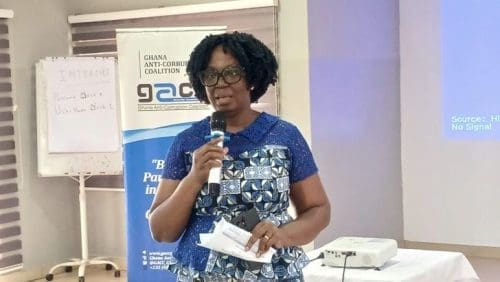
In a statement issued and signed by its Executive Secretary, Mrs. Beauty Emefa Narteh stressed that corruption remains one of the country’s most damaging obstacles to development, justice, and democratic progress.


She noted that the cost of corruption goes far beyond financial loss, stripping citizens—particularly the youth—of opportunities for quality education, healthcare, infrastructure, and employment.
“Every cedi lost is a missed opportunity,” she emphasized, adding that public trust continues to erode when institutions fail to uphold transparency.
This year’s theme, “Uniting with Youth Against Corruption: Shaping Tomorrow’s Integrity,” underscores the critical role of young people in advancing national accountability.
Mrs. Narteh explained that GACC has, over the years, equipped thousands of young people with the knowledge and values needed to champion integrity, recognizing that nurturing ethical leaders today is essential for securing Ghana’s future.
Youth engagement achieved in 2024
Reflecting on efforts made during the 2024 election year, she highlighted GACC’s extensive engagement through its Local Accountability Networks (LANets).
Working across 34 districts in 14 regions, the coalition reached an estimated 50,000 young people through educational activities in universities, senior high schools, faith-based groups, and youth organisations.
A complementary social media campaign also heightened national awareness on electoral integrity, vote-buying, and election-related corruption.
Building on this momentum, GACC is set to significantly expand its outreach in 2025.
Expansion across 87 Districts in 2025
The coalition will roll out activities across 87 districts in all 16 regions, deepening its engagement with young people on the effects of corruption, the importance of whistleblowing, and the need for civic responsibility.
A nationwide social media campaign will further amplify youth voices and spread anti-corruption messages across digital platforms.
These initiatives, she noted, are supported by the William and Flora Hewlett Foundation and the GIZ EU-funded PAIReD Programme.
Call for collective support
She urged stakeholders; parents, educators, religious leaders, civil society, the media, and public institutions to continue reinforcing integrity among young people.
“Empowering the youth is not merely education; it is a strategic investment in our nation’s future,” she said.
Addressing young Ghanaians directly, she encouraged them to be bold in confronting wrongdoing and commit to the “3Rs” of anti-corruption: Resist, Reject, and Report corruption.
“You are not only the leaders of tomorrow, but the defenders of integrity today,” she charged.
She ended with a call for collective effort in building a Ghana rooted in transparency, accountability, and justice.