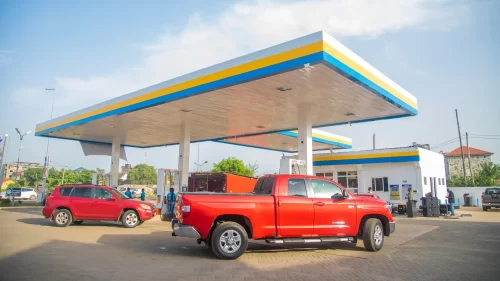
Star Oil has become one of the most talked-about oil marketing companies (OMCs) in Ghana, largely because it appears to be winning the fuel price war currently raging in the sector.
For now, motorists are smiling — consumers are the immediate winners.

But how has Star Oil managed to undercut long-established giants such as GOIL, Shell, and TotalEnergies? And more importantly, how long can this advantage last?
A Crowded Market, Familiar Leaders
Ghana’s oil marketing sector is highly competitive, with nearly 200 registered OMCs all vying for consumer trust and market share.
For decades, the industry has been dominated by state-owned GOIL, France-based TotalEnergies, and Shell, whose majority shareholder is Vivo Energy.
Star Oil’s rise, however, signals a clear shift in the balance of power.
A long game, not an overnight success
While many consumers began noticing Star Oil in 2025—when fuel price competition intensified—the company’s ascent has been years in the making.
For the past five years, the indigenous OMC has steadily challenged the status quo using a simple but aggressive strategy:
- Price fuel below the big players to attract volume
- Ensure seamless fuel supply and distribution
- Reward customers while expanding its retail footprint
This strategy included acquiring stations, some of them formerly operated by GOIL in peri-urban areas, helping Star Oil expand to over 200 stations nationwide.
By 2025, its persistence paid off. The company moved from 13th place in 2020 to the top tier of Ghana’s fuel market by 2025, with its name frequently appearing in industry price comparisons.
As of October 2025, the top OMCs by market share were:
- Star Oil – 15.21%
- GOIL – 12.61%
- Vivo Energy – 8.82%
- TotalEnergies – 5.78%
In the first half of 2025, Star Oil recorded a 41.02% increase in product volumes, reaching 403.3 million litres, allowing it to overtake GOIL in market share.
Founded in 1998, Star Oil is wholly Ghanaian-owned and remains the oldest independent OMC in the country with no foreign or state involvement.
What triggered the price war?
Industry players point to GOIL’s response to Star Oil’s price cuts in 2025 as the spark that ignited the current price war.
As of January 20, 2026, competition intensified further, with Zen and JP undercutting both Star Oil and GOIL:
- JP: GH¢9.89
- Zen: GH¢9.94
- Star Oil: GH¢9.97
- GOIL: GH¢9.99
- Shell : GH¢11.68 cedis
- Total : GH¢11.68 cedis
Why Star Oil has the upper hand in the price war
Access to cheaper fuel (PPM advantage)

OMCs are classified into three tiers, based largely on fuel quality standards:
- Tier One: Shell, TotalEnergies, GOIL (≤ 9 PPM)
- Tier Two: Star Oil, Zen (≤ 40 PPM)
- Tier Three: ≤ 60 PPM
PPM (parts per million) measures sulphur content in fuel. Lower PPM means cleaner fuel — but also higher cost.
Tier-one OMCs must buy cleaner, more expensive fuel, while tier-two and tier-three firms can purchase fuel at lower cost.
The regulator, NPA, permits this differentiation because many tier-two and tier-three customers are in price-sensitive and underserved communities.
Lower cost structure and strong bargaining power
Fuel pricing is driven by Bulk Distribution Companies (BDCs), the wholesalers.
OMCs with scale and volume enjoy better pricing.
Star Oil also benefits from vertical integration.
Unlike foreign-owned firms that must rely on local retailers due to Ghanaian law, Star Oil:
- Owns its stations
- Operates directly at retail level
- Eliminates the retail margin, leaving only the OMC margin
This significantly lowers pump prices.
Exchange rate shield
Local OMCs like Star Oil are less exposed to exchange rate volatility.
Foreign-linked firms such as Shell and TotalEnergies report earnings in dollars to parent companies, making them more vulnerable when the cedi weakens.
The TOR factor
The Tema Oil Refinery (TOR) is back on stream, supplying PPM 40 fuel, which tier-two OMCs are actively buying. However, TOR currently cannot blend PPM 9 fuel due to equipment limitations.
Once TOR upgrades and reaches full capacity, tier-one OMCs could access cheaper cleaner fuel — potentially narrowing Star Oil’s price advantage.
Can the big players fight back?
Industry insiders believe GOIL can.
With about 400 stations nationwide, double Star Oil’s footprint, GOIL has the operational muscle to absorb margin cuts and compete aggressively on price.
It can temporarily sacrifice margins and still remain profitable.
Is the Price War Healthy?
Opinions are divided.
Some industry players warn that prolonged price wars:
- Erode profits
- Weaken capital
- Could force smaller OMCs out of business
Others argue competition ultimately benefits consumers and drives efficiency.
A win — for now
Star Oil’s rise is not accidental. It is the result of pricing discipline, cost control, scale, and strategic positioning within Ghana’s regulatory framework.
For now, the company is winning the price war. But how long it lasts will depend on global crude oil prices, the stability of the cedi, and how quickly competitors adapt — particularly when TOR begins producing cleaner fuel at scale.
One thing is clear: Ghana’s fuel market has changed, and Star Oil has forced everyone to rethink how business is done.
By Vivian Kai Lokko The author is the Editorial Lead for Business Outlook with Vivian Kai Lokko, a high-impact digital platform for smart conversations on business, leadership, and the economy.